
It takes some skill to write any good crime movie. It’s a sentiment you can probably agree with if you’ve seen one of the worst crime movies of all time, like Gotti (2018), Gigli (2003), or The Snowman (2017). Those films show there are so many ways a screenplay for a crime movie can go wrong, and though those films have flaws beyond the writing, they were all pretty much doomed from the start, owing to the… you know… writing.
So, it feels particularly worth celebrating those crime films that do just about everything right, as far as the screenplay’s concerned. What follows is a collection of crime movies that are perfectly written, and they’re not necessarily the most perfectly written. 10 crime movies being perfectly written is not an automatic indication that there are only 10 perfectly written crime movies. Get it? Got it? Good.
10
‘Dog Day Afternoon’ (1975)

Dog Day Afternoon wastes no time getting off to a great start, with such an approach being sensible, owing to this heist movie taking place over a very short span of time. It’s not in real-time exactly, but it almost feels like it is, showcasing a bank heist that very quickly spirals out of control, and develops into a massive hostage situation that the media soon makes a big deal out of.
And before anyone calls Dog Day Afternoon implausible, it’s worth noting that it was based on a real-life event, not to the extent of being 100% historically accurate, but most of the basics are captured. The film retells such an ordeal while also being expertly paced and consistently intense, in turn easily being up there among the best bank robbery-related movies ever made.
9
‘Le Trou’ (1960)

In Le Trou, there are a group of prisoners, and – get this – they’re in prison, and they don’t like being in prison very much. To the surprise of no one watching Le Trou, they want to break out of the prison they’re in. And that makes it all sound very ordinary, but this really isn’t your average prison movie, since it tackles this whole crime sub-genre in a unique and continually tense way.
Also, Le Trou is very patiently paced, to the extent where you’re almost tempted to call it slow, but it really is quite engrossing, even when there’s not a great deal by way of action or outright excitement happening. It’s all methodical, replicating the plan carried out by the prisoners who want to break free, and it all makes for a genuinely immersive viewing experience.
8
‘Double Indemnity’ (1944)

Of all the movies Billy Wilder directed, Double Indemnity is one of the very best, and that’s saying a lot, considering what a great filmmaker he was. This is also about as essential as classic film noir titles get, being about a man in over his head with a criminal scheme that involves a shady woman who wants to murder her husband, and if you want to get up in arms about what that means or what it reflects, that’s just film noir for you.
These movies tend to require such archetypes, and if you want a little more nuance, there are always neo-noir films to satiate you. With Double Indemnity, it’s very much of its time, but about as perfect as movies of its time got, with a particularly inventive screenplay that structures everything ideally, all the while making the events of the story equal parts inevitable and surprising, somehow.
7
‘Uncut Gems’ (2019)

Uncut Gems is famously, or infamously, one of the most anxiety-inducing movies of all time. It’s about a guy who has possession of a valuable gem, and he feels he can use it as part of an overall gambling-heavy plan to win big, but said plan also involves crossing paths with various people you don’t want to get on the wrong side of, and he’s not really on anyone’s good side to begin with.
It’s sort of an exploration of addiction, mostly relating to gambling, but also of wanting to attain some sort of unspeakable high that is probably impossible to reach. And everything is a big old spiral downward, but at the same time, Uncut Gems has a screenplay that’s also darkly funny at times, and one that really makes people yelling and swearing at each other non-stop for almost 2.5 hours surprisingly poetic.
6
‘Purple Noon’ (1960)

Don’t let the title fool you, because Purple Noon is actually an adaptation of The Talented Mr. Ripley, and a phenomenal one at that. In case you’re not familiar with either the source material or any of its adaptations, it’s about a dangerous con man by the name of Tom Ripley, and the way he becomes obsessed with another man named Philippe Greenleaf, to the point where it seems Tom pretty much wants to take over Philippe’s life.
It’s as good a thriller as it is a crime movie, and it’s very much worth watching, even if you’ve already watched – and enjoyed – the 1999 adaptation of The Talented Mr. Ripley.
From there, things get messy, but messy in a good and appropriate way, because Purple Noon does very much do its source material (the aforementioned novel, written by Patricia Highsmith) justice. It’s as good a thriller as it is a crime movie, and it’s very much worth watching, even if you’ve already watched – and enjoyed – the 1999 adaptation of The Talented Mr. Ripley, which is also, admittedly, pretty darn good, but not as great as Purple Noon.
5
‘Heat’ (1995)

Heat is, for starters, a huge movie. You could break it down and summarize it as a heist movie that spends equal time on both sides of the law, and you wouldn’t necessarily be wrong, but it’s all in the execution, and also how much time the film runs for overall. It’s almost three hours long, and you do come to care about both the criminals who want to pull off a massive heist and some of the cops who want to stop such a thing from happening.
Call it a cops vs. robbers story, because it is, but it also elevates all the norms you’d expect out of such a narrative. Heat is so perfectly executed, and not just when it comes to the two big scenes everyone remembers (Pacino talking to De Niro in the diner, and the big heist itself), because Heat is excellent throughout, from its opening to the way it memorably concludes.
4
‘The Godfather Part II’ (1974)

There’s an undeniable heaviness to The Godfather Part II that’s still easy to admire and/or feel mortified by, even now, more than half a century on from its release. The Godfather (1972) is also pretty much perfectly written, and so consider it worthy of an honorable mention here, but The Godfather Part II has even more to offer from a screenplay perspective, mainly owing to the ambitious structure at hand.
It’s both a sequel and, to a slightly lesser extent, a prequel to The Godfather, and it balances those two timelines rather perfectly, not to mention having them contrast to a devastating extent emotionally/thematically. And sure, the whole trilogy didn’t end the best, owing to The Godfather Part III being The Godfather Part III, but two pretty much perfectly written movies in a row is, nonetheless, something very much worth celebrating.
3
‘High and Low’ (1963)

High and Low begins as one kind of movie, and gradually morphs into another, all very organically, over a runtime that nears 2.5 hours. It’s old, sure, but can still be spoiled, so here’s what can be said regarding the plot, or at least the first half of it: High and Low is about a kidnapping scheme that goes wrong, with the son of a worker being kidnapped, instead of the desired target, which is the son of a wealthy executive said worker works for.
The kidnapper kind of just says, “Screw it,” and still demands what’s desired, and then the moral dilemma of the whole situation really accelerates, and it gets more interesting/intense when the film shifts a little narratively in its back half. As both a crime movie and a thriller, High and Low is truly immense, and is up there among the best Akira Kurosawa films not called Seven Samurai.
2
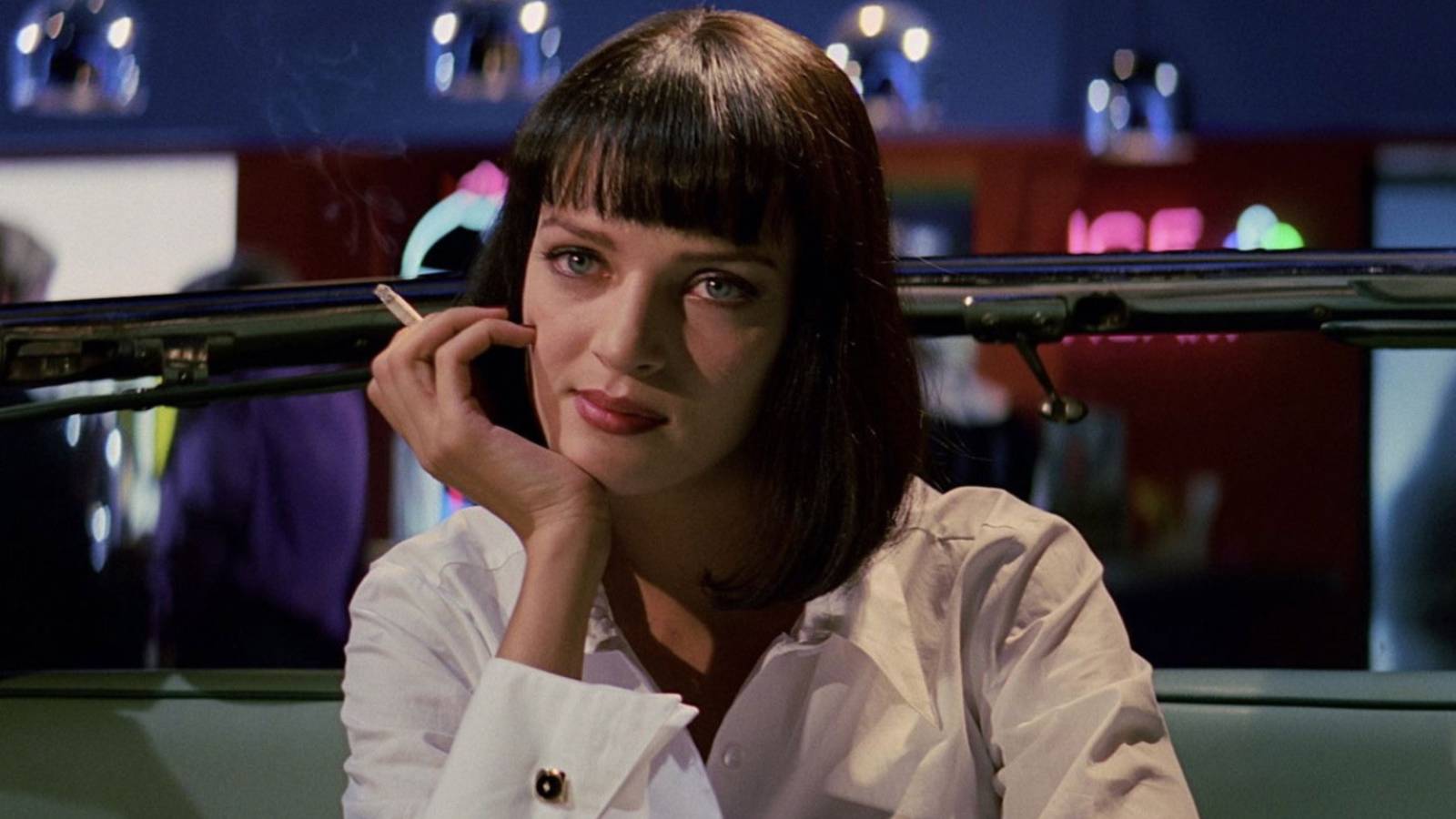
‘Pulp Fiction’ (1994)
If you’re okay with Pulp Fiction being classified as a gangster movie, then it just so happens to be one of the funniest gangster movies of all time, albeit it’s also a bit more than just a dark comedy. The whole thing is tremendously adventurous as far as the writing’s concerned, since Pulp Fiction tells several stories within the one movie, and they’re all told in a non-chronological way, too.
Everything more or less revolves around the one gangster, and that gangster isn’t even the main character, but it makes sense within the film itself. Pulp Fiction kind of plays by its own rules, and is confident enough to feel borderline-cocky, or maybe it would feel cocky if it didn’t actually back up its confidence with the phenomenal screenplay and overall expert direction, courtesy of Quentin Tarantino.
1
‘Goodfellas’ (1990)

Oh what, you’re going to act surprised that Goodfellas is here? Please. It’s an untouchably good gangster movie about a man named Henry Hill, who is very much wrapped up in the mafia and that whole lifestyle, but is unable to be a full-on made man. So he gets as close as he can, but he’s still a bit of an outsider, and thereby the perfect point of view character to follow if you want an idea about what this sort of lifestyle entails.
It’s one of a fair few gangster movies Martin Scorsese has directed, and stands, overall, as his very best. There’s a good deal of humor here, alongside genuinely intense moments, and all of it’s accompanied by one of the very best soundtracks of all time. You could just listen to Goodfellas and it would be phenomenal, for all the dialogue alone, but then the filmmaking (you know, everything else) is also just as strong, so it’s obviously an absolute classic.

Goodfellas
- Release Date
-
September 19, 1990
- Runtime
-
145 minutes