
Fantasy is such a fascinating genre, one that sells a story out of the ordinary to a sea of viewers who are hungry to escape the chaos of reality. Over the years, we have been treated to some of the best fantasy shows television has produced, with most standing the test of time and the changing tastes of its audience. However, those are not the shows we want to focus on; instead, we want to look at the fantasy shows that have aged like curdled milk.
Whether it’s the clunky, dated CGI of the early 2000s, or certain plot tropes that felt more “cringy” than innovative over the years, not every journey into a fantastical world has aged gracefully. Thanks to the wonderful world of streaming, we’re able to look back at fantasy shows that were once thought of as pioneers of the genre, only to slowly realize that these shows don’t retain the same magic as the modern fantasy shows. These past series helped pave the path for. So, without further ado, let’s look at the seven fantasy shows that, despite their charm, have drastically shown their age, and not in a good way.
‘Cursed’ (2020)

For a show that’s only six years old (as of this publication), you wouldn’t think that a modern fantasy series such as Cursed would age so quickly and so poorly. However, the Netflix high fantasy show is a cautionary tale of what happens when you try to reach for the stars on a shoestring budget. Created by Frank Miller and Tom Wheeler, Cursed was adapted from the graphic novel written by Miller and Wheeler, and is a re-imagination of Arthurian legend. While the concept behind the show was good, it was basically “cursed” from the start.
For a Netflix series, the aesthetics of Cursed simply don’t achieve the high fantasy concept the show was going for. The visuals looked drab and cheap, coming off as a show made for syndication in the ’90s rather than a modern fantasy show.
But fantasy fans could have forgiven the low-budget effects if the writing and pacing of Cursed was clunky. The plot was incredibly predictable, and the tone of the show was all over the place. While re-watching the series, even we, as TV savants, had a hard time trying to depict if this show wanted to be a serious fantasy drama, or a young adult melodrama. It weirdly tried to be both, and the entire product ended up falling flat. With much better high fantasy shows out there, like Game of Thrones (the first four seasons) and The Witcher, Cursed was a low-budget fantasy that sat in the sun for way too long.
‘Once Upon a Time’ (2011–2018)
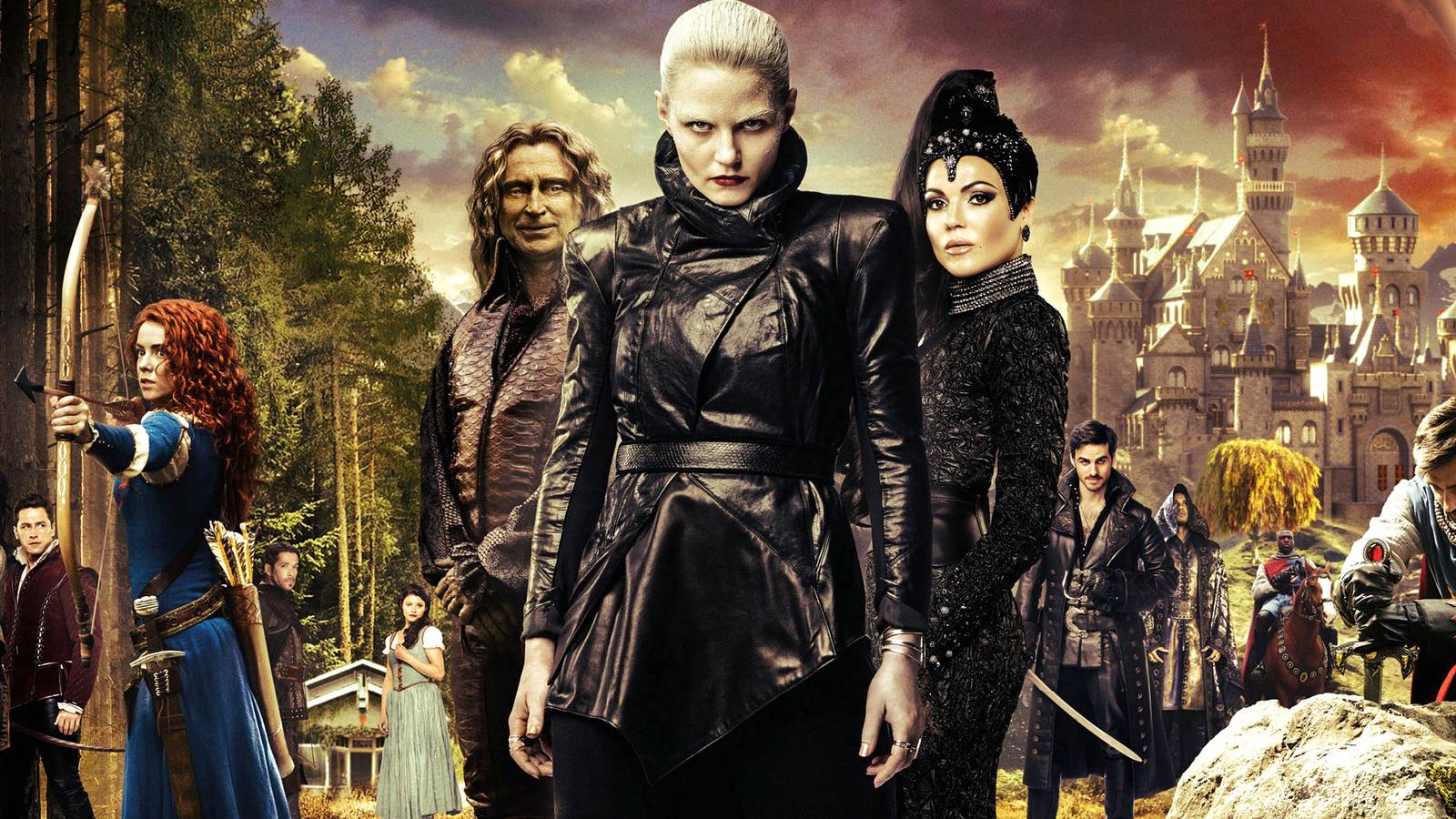
There was a time when ABC’s fantasy adventure Once Upon a Time was a must-watch event every week. Created by Edward Kitsis and Adam Horowitz, the show felt like a series that was ahead of its time, with its central plot of a seaside town being populated by fairy tale characters who were transported there by the Evil Queen (Lana Parrilla). The first season was a hit among audiences, who latched on to the unique fairy tale angle. However, as the show went along, it quickly became apparent that this show had an expiration date.
The central story of Once Upon a Time relied heavily on these fairy tale characters being wiped of their memory, unaware of who they are. This mainly worked in the first season, but once the plot kept reverting to the same memory wipes/curses angle, the plot became extremely repetitive, and it kept the show stagnated, something that no one wants in a good fantasy series. Then there were the visuals, which were stunning in 2011, but now, the CGI used in the show looks very outdated, with the CGI very much noticeable on repeat viewings. To put a sour lemon on the sundae, the show, out of nowhere, pivoted away from its modern re-telling of classic fairy tales to shoving in popular Disney characters. For those not in the know, ABC is owned by Disney, and the show substituted those fairy tale characters for the likes of Elsa (Georgina Haig), which threw the entire show off and dated it even more.
‘Heroes’ (2006–2010)

Speaking of shows that were once seen as groundbreaking examples of how fantasy shows could become in the modern age, we have NBC’s Heroes. Created by Tim Kring, the superhero fantasy drama was water cooler talk during its first two seasons, easily becoming one of NBC’s highest rated dramas during this time and earning a slew of award nominations. The show follows a group of ordinary people who discover that they have superhuman abilities, and they all eventually team up to prevent disastrous futures.
The first two seasons of Heroes were a masterclass in superhero storytelling, but the 2007 writer’s strike had a profound impact on the series. The strike cut Season 2 incredibly short, and once the strike ended, Season 3 felt rushed, with poor storylines that the series would never seem to recover from. The screeching halt to Season 2 also killed the show’s original vision, as Heroes was actually planned to be an anthology series, in the same vein as American Horror Story. However, NBC, who didn’t want to alter the hit they had on their hands, threw cold water on the anthology idea, and forced the showrunners to keep Heroes as it was, leaving it with a bloated cast that resulted in repetitive character arcs that didn’t grow as the series went along; and, with repetitive characters came a repetitive, formulaic storyline that lost the interest of its fans. Instead of Heroes being championed as a high-water mark for modern fantasy shows, the series has become curdled milk, and practically unwatchable on repeat viewings.
‘Charmed’ (1998–2006)

For eight seasons, viewers were enchanted by three very powerful witches in The WB fantasy series Charmed. Created by Constance M. Burge, the show followed a trio of sisters known as “The Charmed Ones” who use their powers to protect the innocent from evil, malevolent beings such as demons and warlocks. On a network that, at the time, was primarily known for its sitcoms and family dramas, Charmed busted on to the scene and became a ratings hit for the network, and has since grown a huge cult following. However, the popularity of Charmed doesn’t paper over the numerous flaws that have made it age quite poorly over the years.
While the show initially focused on the sisterly bond between the Halliwell sisters, after Season 4, the show shifted its focus from the sisters’ bond to one that put a heavy emphasis on the sisters’ individual lives and romance. While this wouldn’t have been an issue if the writing was still strong, the weakening nature of the show’s plot and continuity made this a sore spot. Speaking of continuity, the show’s constant changing of the rules with regard to each magical being within the universe led to the show creating enormous plot holes that even diehard fans are still trying to fill. Add in the outdated social dynamics of the series, a lack of LGBTQ+ representation and shallow treatment of minority characters, and you have a show that, while still good on the surface, has aged rather poorly from a modern lens.
‘Legend of the Seeker’ (2008–2010)

Before the turn of the new millennium, fantasy shows thrived on the “monster-of-the-week” format that offered something different for the viewers. But the downside to this form of storytelling is that it makes a show age much faster than intended, as there is little continuity when it comes to the plot to make fans stick around long after a show has ended. That was just one of the problems that befell Legend of the Seeker, the syndicated fantasy series created by the legendary Sam Raimi and adapted from The Sword of Truth novel series written by Terry Goodkind.
The series follows a “Seeker of Truth” who defends the people of their home realm from tyranny and destruction; but while the show is based on a popular novel series, when you take a look at it from the surface, you’ll find a show that threw out everything that made the book series so popular. Legend of the Seeker was a massive departure from the book series, throwing out plot continuity in exchange for the “monster-of-the-week” format that was quickly losing flavor with a lot of fantasy viewers at the time. By discarding the storyline of the books, it made the characters weaker and shallower, and we haven’t even gotten into the overall tone of the series, which was a real problem. The Sword of Truth novel series was quite dark, and fans of the books thought that the TV adaptation would follow along that same path. Alas, when it premiered in 2008, they found a series that strived very hard to be “family friendly,” and it simply did not work. While some may call this series underrated, it’s also a show that has failed to withstand the test of time.
‘Hercules: The Legendary Journeys’ (1995–1999)

In the mid-’90s, historical heroes were having a grand time in syndication, and it all started with Hercules: The Legendary Journeys. Premiering in 1995 and running for six seasons, the show follows Hercules (Kevin Sorbo) as he goes around Ancient Greece saving villagers from monsters, warlords and other so-called “selfish whims of the Gods.” Hercules: The Legendary Journeys wasn’t all fantasy, as it mixed in comedy as well, and “insider jokes” on modern themes that most millennials who grew up with the show would get.
But that’s one of the main issues as to why Hercules has aged so poorly. While the writing (for the most part) was pretty solid, it was also a product of its time, a product that was destined to never age well. The campy tone of the series was compounded by extremely formulaic storytelling. Yes, Hercules followed the “monster-of-the-week” format that, while popular in its day, has since become stale, especially among modern fantasy fans who favor high prestige and continuity within their storytelling, along with great special effects, another area the show falls short. While the CGI of the 1990s was groundbreaking, especially for a syndicated show like Hercules, looking at the series from a modern standpoint, it looks downright cheesy and campy, which, ironically, matches the aesthetics of the show as a whole.
‘I Dream of Jeannie’ (1965–1970)

What would you do if a bottle washed up on the beach containing a 2,000-year-old genie? Well, of course you would get your three wishes, but that was far from the main plotline of the hit fantasy sitcom I Dream of Jeannie. Created by Sidney Sheldon, the NBC series follows Captan Anthony “Tony” Nelson (Larry Hagman), an astronaut who finds a bottle on the beach that contains Jeannie (Barbara Eden), a powerful, but mischievous genie who becomes Tony’s servant. While it was sweet to watch these two fall in love, and one can’t argue that the show helped pave the way for fantasy series to have a viable future on television, you can’t ignore the numerous problematic tropes of I Dream of Jeannie that would certainly get the series cancelled today.
The main issue, aside from the formulaic storylines, was the dynamic that is at the root of the series. Jeannie is a powerful being, but throughout the series, she is completely submissive to Tony, even calling him “Master” and basically existing to serve his needs. Some would say that this is the whole point of the show, and that she’s a genie and exists to serve the needs of anyone who opens her bottle, fair enough. However, the storyline doesn’t allow Jeannie to grow into her own person, even after they fall in love. She is the embodiment of the subservient housewife, a trope that has aged very poorly. This is on top of the stereotypical depictions of Middle Eastern and Asian culture, which, from today’s view, are extremely problematic, and you have a show that, while beloved, is a shining example of a fantasy series that has aged like milk.

I Dream of Jeannie
- Release Date
-
1965 – 1970-00-00
- Directors
-
Hal Cooper, Gene Nelson, E.W. Swackhamer, Alan Rafkin, Larry Hagman, Oscar Rudolph, Russ Mayberry, Jerrold Bernstein, Bruce Kessler, Leo Garen, Michael Ansara, Theodore J. Flicker, Jon C. Andersen, Richard Kinon, Richard Goode
- Writers
-
James S. Henerson, Martin Roth, Dick Bensfield, Perry Grant, Arnold Horwitt, Arthur Alsberg, Ron Friedman, Bob Fisher, Frank Waldman, Joanna Lee, Tom Waldman, Bruce Howard, Bob Marcus, Bill Davenport, Arthur Julian, Bill Daily, Charles Tannen, Douglas Dick, Harry Essex, Howard Ostroff, Irma Kalish, James B. Allardice, John McGreevey, Larry Markes
-

-

-
Bill Daily
Major Roger Healey
-
Hayden Rorke
Alfred Bellows