
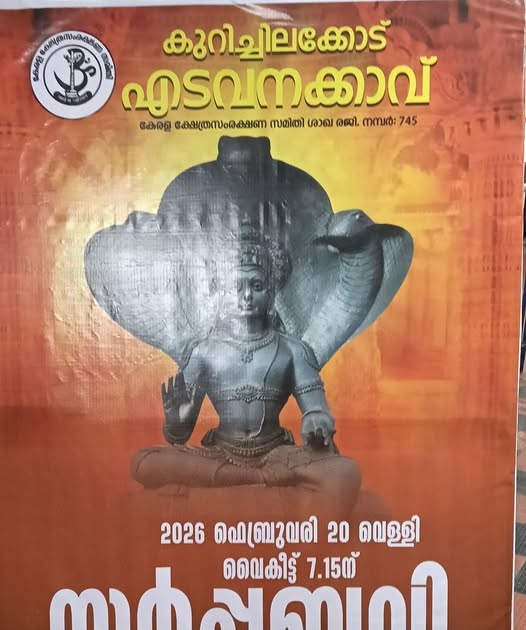
Kurichilakkodu Edavanakkavu stands as a revered spiritual center, deeply rooted in Kerala’s temple traditions and ritual heritage. On Friday, February 20, 2026, devotees will gather at this sacred shrine to witness and participate in the auspicious Sarpa Bali, scheduled at 7:15 PM. Organized by the Kerala Kshethra Samrakshana Samithi Branch (Reg. No. 745), this ritual is conducted under the chief priesthood (Mukhya Karmmikathwam) of Sree M.S. Vasudevan Namboothiri, ensuring the ceremony adheres to authentic Vedic and Tantric customs.
The Spiritual Significance of Sarpa Bali
Sarpa Bali is a time-honored ritual dedicated to the divine serpent energies, symbolizing fertility, protection, prosperity, and the cyclical renewal of life. In Kerala’s temple culture, serpent worship occupies a distinctive place, reflecting humanity’s reverence for nature and cosmic balance. The ritual seeks blessings for family welfare, removal of obstacles, ancestral harmony, and environmental well-being.
Traditionally, Sarpa Bali is believed to pacify Sarpa Dosha—astrological or karmic imbalances associated with serpent deities. Devotees often participate with prayers for health, progeny, peace, and spiritual progress. Beyond personal intentions, the ritual also serves as a collective act of gratitude toward the natural world, emphasizing coexistence and ecological respect.
Kurichilakkodu Edavanakkavu – A Temple of Faith
Edavanakkavu has long been recognized as a sanctuary of devotion, where rituals are performed with precision, discipline, and deep spiritual consciousness. The temple’s serene atmosphere, enriched by sacred chants and traditional lamp-lit surroundings, creates a profoundly uplifting experience for worshippers.
Events like Sarpa Bali highlight the temple’s commitment to preserving Kerala’s ritualistic heritage. Under the guidance of the Kerala Kshethra Samrakshana Samithi, such ceremonies play a vital role in sustaining cultural continuity, educating younger generations, and strengthening communal bonds.
Ritual Observances and Devotee Participation
On the evening of February 20, the temple premises will resonate with Vedic mantras, rhythmic offerings, and sacred invocations. The Sarpa Bali ceremony typically includes ritualistic preparations, offerings to serpent deities, and prayers seeking divine grace. The involvement of Sree M.S. Vasudevan Namboothiri as the chief officiant underscores the ritual’s sanctity and authenticity.
Devotees attending the ceremony are encouraged to maintain traditional decorum and spiritual mindfulness. Many participants observe personal prayers or fasting prior to the ritual. The temple environment during Sarpa Bali often reflects a unique blend of solemnity and devotional energy, where faith, tradition, and inner reflection converge.
Cultural and Community Relevance
Kerala’s temple rituals are more than religious observances; they are expressions of collective identity and shared heritage. Sarpa Bali, in particular, connects spiritual belief with ecological symbolism, honoring serpents as guardians of the earth and custodians of fertility.
By organizing this event, the Kerala Kshethra Samrakshana Samithi Branch reaffirms its dedication to safeguarding temple customs and nurturing devotional awareness. Such initiatives reinforce the temple’s role as a living institution where spirituality, culture, and community intersect.
An Invitation to Experience the Divine
The Sarpa Bali at Kurichilakkodu Edavanakkavu offers devotees an opportunity to experience a deeply meaningful ritual within a sacred setting. Whether attending for personal prayers, cultural appreciation, or spiritual connection, participants often describe the ceremony as serene, powerful, and spiritually enriching.
As February 20 approaches, devotees and visitors alike are invited to join this sacred observance and receive the blessings associated with Sarpa Bali. The ritual not only invokes divine grace but also celebrates Kerala’s enduring temple traditions—where devotion is lived, preserved, and shared across generations.