
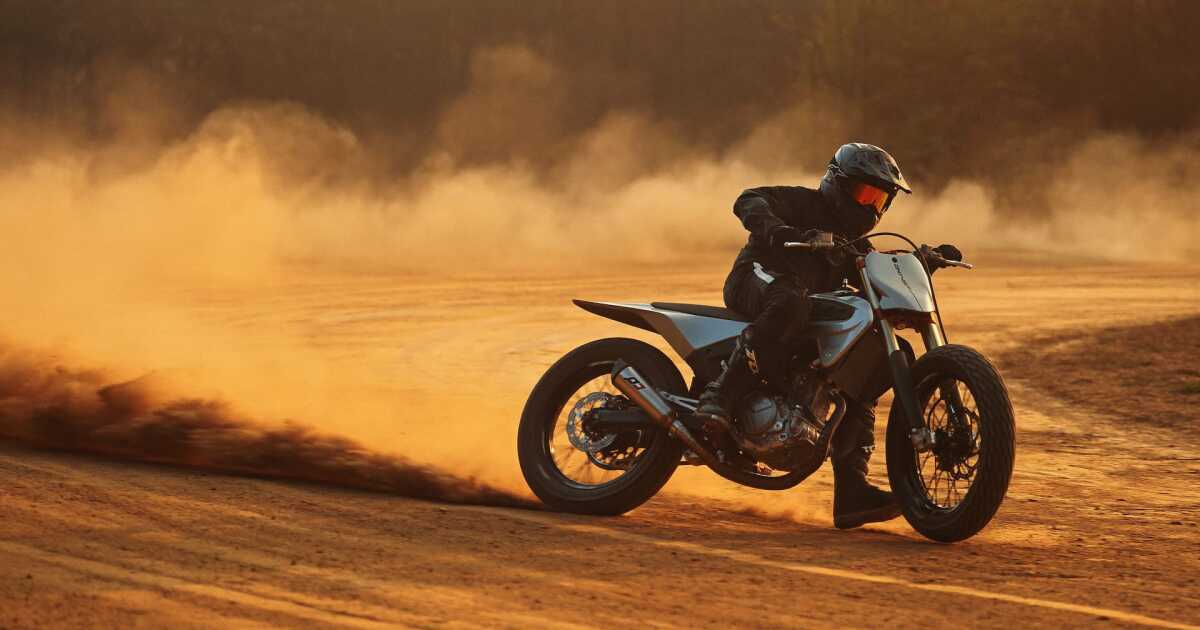
Swiss engineering company Picasso has mostly made its name with sports supercars and hypercars. It’s headed by Stefano Picasso (not a relative of Pablo Picasso), and has just come up with a flat-track-racing motorcycle that features an adjustable carbon frame.
Now that makes so much sense if you know anything about flat tracking. You see, often pitched sideways, flat track motorcycles constantly search for grip on dirt tracks. In this particular niche of motorcycles, you’d mostly find fixed frames everywhere. These frames often make the bike too rigid to maneuver. And if the frame is too soft, you’re in danger of making the control too ambiguous. This is why Picasso’s adjustable setup seems ingenious.
Picasso Engineering
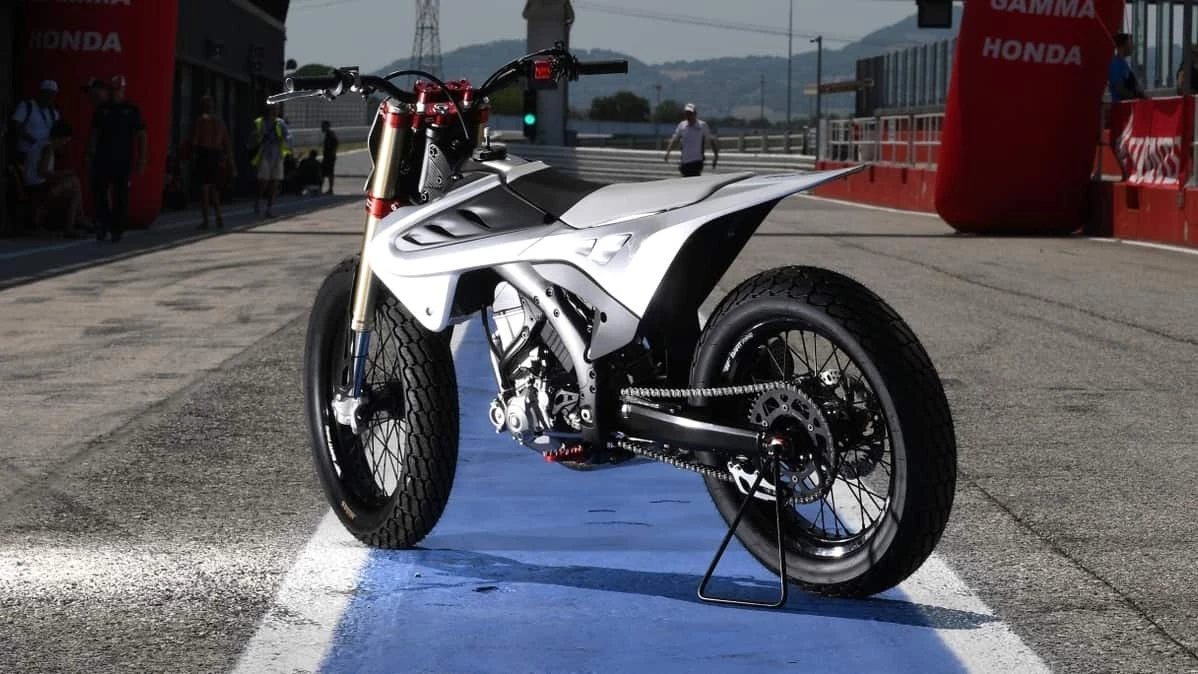
The engineers at the company believe that teams should be able to adjust the frame’s flex at the structural level rather than by making adjustments to the geometry or adding suspension tricks. That’s exactly what they’ve done to the Picasso OMT 450c – as the flat tracker is called – through DAST (Dynamic Adjustable Stiffness Technology) that helps you adjust the chassis to various tracks, surfaces, and grip levels.
Picasso Engineering puts a lot of importance on extremely low weight in all its designs, which translates to lots of light, homespun carbon components across their portfolio. That continues to be the case on OMT 450c, which is set to compete in the Flat Track World Championship from 2026.
At the center of it all is the carbon bridge frame. It’s made of differently manufactured carbon fiber laminates that are joined together by machined connecting components composed of the high-strength aluminum alloy Ergal 7075 T6. It’s exactly this that makes it possible to precisely control the frame’s torsional stiffness.
Picasso Engineering
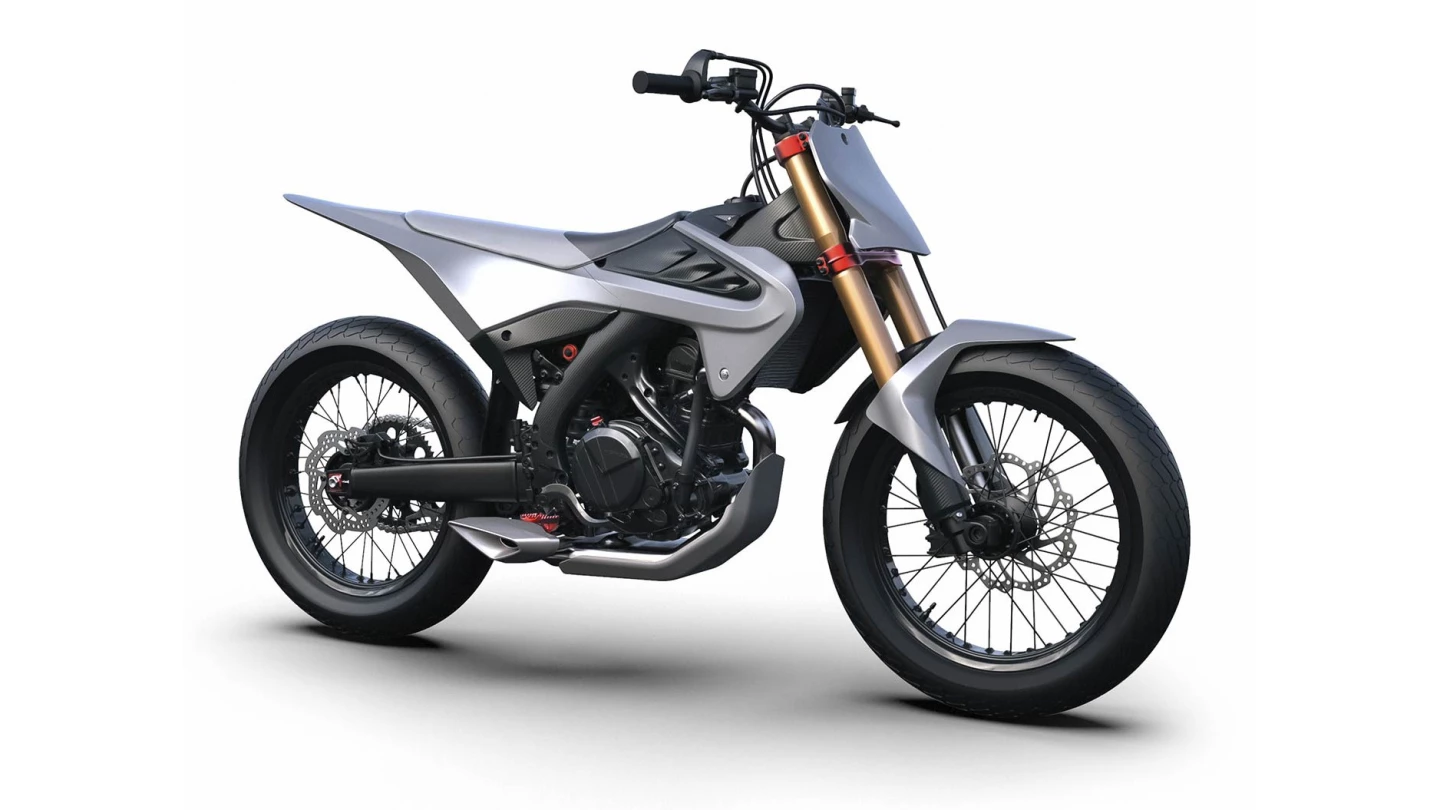
Power comes from a Honda CRF450-based single-cylinder engine boasting titanium valves, which delivers over 50 hp, and revs in the five-digit range.
But if you ask me, I wouldn’t care too much about that peak power output. That’s because in flat track racing, controllable, well-modulated power delivery is more important. And for that very reason, there couldn’t be a better choice than this well-proven, reliable, and simple Honda engine.
The bike’s frame is small and functional, and tightly packed to maintain weight distribution. It gets a suspension setup that’s adjusted specifically for dirt oval tracks. And as is customary for such bikes, there are no front brakes.
We don’t know the weight specifications for the Picasso OMT 450c, but it is highly unlikely that it weighs in at more than 220 lb (100 kg) in the sports trim shown. That would make it about as light as the Honda CRF 450 R, the same bike it borrows its motor from. Interesting!

Picasso Engineering
In addition to the competition bike, there’s also talk of an OMT 450s Stradale version in the works that’s meant for the street riding with required licensing. It’s even been passed for Euro 5+ standards.
I’ve always wondered how Picasso would envision a motorcycle. Now we finally have the answer to the question. And with luck, we might not be too far from road-legal motorcycles sporting adjustable frames.
Source: Picasso Engineering