
The Fierce Charchika Mudra: Goddess Chamunda’s Victory Over Demonic Forces
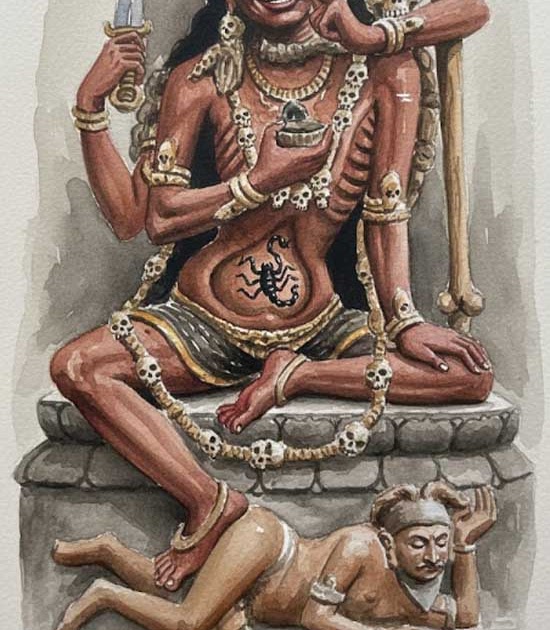
The Charchika Mudra represents one of the most terrifying and powerful manifestations of Goddess Chamunda, an aspect of the Divine Mother who embodies the destructive force necessary to eliminate evil from the universe. This particular form depicts the goddess in her most ferocious state, having just vanquished the demon generals Chanda and Munda, her mouth still bearing the remnants of her cosmic feast. The image of the goddess cleaning her teeth with the little finger of her left hand while wearing an inviting smile captures the paradoxical nature of divine feminine energy—simultaneously nurturing and destructive.
The Battle Context and Victory
Goddess Chamunda emerged from the wrath of Goddess Durga during the cosmic battle against the asura forces led by the demon king Shumbha and Nishumbha. When the demon commanders Chanda and Munda advanced with their armies, the goddess manifested in her most terrifying form to annihilate them. In the Devi Mahatmya, which forms part of the Markandeya Purana, this fierce battle is vividly described. The text narrates how the goddess destroyed not just the demons but their entire armies, including elephants, horses, and warriors.
The Charchika Mudra commemorates the moment immediately following this tremendous victory, when the battlefield lay strewn with the corpses of demons and their forces, and the goddess herself bore the marks of her ferocious consumption.

Symbolic Elements of the Mudra
The Act of Cleaning Teeth
The image of Chamunda using her little finger to remove flesh from her teeth is deeply symbolic. The left hand in tantric traditions represents the path of the unconventional, the fearsome aspect of spiritual practice that confronts death and destruction directly. The little finger, being the smallest and weakest digit, paradoxically represents the ease with which the goddess has accomplished this monumental task. What would require tremendous effort for ordinary beings is merely a casual act for the Divine Mother.
The “inviting smile” mentioned in descriptions of this mudra reveals an essential truth: the goddess’s ferocity is not born of malice but of cosmic necessity. Her smile invites devotees to transcend their fear of death and destruction, understanding that these forces serve the ultimate purpose of cosmic balance and the protection of dharma.
The Unfilled Stomach
Perhaps the most profound symbolism in this mudra is the goddess’s stomach, which remains empty despite her consumption of vast demonic armies. This represents the infinite nature of divine consciousness—no amount of worldly experience, whether positive or negative, can fill or satisfy the ultimate reality. The empty stomach also symbolizes the insatiable nature of cosmic justice; evil cannot exhaust the goddess’s capacity to destroy it.
The scorpion crawling through her stomach adds another layer of meaning. Scorpions in Hindu iconography represent both danger and transformation through pain. The creature’s presence suggests that even the most venomous and dangerous forces of nature find their place within the cosmic body of the goddess, yet cannot affect her essential nature.

Theological Significance
The Charchika form teaches devotees about the necessity of divine wrath in maintaining cosmic order. In the Devi Mahatmya, the gods themselves praise the goddess for her fierce actions, recognizing that gentleness alone cannot defeat entrenched evil. This understanding is crucial in Hindu spiritual philosophy—the divine feminine encompasses both the nurturing mother and the fierce protector.
The battlefield remnants—bones of demons, elephants, and horses—represent the destruction of ignorance (demons), false pride (elephants), and restless desires (horses). The goddess’s consumption of these forces symbolizes the complete annihilation of obstacles to spiritual liberation.
Worship and Contemporary Relevance
Devotees who worship Goddess Chamunda in her Charchika form seek her protection against enemies, both external and internal. The internal enemies—anger, greed, delusion, pride, and jealousy—are considered even more dangerous than physical adversaries. By meditating on this fierce form, practitioners invoke the goddess’s power to destroy these negative qualities within themselves.
The Charchika Mudra reminds spiritual seekers that transformation sometimes requires destruction. Just as the goddess ruthlessly eliminates demonic forces, aspirants must be willing to destroy their own negative tendencies without mercy. The inviting smile suggests that this process, while intense, ultimately leads to liberation and joy.
Final Thoughts
The Charchika Mudra of Goddess Chamunda stands as a powerful testament to the multifaceted nature of divine feminine energy in Hindu tradition. Far from being merely grotesque, this imagery contains profound spiritual truths about the nature of cosmic justice, the limits of material satisfaction, and the necessity of fierce compassion in protecting dharma. Through this form, the goddess teaches that true spiritual power requires the courage to confront and consume all that stands in opposition to truth and righteousness.