

Co-authored by Mufti Abdullah Nana and Dr. Shafi Lodhi
Picture the last time you donated during Ramadan. Maybe you were scrolling through your phone after taraweeh, watching a video of children in Gaza searching through rubble. Or perhaps you sat in your masjid as a charismatic speaker painted scenes of suffering so vivid you reached for your wallet/purse before he finished talking. You gave $100, $500, maybe more. You felt that catch in your throat, that pull of obligation and compassion.
Now answer this: what if someone told you that $30 of your $100 donation went not to buy food or care for children, but into the personal bank account of the person who asked you to give?
Keep supporting MuslimMatters for the sake of Allah
Alhamdulillah, we’re at over 850 supporters. Help us get to 900 supporters this month. All it takes is a small gift from a reader like you to keep us going, for just $2 / month.
The Prophet (SAW) has taught us the best of deeds are those that done consistently, even if they are small.
Click here to support MuslimMatters with a monthly donation of $2 per month. Set it and collect blessings from Allah (swt) for the khayr you’re supporting without thinking about it.
Would you want to know? Would it matter to you?
In early February 2026, a review of IRS Form 990 filings revealed that Human Appeal USA had listed $2,040,887 in payments to legal scholar and activist Khaled Beydoun for “professional fundraising services” during the fiscal year ending in 2024. According to the same filing, Beydoun had raised $7,120,440 for the charity through online crowdfunding campaigns. In other words, nearly 29 cents of every dollar donated was recorded as compensation for a single fundraiser.
Beydoun has denied receiving any personal payment, calling the filing a “clerical error” and stating that the funds were directed to a nonprofit organization focused on combating Islamophobia rather than to him personally. Human Appeal USA has echoed this explanation. But as advocacy groups have pointed out, no proof has been provided that the money was transferred to such an organization, and the charity has not amended its IRS filings to correct the alleged error.
Whether the specifics of this case are ultimately resolved in Beydoun’s favor or not, the controversy has forced the Muslim community to confront a systemic problem it has long avoided discussing. That problem is the widespread, undisclosed practice of commission-based fundraising that is far bigger than one person or one charity.
The Gold Rush
Every Ramadan and Dhul Hijjah, when Muslim giving reaches its annual peak, a well-oiled machine kicks into gear. Crowdfunding platforms compete for donor dollars. Influencers and professional speakers fan out across the country, appearing at masajid and speaking events. Their appeals are polished, their rhetoric powerful. Children are dying. Families are starving. The ummah is bleeding. Give now. Give generously. Allah is watching.
Millions of dollars flow in. Six-figure paydays for individual fundraisers during Ramadan alone aren’t unusual.
Meanwhile, at your local masjid, a different version of the same story unfolds. A visiting speaker arrives, often someone with name recognition and social media following. He delivers a moving khutbah. He talks about our duty to the suffering, about standing before Allah 
on the Day of Judgment and being asked what we did when our brothers and sisters needed us. Then comes the appeal. Checks are written. Cash is collected. The speaker leaves with his cut, a percentage negotiated privately with the masjid board, unknown to the congregation who just opened their wallets.
This is not overhead, the legitimate costs of running a charity that everyone accepts. This is a commission. A finder’s fee that scales infinitely with how much emotional urgency the fundraiser can generate.
Ask yourself: Did you consent to this? Did anyone tell you? Did you have a choice?
When the Experts Settled This Debate
Outside the Muslim nonprofit bubble, this question has been settled for years.
The Association of Fundraising Professionals, the largest professional body representing fundraisers in the world, is unequivocal. Standards 21 through 24 of the AFP Code of Ethical Standards explicitly prohibit percentage-based compensation, finder’s fees, and commissions tied to the amount of money raised. Standard 23 states that compensation “may include bonuses or merit pay in line with organizational practices but may never be based on a percentage of funds raised.” Standard 24 directs members to “decline receiving or paying finder’s fees, commissions, or compensation based on a percentage of funds raised.”
The National Council of Nonprofits is equally direct: “It is NOT appropriate for a nonprofit to compensate a fundraising professional based on a percentage of the money raised.”
These are not obscure positions. They represent the consensus of the entire professional fundraising world, built on decades of experience and hard learned lessons. The charity scandals of previous decades taught the nonprofit sector a painful lesson about what happens when financial incentives are misaligned with charitable missions.
The reasoning behind the prohibition is straightforward. Commission-based compensation puts personal financial gain above the donor’s trust and the organization’s mission. It incentivizes short-term cash grabs over long-term relationship building with donors. It creates pressure to use manipulative tactics that maximize the amount raised in a given moment rather than tactics that serve the organization’s genuine needs. And when donors eventually discover that their heartfelt contributions were significantly diverted to pay a commissioned agent, it erodes trust not just in one organization but in the entire charitable sector.
Percentage-based compensation doesn’t just create a conflict of interest; it makes the conflict the entire structure of the relationship. The fundraiser’s personal income directly competes with the donor’s intent and the charity’s mission. The more they take, the less it reaches the cause. Every charity dollar that goes into the fundraiser’s pocket is a dollar that doesn’t feed a hungry child or rebuild a destroyed home.
The Muslim nonprofit sector is operating as if it is exempt from these standards, as if the rules of ethical fundraising don’t apply to Muslim organizations.
What Islam Actually Says About This
Some defenders of commission-based fundraising in the Muslim community invoke the Quranic concept of al-amileen alayha, those employed in the collection and distribution of zakat, who are themselves entitled to a share of the funds they collect. This is mentioned in Surah At-Tawbah as one of the eight categories of zakat recipients.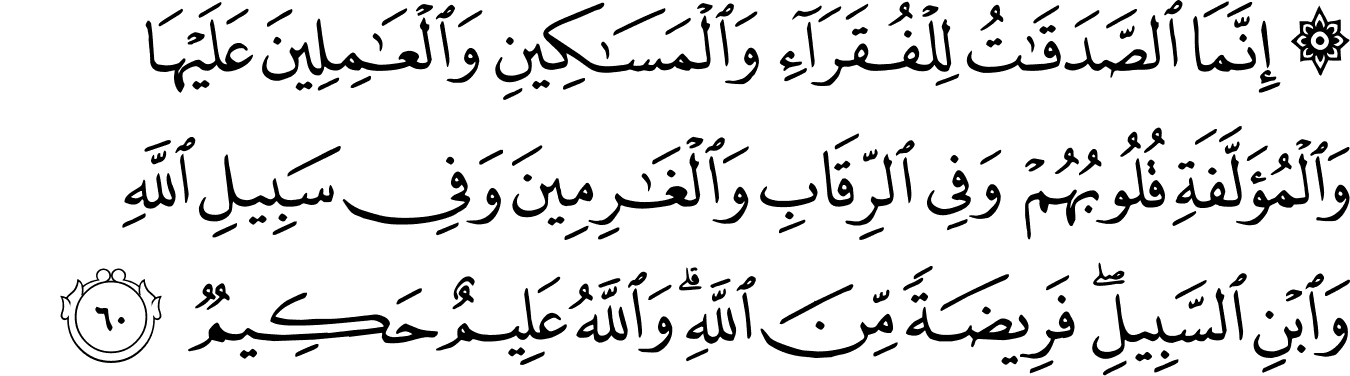
“Zakah expenditures are only for the poor and for the needy and for those employed to collect [zakah] and for bringing hearts together [for Islam] and for freeing captives [or slaves] and for those in debt and for the cause of Allah and for the [stranded] traveler – an obligation [imposed] by Allah . And Allah is Knowing and Wise.” [Surah At-Tawbah: 9;60]
The argument goes that since Islam itself recognizes that those who collect charitable funds may be compensated from those funds, there is nothing wrong with paying fundraisers a percentage.
This argument confuses categories in a way that does not survive scrutiny. The Quranic provision for zakat collectors envisions fair compensation for the labor of collection and distribution. It does not create a percentage-based commission structure that scales infinitely with the amount collected. There is a fundamental difference between paying a worker a fair wage for their time and effort, and paying an agent 29% of every dollar that passes through their hands. The classical jurists who discussed the share of the amil (collector) debated appropriate limits precisely because they understood the moral hazard of allowing collectors to enrich themselves disproportionately from funds intended for the poor.
This distinction was recognized not only in theory but in lived institutional practice. Maulana Ashraf ʿAlī Thānwī explicitly condemned the commission model in the context of religious fundraising. He wrote1:
“Madāris kī ṭaraf se kamīshan par safīr rakhna sharṭ fāsid hai.”
“Appointing an agent on a commission basis on behalf of madrasas is an invalid condition.”
In the terminology of fiqh, sharṭ fāsid is not a mild critique. It denotes a legally defective contractual condition that corrupts the agreement itself. In other words, the problem is not merely optics or excessiveness; the very structure of tying religious fundraising to a percentage incentive is considered unsound because it distorts intention, creates exploitation risk, and undermines the trust inherent in charitable transactions.
Islamic contract law (fiqh al-mu’amalat) provides additional clarity. The principles governing hiring and employment (ijara) emphasize that compensation must be clearly agreed upon, transparent to all relevant parties, and free from gharar (ambiguity, uncertainty, or deception). When a donor gives sadaqah or zakat believing that their contribution is going to feed a starving child, and a significant undisclosed portion instead goes to compensate a fundraiser, the element of gharar is plain. The donor did not consent to that allocation. They were not informed. The transaction, as presented to them, was misleading.
There is a broader principle at stake as well. Muslims are called to a standard of honesty and transparency in financial dealings that should exceed, not fall below, the ethical norms of the societies in which they live. If the mainstream nonprofit world has concluded that commission-based fundraising is unethical, the Muslim community should be leading the conversation, not trailing behind it, and not exploiting the gap.
The Crisis of Knowledge
Most Muslim donors have absolutely no idea any of this is happening. They see appeals for Gaza relief, Yemen famine aid, and Syria orphan care. They give because they want to help desperate people. The campaign page doesn’t mention commissions. The masjid announcement doesn’t mention commissions.
The emotional context makes this even worse. These appeals weaponize human suffering and religious duty. Images of dying children. Stories of families fleeing genocide. Reports of famine and disease. Donors give out of religious obligation and emotional urgency, often during Ramadan when they’re fasting and spiritually heightened. Taking undisclosed percentage cuts during these campaigns—campaigns that exploit the most vulnerable human beings on earth to open wallets—should shock our collective conscience.

“Donors give from a place of spiritual obligation and moral anguish. To exploit that emotional state while concealing how their money will actually be divided is a betrayal of trust that carries weight in this life and in the next.”
Technically, some of this information is discoverable. IRS Form 990 filings (the same documents that brought the Beydoun arrangement to light) require that nonprofits disclose payments to professional fundraisers. But these filings are dense, technical documents buried in databases that ordinary donors never access. The information is legally available in the way that a needle is technically available in a haystack. No one browsing a crowdfunding campaign page encounters a disclosure that reads: “28.7% of your donation will go to compensate the fundraiser promoting this campaign.”
At the masjid level, the opacity is even worse. When a traveling fundraiser stands at the minbar during the last ten nights of Ramadan and delivers a devastating account of children dying in a war zone, and then the donation requests are made, there is no announcement that the speaker will be taking 15% or 30% of whatever is collected. The congregants who give, often sacrificially, often from modest means, often with tears in their eyes, are making a decision based on incomplete information. They believe their money is going to the cause. They are not told otherwise.
The emotional context makes this worse. These fundraising appeals are not selling magazine subscriptions. They are tied to the most visceral human suffering: genocide, famine, orphaned children, bombed hospitals. Donors give from a place of spiritual obligation and moral anguish. To exploit that emotional state while concealing how their money will actually be divided is a betrayal of trust that carries weight in this life and in the next.
The Reform We Need
The path forward requires action from institutions that already exist and already claim moral authority over the Muslim community’s collective life.
– National Muslim organizations, fiqh councils, and nonprofit networks must develop and publish explicit ethical fundraising guidelines. These guidelines should be modeled on the AFP Code of Ethical Standards and should contain clear, unambiguous language banning commission-based compensation for fundraisers. Fundraisers should be paid fair salaries, flat fees, or hourly rates for their work, never a percentage of the money they raise. This is the established standard in every other sector of professional fundraising, and it is long past time for the Muslim nonprofit world to adopt it.
– Every fundraising effort must include mandatory disclosure at the point of donation. Whether online or at a masjid, donors must be told before they give how much of their donation will go to fundraising costs, administrative overhead, and third-party compensation. This information should be prominently displayed, not buried in fine print or tax filings that no one reads. Informed consent is a basic Islamic requirement for a valid transaction.
– Masjid boards must ban commission-based fundraisers and publicly disclose the flat fee that they pay visiting fundraisers. The figure should be announced to the congregation before the appeal begins. It should not be buried in obscure filings or hidden away. If a fundraiser is being paid 20% of whatever is raised, the people writing the checks deserve to know that before they write them.
– Crowdfunding platforms serving the Muslim community must require charities to disclose fundraiser compensation arrangements on the campaign page itself. Donors should not need to file FOIA requests or dig through ProPublica databases to learn how their money is being allocated. The information should be right there, next to the donate button.
– Every Muslim nonprofit should publish an accessible, plain-language annual report showing how funds were allocated. Not just an IRS Form 990. Instead, a clear, readable document that any donor can understand, showing what percentage of funds went to programs, what went to administration, and what went to fundraising compensation.
Why This Hasn’t Happened
There is an uncomfortable reason why these reforms have not already happened.
Many individuals who sit on the boards of major Muslim organizations, who speak at their conventions, who would be tasked with writing these ethical guidelines, are themselves participants in commission-based fundraising. Some are the most prominent voices in Muslim America.
The conflict of interest is structural. The people with authority to reform the system are often the ones profiting from it. Asking them to write guidelines that ban commission-based fundraising is like asking someone to vote for a pay cut. It is not impossible; people of conscience do act against their own financial interests, but it requires acknowledging why this conversation has been avoided for so long.
This is also why reform cannot be left to insiders alone. The donor community, the millions of ordinary Muslims who fund these organizations with their charitable contributions, must demand change from below. Donors should ask direct questions before giving: How is the fundraiser being compensated? What percentage of my donation goes to the cause? Will you show me a breakdown? If the answers are evasive, the donor should give elsewhere.
Scholars and community leaders who are not entangled in the fundraising circuit bear a particular responsibility to speak on this issue clearly, without hedging, and without worrying about alienating colleagues who benefit from the current arrangement. The community needs voices that are not compromised by the very practice being examined.
The Trust We’re Breaking
Every dollar a Muslim donates in the name of Allah is an amanah. It is a trust placed in the hands of the charity, the platform, the fundraiser, and every person in the chain between the donor’s intention and the beneficiary’s relief. The Quran warns, in Surah Al-Anfal:
“O you who believe, do not betray Allah and the Messenger, nor betray your trusts while you know.” [Surah Al-Anfal; 8:27]
The Beydoun controversy is not one person’s scandal. It is a window into a system that has operated for years without adequate scrutiny, accountability, or transparency. The question is not whether Khaled Beydoun personally did or did not receive $2 million. The question is how many other arrangements like this exist across the Muslim nonprofit landscape, undisclosed, unexamined, and unknown to the donors who fund them.
Ramadan is days away. Millions of Muslims will open their hearts and their wallets in pursuit of Allah’s Pleasure, giving to causes they believe in with a sincerity that should humble anyone involved in the process of collecting and distributing those funds. They deserve to know where their money is going. They deserve honesty. They deserve a community that holds its institutions to a standard worthy of the trust being placed in them.
Donors: ask questions before you give. Masjid boards: adopt transparent policies and disclose what you pay fundraisers. Existing Muslim institutions and fiqh councils: draft and publish clear ethical guidelines, even when doing so is inconvenient for those in your own ranks. Scholars: speak on this without equivocation, even if doing so costs you your speaking fees.
The time for this conversation was years ago. The next best time is now, before another Ramadan passes with millions of dollars flowing through a system that betrays both the donors and the beneficiaries.
Related:
– Zakat Eligibility of Islamic Organizations
– This Article Could be Zakat-Eligible