
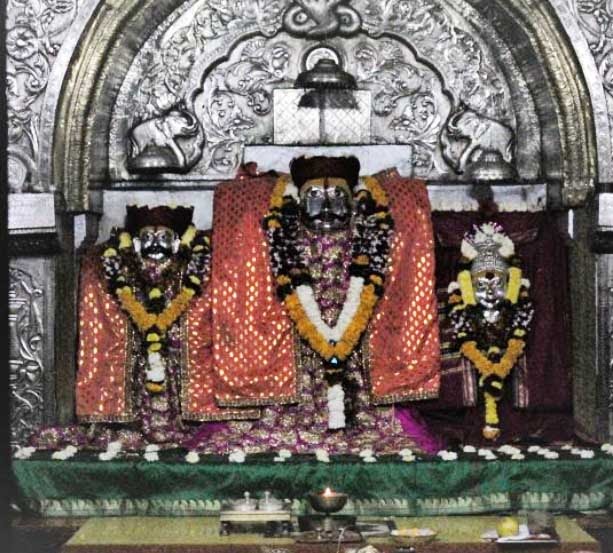
Kalbhairavnath Mandir Saswad: A Divine Seat of Bhairava and Nath Panth Heritage
Saswad Bhairavnath Mandir, located near Pune in Maharashtra, is an ancient and spiritually powerful temple dedicated to Kal Bhairav, a fierce and protector form of Lord Shiva. The temple is also known as Kalbhairavnath Mandir and holds a significant place in the Nath Panth, Shaiva traditions and warrior cults of Maharashtra.
One of the most remarkable features of this temple is the presence of three deities on a single pedestal inside the garbhagriha (sanctum)—Bhairavnath, Jogeshwari and Kalbhairava, making it unique among Bhairava shrines of India.
Historical Roots of the Temple
Connection with Shivaji Maharaj
Local tradition narrates that during the battle of Khalad Belsar, the horse of Chhatrapati Shivaji Maharaj suffered a venomous snake bite. Seeking divine guidance, Shivaji Maharaj visited the earlier shrine of Bhairavnath located at Girme Ali in Saswad.
It is said that he vowed to build a full temple if divine grace saved him and his horse. The vow was fulfilled when the horse recovered, and Shivaji Maharaj commissioned the construction of a new and larger temple.
Later, Ahilyabai Holkar, known for restoring several ancient temples across India, further expanded the complex by adding stone platforms, boundary walls and living spaces for devotees and ascetics.

Sacred Story of the Temple Drums
A unique aspect of the temple is the presence of large traditional kettledrums. According to temple tradition, these drums were once brought to Saswad by Mehendale Sardar for personal use in his palace.
However, objections were raised at the Peshwa court in Pune, claiming that the drums symbolized honour reserved only for deserving warriors or temple deities. To avoid dispute, Mehendale shifted the drums to the Bhairavnath temple, declaring them as offerings of devotion.
Since then, the drums remain part of temple identity and ritual culture.
Unique Features of Saswad Bhairavnath Mandir
Presence of Twin Forms of Bhairava
This temple is exceptional because it houses images of both:
-
Bhairavnath
-
Kal Bhairavnath
Such a dual presence is rare and deeply rooted in the Nath tradition, where Bhairava is seen not only as a deity but also as a spiritual guardian of yogic paths.
Pilgrimage of Nathpanthi Sadhus
Every twelve years during the Nashik Kumbh Mela, thousands of Nathpanthi devotees known as Navnath Jhundi visit this temple. They stay for two days, performing rituals, yogic sadhana and communal worship, turning Saswad into a hub of ascetic energy.
Religious Belief and Worship Practices
Ganapati is revered as the first deity within the temple complex, reinforcing the tradition of beginning every auspicious act with his blessings.
Outside and around the main sanctum, idols and shrines dedicated to various deities are present, including:
Under an ancient banyan tree outside the protective wall of the temple stand additional shrines of Ganapati and two Shiva Lingas, believed to be charged with strong spiritual vibrations.
Spiritual Significance of Lord Bhairav
Lord Bhairav is revered as the guardian of dharma, boundaries and sacred spaces. In many Shaiva scriptures he is described as fierce yet compassionate, protecting devotees from negative energies and guiding them towards truth.
A relevant verse from Shiva Purana states:
“One who worships Bhairava with devotion, finds protection from fear and obstacles, and walks firmly on the path of righteousness.”
(Shiva Purana, Rudra Samhita)
This reflects the deep belief that Bhairavnath is not merely worshipped but relied upon as a divine protector.
Why the Temple is Considered Special
-
Rare triple–deity sanctum
-
Historic association with Shivaji Maharaj
-
Continued Nathpanthi pilgrimage tradition
-
Presence of sacred ritual drums
-
Powerful spiritual energy and heritage architecture
Together, these elements make Saswad Bhairavnath Mandir not just a temple, but a living cultural and spiritual landmark of Maharashtra.
The Saswad Bhairavnath Mandir near Pune stands as a testimony to devotion, history and timeless Shaiva worship. With its sacred legacy connected to warriors, ascetics and saints, the temple continues to draw devotees seeking protection, strength and spiritual awakening.