

Specialized spent years chasing the same obsessive idea: that the perfect ebike is one that doesn’t feel electric. With the new Turbo Levo R, the company argues it’s finally closed the gap – packing one of the most powerful motors in the trail-bike category into a chassis that, in its lightest configuration, tips the scales at 18.8 kg (41.4 lb).
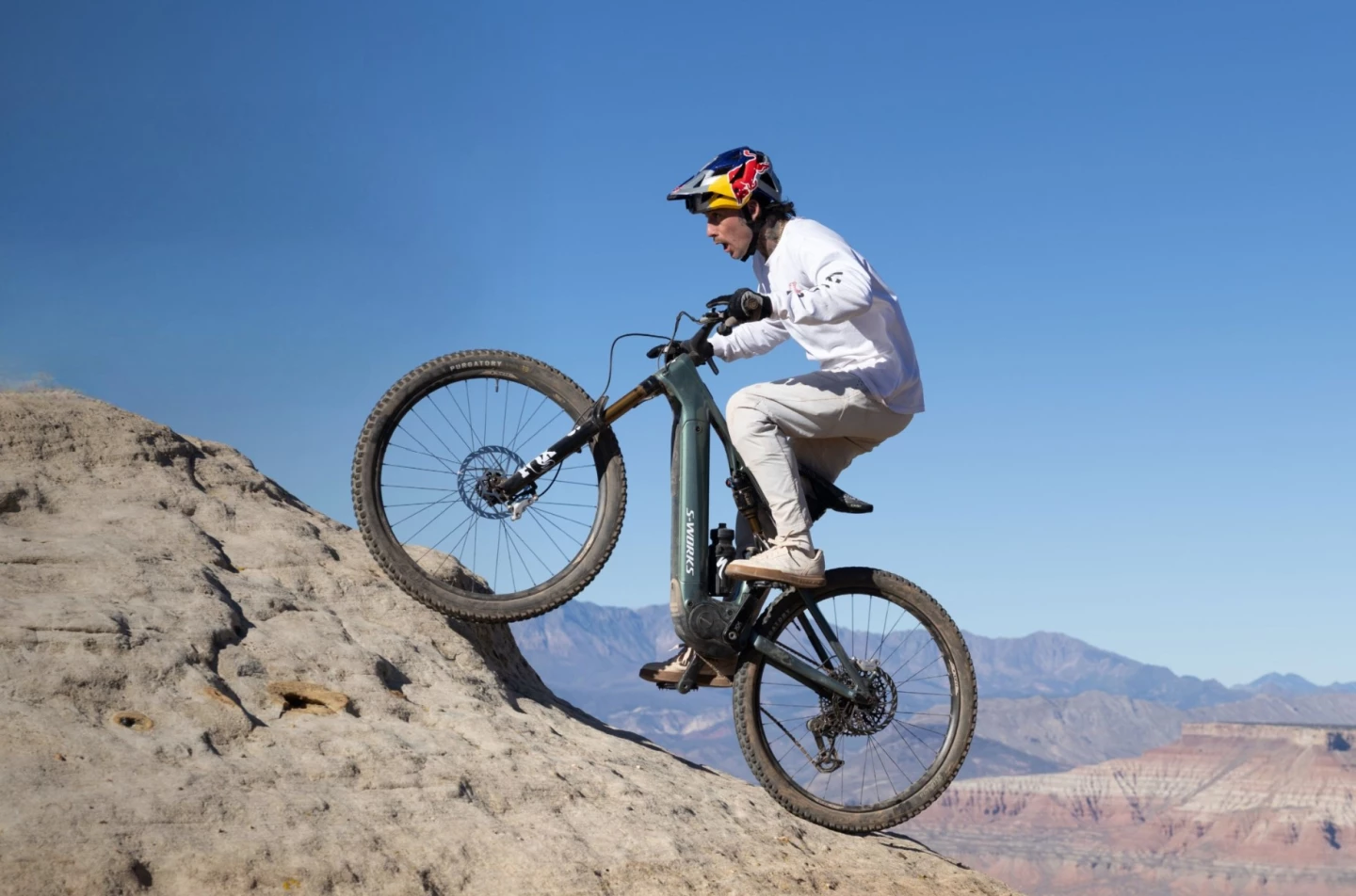
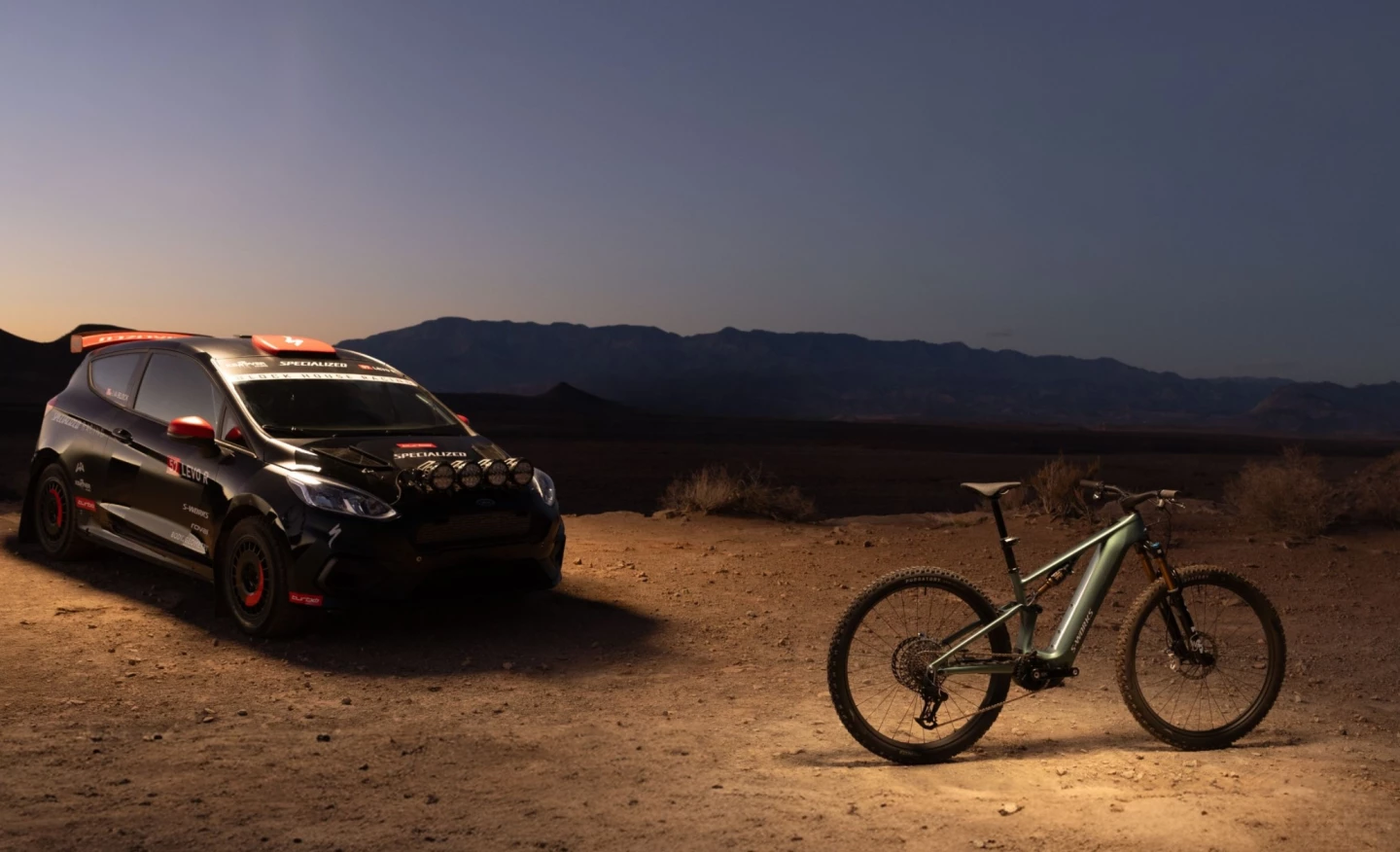
The “R” in the new Levo models stands for Rally. Specialized is leaning hard into that framing, positioning the Levo R as the category’s equivalent of a rally car, versus the burlier Levo 4, which the company likens to a Ford Raptor – built for all-terrain capability rather than outright speed. But they are different tools for different adventures. The distinction starts at the frame: the Levo R’s carbon chassis is 530 g (1.17 lb) lighter than its sibling’s, with a geometry that lowers the center of gravity and shifts the rider forward. The result, on paper, is a bike that climbs quickly and descends even quicker.
Specialized
The headline figure is 850 watts of peak power, but what makes Specialized’s new Turbo S-Works 3.1 system genuinely interesting is how it manages that output. Rather than delivering a fixed assist curve, the motor reads cadence (how fast your legs are spinning) and wheel speed in real time, adjusting power delivery moment to moment. Slow down for a loose, rocky corner and it dials back to maintain traction; open up on a fast straight and it smooths the surge to keep the bike predictable.
In Specialized’s own controlled testing, the closest competitor failed to complete a demanding technical climb twice as often as the Levo R did. Independent analysis tells a slightly different story on raw power: the MAHLE M40 and the Avinox M1 reportedly edge ahead in sheer output, with up to 1,200 W and 120 Nm of torque (a measure of rotational force). The S-Works variant of the 3.1 produces 111 Nm and a peak 850 W, while the standard version, fitted to the Expert and Comp models, delivers 105 Nm and 810 W.
Where Specialized does appear to lead the class is in acoustics. The 3.1 is notably quiet – and if you’ve ridden an e-MTB that hums like a small appliance, you’ll know why that matters. The CoreCoat encapsulation (a protective coating around the motor’s copper windings) helps dissipate heat and dampen mechanical noise. The metal gears – double the size of those in the previous generation and treated with a surface-hardening process Specialized calls HardDrive – resist the thermal expansion that makes motors noisy and sluggish at the end of a long descent. The gear mechanism is also mechanically isolated from the drivetrain-side housing to eliminate vibration transfer.
Specialized
The rear end is managed by a system called GENIE, built into a Fox FLOAT shock with a tuning developed specifically for rally-style riding. The engineering insight here is a variable spring rate: GENIE behaves like a traditional coil spring. It’s predictable and linear through the first 70% of the suspension’s 130 mm (5.1 in) of travel, then stiffens sharply in the final 30% to resist bottoming out on big hits. According to Specialized’s data, at 842 Newtons of force at the rear wheel, GENIE delivers 17.3% more usable travel than a conventional Fox FLOAT – 95 mm (3.7 in) versus 81 mm (3.2 in).
Up front, the fork delivers 140 mm (5.5 in) of travel, and 29-inch wheels round out a chassis designed to move efficiently in both directions – light enough on the way up, composed on the way down.
Regarding the battery, Specialized doesn’t force a choice between range and weight. The standard 840-Wh pack is rated for 3.75 hours of riding in Eco mode for an 80-kg (176-lb) rider on a route with significant climbing. A bolt-on 280-Wh Range Extender bumps total capacity to 1,120 Wh and approximately 5 hours of riding. Weight-conscious riders can opt for a 600-Wh pack instead – which is also where the 18.8 kg (41.4 lb) minimum weight figure comes from. All three packs carry an IP67 waterproof rating, meaning they’ll handle rain, mud, and the occasional stream crossing without complaint.
The geometry is adjustable in the field, without tools. The head angle (how steeply the fork meets the ground – steeper means twitchier steering, slacker means more stability at speed) offers three positions. The bottom bracket height (where the pedals sit relative to the ground) adjusts between two settings, and the chainstay length (the distance from the pedal axle to the rear axle, which governs stability and handling feel) changes via a flip chip. The practical upshot: riders can tune the bike to their terrain in minutes rather than adapting their riding style to a fixed setup.

Specialized
Another strong point of the Levo R is its digital integration. The MasterMind T3 – a 4.5-cm (1.78-in) display mounted on the stem – provides a live read on power output, assist level, and range. MicroTune lets riders nudge assistance up or down in 10% increments on the fly, and Dynamic MicroTune automatically unlocks full power during hard accelerations even when running in a restricted mode. The companion app integrates with Strava and Garmin, includes an anti-theft layer via Apple Find My, and supports over-the-air firmware updates.
The Levo R launches in Europe exclusively for now, with pricing that reflects the caliber of components on offer. The S-Works tops the range at €13,999 (which converts to US$16,500), the Expert sits at €9,999 (US$11,785), and the Comp enters at €7,999 (~US$9,430). No timeline has been announced for a broader global rollout.
Source: Specialized