
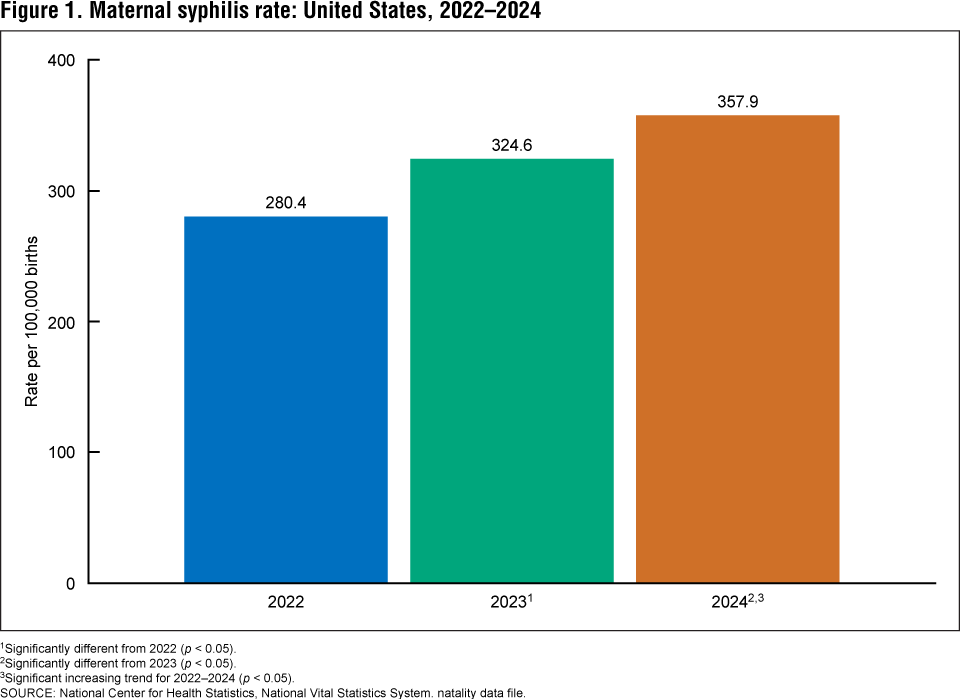
Maternal syphilis rates are higher than they’ve been since the early 1990s according to a new report from the National Center for Health Statistics (NCHS). The report finds that the syphilis rate among pregnant women went up 222% percent between 2016 and 2022 and another 28% between 2022 and 2024. Syphilis is treatable even in pregnancy if a woman knows she has it. This alarming increase shows too many pregnant women are not being screened.
Syphilis is a sexually transmitted infection caused by the Treponema pallidum. It can be passed during vaginal, anal, or oral sex. It can also be passed from a mother to an infant during pregnancy or delivery. This is referred to as congenital syphilis. Congenital syphilis can cause miscarriage, stillbirth, and even infant death. Babies born with syphilis can face lifelong medical issues.
Syphilis often has no symptoms in its early stages. For many people, the only way they know they have is to get tested. Syphilis can be detected by a simple blood test. Women who have access to prenatal care are usually tested for syphilis at their first pregnancy check-up. In fact, most states mandate syphilis screening at that first prenatal appointment. Some states also require testing during the third trimester and at the time of delivery. Health care providers may recommend this even in states where it is not required.
Unfortunately, too many people in this country do not have access to prenatal care. Financial issues like lack of insurance or high deductibles can prevent some women from getting care. Others may have trouble with transportation or taking time from work. Many rural areas don’t have local pregnancy care providers and hospitals in those areas are closing their maternity wards. One study found that in the United States, 35% of women of reproductive age (usually defined as 15-44) live in an area without a maternal health provider. These issues are most likely to impact low-income women, women of color, and women in rural areas.