
The DNC is allegedly hiding a report showing that Kamala Harris’s Gaza policy helped cost her the 2024 election. But that report won’t tell us anything we don’t already know.
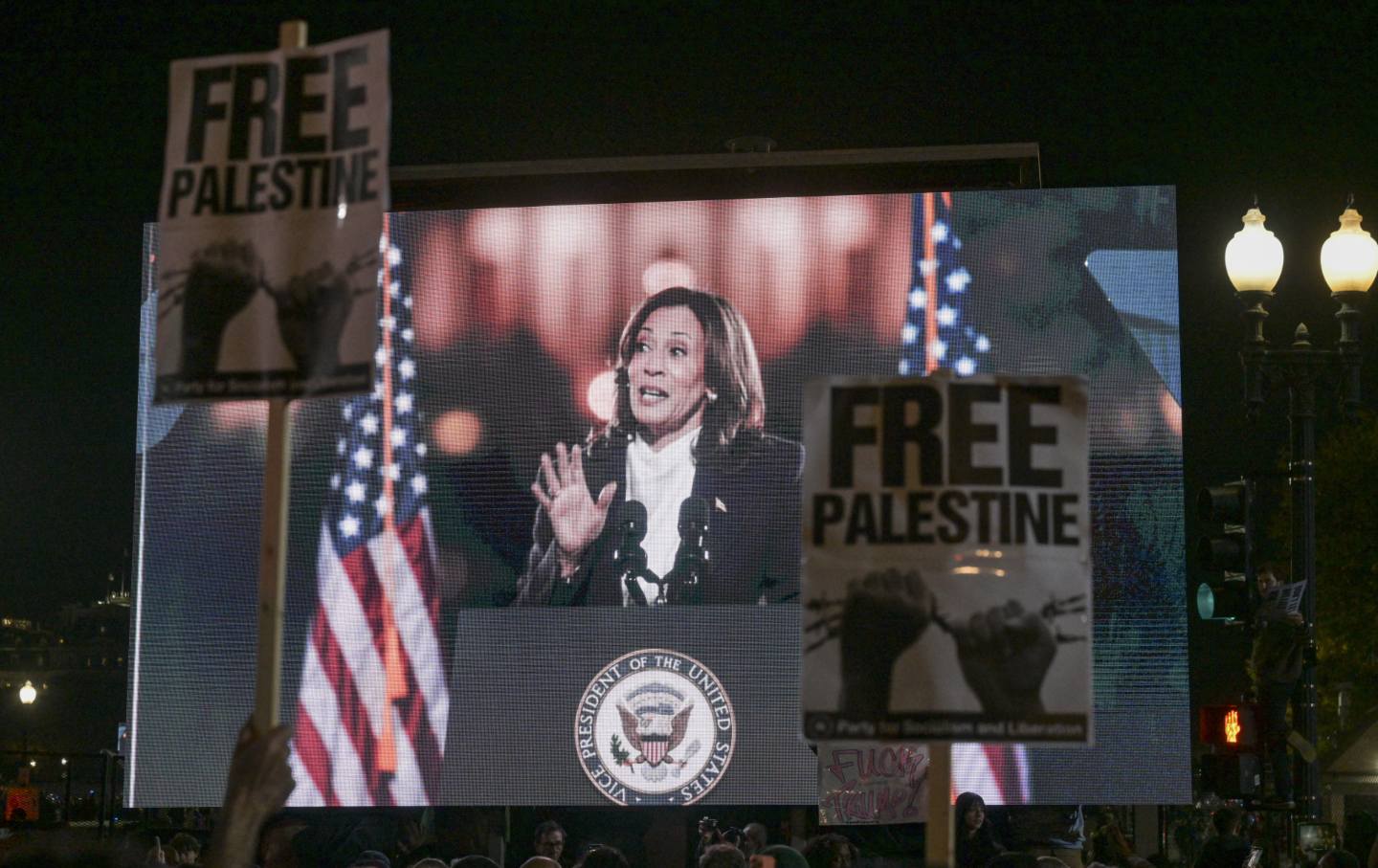
Kamala Harris, campaigning in Washington, DC, faces protests from hundreds of people expressing disapproval of her administration’s Gaza policy, on October 29, 2024.
(Celal Gunes / Anadolu via Getty Images)
Amini-brouhaha has erupted over whether the Democratic National Committee has buried a so-called “autopsy” report into Kamala Harris’s loss in the 2024 presidential election. There’s a fear that the report isn’t being released because it suggests that Harris’s defeat was due to her refusal to break with Joe Biden’s disastrous support for Israel’s sustained genocidal assault on Palestinians in Gaza. As a result, some groups are charging the DNC with a cover-up and demanding that the autopsy report be released.
I’ve been on the DNC for more than three decades. I served 16 years on the party’s executive committee and 11 as co-chair of its resolutions committee, and in 2016 I was appointed to serve on that year’s convention platform drafting committee. Finally, this past year, I was appointed by DNC chair Ken Martin to serve on a Middle East Working Group he created to help us sort out how our party deals with America’s policies in the Middle East.
I am no stranger to how the party handles—or, more accurately, avoids handling—issues involving Palestine/Israel. In 1988, I spoke from the Democratic National Convention podium in Atlanta to introduce Jesse Jackson’s platform plank calling for “mutual recognition, territorial compromise, and self-determination for both Israelis and Palestinians. For my efforts, I was asked to withdraw from the DNC, because “party leaders” were concerned that Republicans would use my membership and support for Palestine as an issue in the campaign. (I was reinstated in 1993). On eight occasions over the years, I testified that the party needed to acknowledge Palestinian rights. Having argued and lost this many times, I am well aware of the party establishment’s fear of addressing Palestine.
But I believe that the fight over this autopsy report is not where those of us who support Palestine, and who know that leading Democrats have been on the wrong side of this issue for far too long, should be focusing our energy.
I say this because any report on the Democrats and Gaza would only tell us what we already know: that voters, especially Democrats and independents, are fed up with blind support for Israeli policies, and that too many establishment Democrats and political consultants are blind to this reality. We have years of polling and election data to prove this. We don’t need another report to confirm it.
A wide range of polls have established just how extensive the erosion of US public support for Israel is. The most comprehensive recent survey about this was conducted by The Economist in August 2025. Here’s some of what they found:
• Forty-three percent of voters favor decreasing military aid to Israel, with only 13 percent wanting to see an increase in such aid. Among Democrats, the decrease/increase ratio is 58 percent to 4 percent. Among independents, it’s almost the same.
• Is Israel committing genocide? Forty-four percent of all voters say “yes” and 28 percent say “no.” Among Democrats, the ratio is 68 percent “yes” and just 8 percent “no.” And among independents, it’s 45 percent to 19 percent.
Other polls show the same thing. Just last week, Gallup reported that, for the first time ever, more Americans say they sympathize with Palestinians than with Israelis. And voters are repeatedly affirming that they are more likely to support candidates who advance such positions and less likely to vote for those who defend Israeli policies and want to maintain current levels of military aid to Israel.
Current Issue

As if to provide further evidence of this shift, with just months before the midterm elections, it’s striking to note that more than three dozen congressional candidates have already declared their intent to reject PAC contributions from AIPAC and other pro-Israel groups. This includes a number of sitting members of Congress, all of whom have previously been strong supporters of Israel and received millions of dollars from pro-Israel sources, including PACs and dark-money independent expenditures.
While these changes in attitudes toward Israel have been brewing for several years now, they were dramatically accelerated by Israel’s assault on Palestinians in Gaza. While it is true that the horrors accompanying Hamas’s October 7 attack generated an initial flush of support for Israel, as the toll of Palestinian civilian casualties grew and the extent of Israel’s gratuitous mass devastation of Gaza became clear, support for Israel collapsed.
This was clearly in evidence in the 2024 presidential contest. Post-election analyses showed that Vice President Kamala Harris lost the backing of a wide range of Democratic and independent voters because she refused to make a decisive break with President Biden’s support for Israel. Instead of listening to her own instincts and being more critical of Israeli practices and more vocal in support of Palestinian rights, she listened to the establishment political consultants who cautioned against “rocking the boat” on this “sensitive issue.”
The consultants, campaign operatives, and media analysts didn’t get the changes that were afoot then, and they still don’t get it now. They are still pretending that Israel’s genocidal war has not completely transformed US politics around the Middle East. But change is happening with or without them.
It used to be said that criticism of Israel was akin to touching the “third rail” in American politics—avoid it or get burned. In a way, it still is, but in reverse. Support for Israel was once the sine qua non for candidates for Congress. Polls now show that voters are less likely to vote for candidates who refuse to criticize Israel or who take money from pro-Israel PACs.
As we get closer to the 2026 midterm elections, we can expect more candidates to publicly distance themselves from Israeli policies. We can also expect that pro-Israel groups will panic and up the ante by pouring tens of millions into defeating candidates who are critical of Israel. My sense is that this may backfire, as it did with the recent special House election in New Jersey, because in 2026, what will be controversial is support for Israeli policies and pro-Israel campaign contributions, not the opposite. The sooner the analysts, consultants, and media figure that out, the better our politics will be.
The DNC autopsy should be released. But it’s more important that we work to deepen the change of the last few years. Our attention might better be focused on supporting candidates who are refusing to accept pro-Israel PAC contributions and running on platforms challenging the failed policies of the past. We should also join the growing number of Democratic National Committee members who are calling on the party to ban dark money in elections. This is an instance where looking forward, not backward, will help to bring the change we need—and take the party to where Democratic voters already are.
More from The Nation

Democratic nominee James Talarico is getting national media attention, but the real story is sky-high voter turnout, even amid GOP bids to suppress balloting
Ana Marie Cox
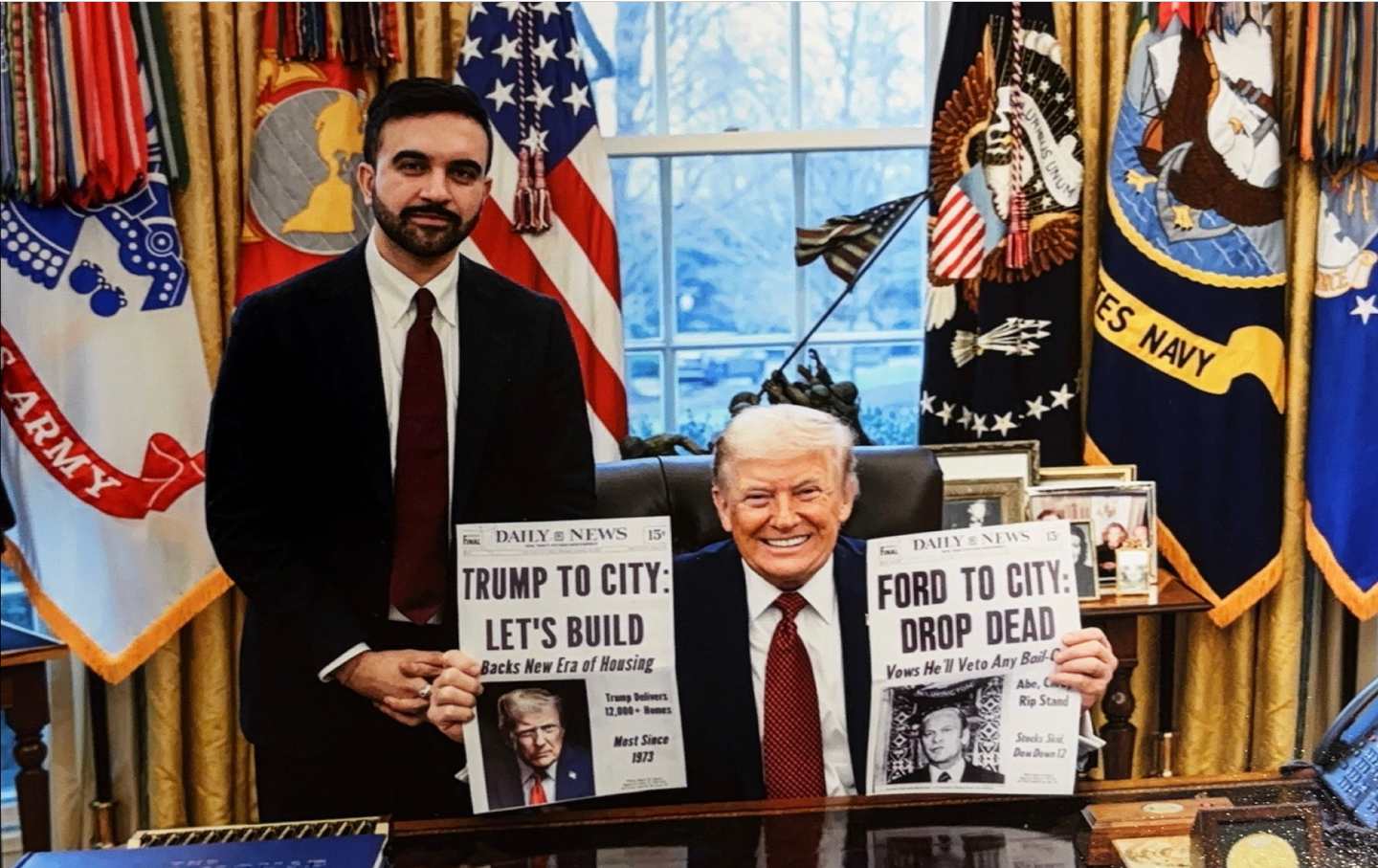
By pandering to the president’s vanity, the New York mayor reinforced Trump’s image as a strongman commanding deference—an especially bad look on the eve of Trump’s war with Iran
D.D. Guttenplan

With plans for city-owned grocery stores and a focus on affordability, the new mayoral administration offers fresh hopes of successfully confronting the food crisis among students…
StudentNation
/
Nikole Rajgor