
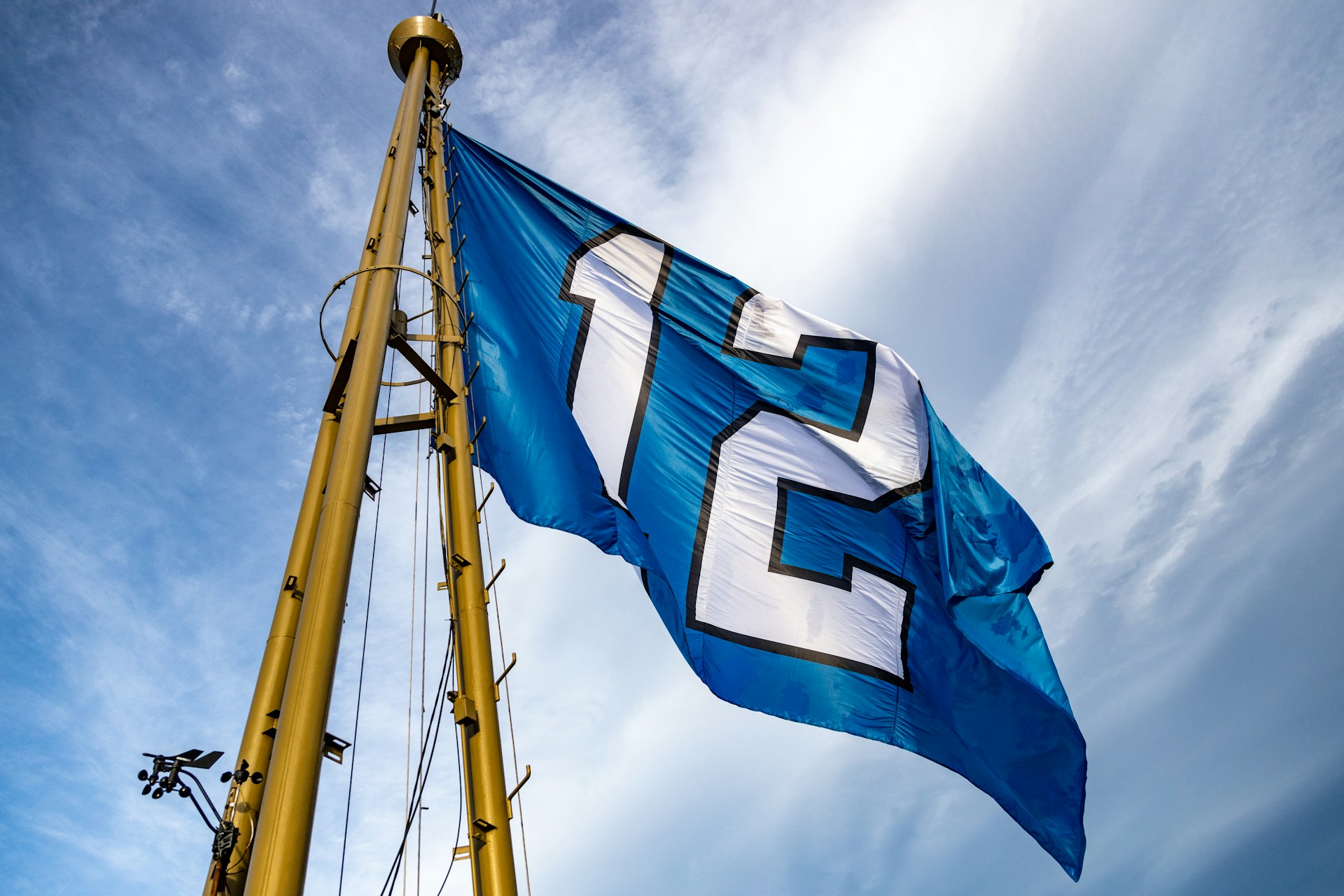
The Seattle Seahawks won the Super Bowl, as we all know. Numerous video recaps of the game, a wide variety of articles, and a lot of insights from observers, sports analysts, and Monday-morning quarterbacks focused on the Seahawks formidable on-field strengths.
So, let’s segue to The New York Times, which wrote an intriguing story. It was observed that the Seahawks’ win is also based on building a culture that contemporizes its heritage. Contemporizing a heritage is, actually, a foundational principle of brand-business-building management: creating and activating a brand-business-driven culture that embraces and preserves its past while staying relevant in a modern world.
This article is part of Branding Strategy Insider’s newsletter. Join the world’s smartest marketers and subscribe here for actionable insights delivered directly to your inbox.
A brand’s culture has provenance. Provenance is a brand’s history, its origin story, or its record of authenticity and quality. If you have an interest in etymology or love crossword puzzles, the word provenance comes from Latin for “come from or stem from.”
The provenance of a brand-business is its consistent, motivating, relevant, and distinctive heritage. Provenance, whether historical or newly formed, acts as a foundational source of strength. Provenance is uniquely past, present, and future. Provenance underscores a past of authoritative authenticity, a present of genuine engagement by employees and customers (fans, sponsors, other stakeholders) with a robust, principled, trustworthy vision for the future.
Basically, the power of provenance is not about preserving everything from the past; it is about preserving the best of the past for a best-performance present and future. This is the power of brand provenance at work.
According to The New York Times’ article, the Seahawks’ victory has a backstory of brand-building culture that played a critical role in the team’s success. As The Times reported, “… the story is also a story about culture… one both old and new.” Continuing, the article reports that when Jody Allen, the Seahawks controlling owner, first interviewed Coach Mike Macdonald, she said that she wanted to “… inject new ideas while building on the (Seahawks) culture.”
In brand-building, there is always a paradox between old and new. The goal is to make old new. It is not about balancing heritage and relevance. It is about maximizing heritage and relevance.
Maximizing a paradox is much more difficult than balancing. However, brands that maximize contradictory benefits – and do not compromise contradictory benefits – win. It is not trivializing to say that Diet Coke won because it tasted great and had no calories. At the time, diet sodas tasted awful. Caloric sodas tasted fabulous. Miller Lite managed the same paradox by delivering great beer taste with fewer calories. Apple made confusing technology easy. Gore-Tex makes breathable, waterproof fabrics. The Gap made it possible to dress like an individual while still looking like all your friends. Chipotle makes large, calorie-dense offerings healthy and sustainable by serving Food With Integrity. Halo Top ice cream delivers a seemingly healthier alternative by being lower-calorie and higher-protein… even though it contains sugar and sugar alcohols.
Working with IHG (InterContinental Hotels Group) on the Holiday Inn brand, our two-person team learned that Holiday Inn had a terrific provenance. Founded by Kemmons Wilson in 1952, Holiday Inn was an innovative brand. Which is actually amazing since the 1950’s was an era of sameness: Levittown, Father Knows Best, dads driving off to work, leaving aproned moms at home, everything 1960’s youth rebelled against. In the 1950s, flower power was Dad bringing home a bouquet for Mom. And yet…
Holiday Inn’s provenance was innovation on behalf of traveling families. At the time, hotels were either ritzy or the stuff of noir movies. Holiday Inn altered the reality. Holiday Inn “democratized family travel.” For literally hundreds of years, family travel was only for the very wealthy. Holiday Inn changed that.
Anytime you stay at a hotel, remember this: the color TV in your room and the swimming pool out back were ideas first found at Holiday Inn. In the United States, Holiday Inn invented the computerized reservation system. By 1972, Holiday Inn became the “largest online civilian computer system in the world.”
Holiday Inn’s purpose was and continues to be: “To create a great hotel brand that is warm and welcoming for families worldwide.” This will be as meaningful decades from now as it was 74 years ago. Why? Because the brand continues to contemporize its heritage in order to stay relevant in our changing world. Even though the Holiday Inn brand has undergone many modernizations, it still maintains its provenance.
The Seahawks are not only building their team with players, but also with a defining culture rooted in their past, present, and vision for the future. Says The New York Times: “(Coach) Macdonald worked with a directive to build on the culture with new ideas.”
When speaking of brand culture change, the reference is to generating a brand-business-driven mind-set and management approach that takes hold throughout the entire organization. Culture matters. Big time.
Culture change does not need to involve a massive redo. With the Seahawks, the team was coming out of the Pete Carroll era. There was a great deal to build upon. Significantly, a positive, winning culture change requires leadership. The Seahawks have cultural leadership. Leadership provides:
- Inspiration – a motivating vision and goals;
- Education – clarifying why the vision and goals are important;
- Influence – the imperceptible or indirect actions exerted to cause change, think brand business diplomacy;
- Support – providing the tools and training for performance and
- Evaluation -providing regular progress reports based on relevant metrics.
The New York Times’ reporting is fairly clear on how Mike Macdonald and his staff helped to achieve on all five of these leadership criteria.
Mike Macdonald’s leadership directive was both internal and external. Which is, of course, the best way to manage. As with any brand, a provenance affects customers (fans, sponsors, other stakeholders) as well as employees. Internal and external marketing are both essential.
During our work with the first McDonald’s turnaround, the unveiling of “i’m lovin’ it” happened first among the employees worldwide. The Internal marketing brought the million+ McDonald’s employees into action before any external customers had heard of “I’m lovin’ it.” The basic concept was to make McDonald’s familiarity relevant to customers’ lives.
Powerful brand-business relationships derive strength from provenance: a brand’s heritage and its contemporary relevance. In this case, Mr. Macdonald had the principle of a culture “chasing the edges.” (Chasing the edges refers to “relentlessly pursuing small, innovative competitive advantages in every aspect of the organization … from sports science and technology to game planning—to maximize performance. The focus is on constantly seeking marginal gains, not settling for the status quo and staying ahead of the league’s curve.”) And, a mentality of “12 is one, decisive, shocking, and relentless.” (The “12” refers to the team’s fans.)
A brand’s culture affects timing. A proactive, aligned organization can aim for something and achieve it. There are those who believe that big brands are cautious and risk-averse. The belief is that when you are big, you can be too slow to change and too slow to be creative. But that is not true. Large brands can be fast-moving, innovative behemoths. As quoted in The New York Times, “Culture is the most under-utilized, under-leveraged competitive advantage in professional sports.”
As a marketer, your job is to compete. Compete differently with The Blake Project.
This appears to be what the Seahawks are doing. Building an extremely cohesive, powerful brand via an extremely cohesive, powerful, provenance-based culture.
Once attributed to management guru Peter Drucker (but denied by the Drucker Institute), the phrase, “Culture eats strategy for breakfast,” played a role in the Seahawks’ success. The phrase aptly states that a brand’s culture will ultimately determine the success of any strategy, as a poor or less cohesive culture can derail even the best-laid plans. A strong culture built on past and present can overwhelm any strategy, positively or negatively, no matter how great the strategy.
Culture can get in the way of success. Building a brand-business culture aimed at driving enduring profitable growth requires action and learning; the pathway forward.
Contributed to Branding Strategy Insider by Joan Kiddon, Partner, The Blake Project, Author of The Paradox Planet: Creating Brand Experiences For The Age Of I
At The Blake Project, we help clients build brand cultures that underpin competitive advantage. Please email us to learn how we can help you compete differently.
Branding Strategy Insider is a service of The Blake Project: A strategic brand consultancy specializing in Brand Research, Brand Strategy, Brand Growth, and Brand Education