
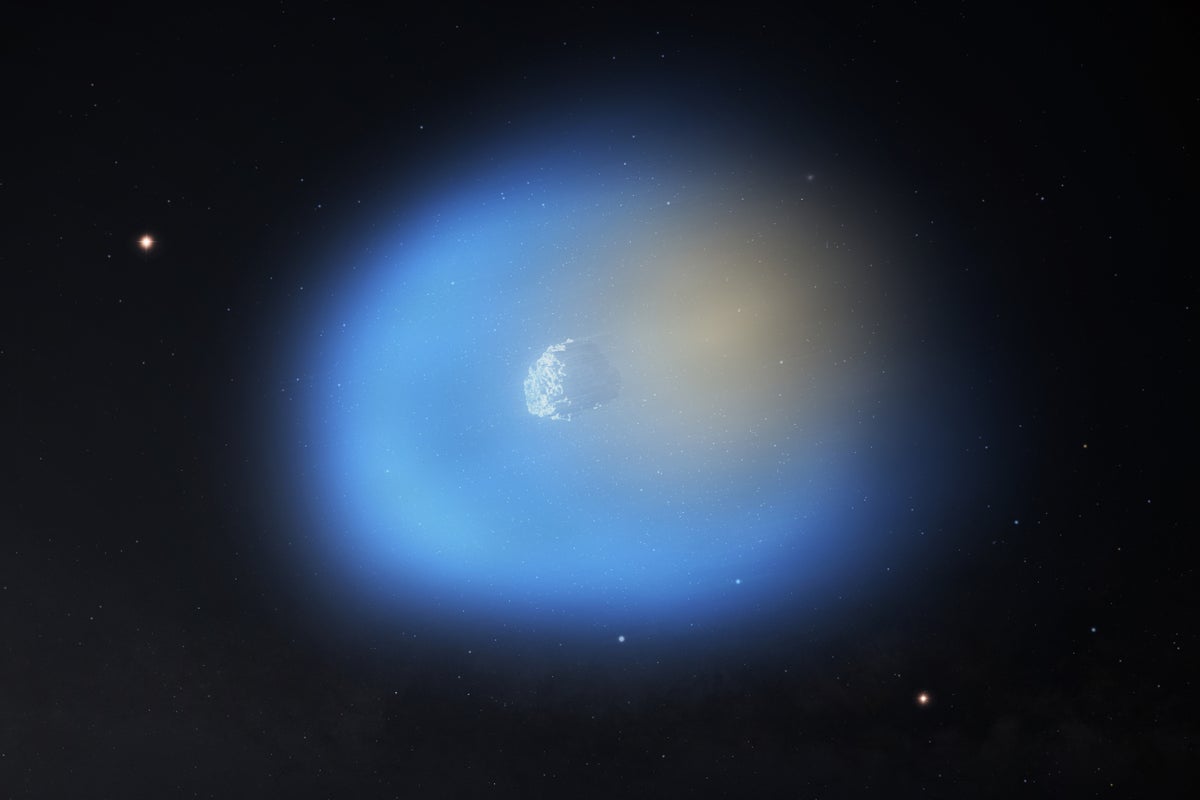

Interstellar Comet 3I/ATLAS is exceptionally alcoholic
This interstellar visitor is “bursting with methanol,” according to one scientist
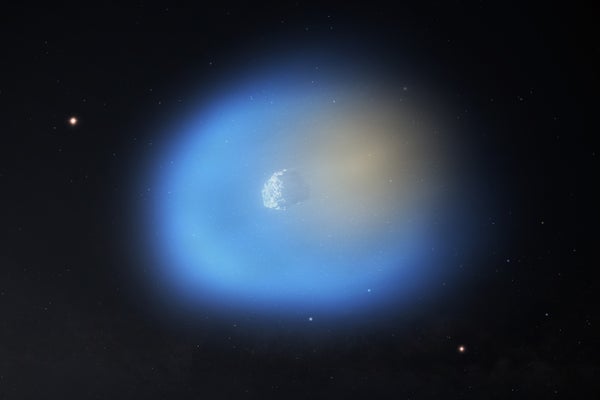
An artist’s impression of Comet 3I/ATLAS is shown as it passes near the sun.
Interstellar Comet 3I/ATLAS is the gift that keeps on giving. A snapshot of space that lies beyond the solar system, it brings clues to our understanding of other stars, other worlds and the galaxy we call home. Just three such interstellar objects have ever been discovered, and by studying each one, we learn more about what’s outside our cosmic neighborhood.
Last year the comet was on course to pass our sun, reaching speeds of more than 150,000 miles per hour at its closest point. That trajectory gave scientists an opportunity to observe the comet in detail, revealing that it is exceptionally alcoholic.
“Observing 3I/ATLAS is like taking a fingerprint from another solar system,” said Nathan Roth, a research assistant professor at American University, in a statement. “The details reveal what it’s made of, and it’s bursting with methanol in a way we just don’t usually see in comets in our own solar system.”
On supporting science journalism
If you’re enjoying this article, consider supporting our award-winning journalism by subscribing. By purchasing a subscription you are helping to ensure the future of impactful stories about the discoveries and ideas shaping our world today.
When a typical comet nears the sun, ice inside the space rock turns to gas, leaving a trail of gases such as carbon monoxide, methane and ammonia in its wake—and sometimes a little methanol. But according to new measurements from the ground-based Atacama Large Millimeter/submillimeter Array (ALMA) in Chile, the interstellar interloper is “heavily enriched” in methanol—indeed, far, far more methanol than astronomers would have expected.
The finding could offer clues to where 3I/ATLAS came from: a question that’s intrigued scientists since the comet’s discovery in July 2025. The research has been posted on the preprint server arXiv.org and is yet to be peer-reviewed.
Meanwhile Comet 3I/ATLAS is still going strong on its journey through our solar system—and our spacecraft are still keeping an eye on it. In February a new image taken by the European Space Agency’s Jupiter Icy Moons Explorer spacecraft revealed that 3I/ATLAS, now past the sun, appeared as “white, glowing egg-shaped object” as it went by, according to the agency.
It’s Time to Stand Up for Science
If you enjoyed this article, I’d like to ask for your support. Scientific American has served as an advocate for science and industry for 180 years, and right now may be the most critical moment in that two-century history.
I’ve been a Scientific American subscriber since I was 12 years old, and it helped shape the way I look at the world. SciAm always educates and delights me, and inspires a sense of awe for our vast, beautiful universe. I hope it does that for you, too.
If you subscribe to Scientific American, you help ensure that our coverage is centered on meaningful research and discovery; that we have the resources to report on the decisions that threaten labs across the U.S.; and that we support both budding and working scientists at a time when the value of science itself too often goes unrecognized.
In return, you get essential news, captivating podcasts, brilliant infographics, can’t-miss newsletters, must-watch videos, challenging games, and the science world’s best writing and reporting. You can even gift someone a subscription.
There has never been a more important time for us to stand up and show why science matters. I hope you’ll support us in that mission.