
Your Startup Is Probably Dead On Arrival
If you started a company more than two years ago, it’s likely that many of your assumptions are no longer true.
You need to stop coding, building, recruiting, fund raising, etc., and take stock of what changed around you. Or your company will die.
I just had coffee with Chris, a startup founder I invested in six years ago. Since then he’s been heads-down focused working on 1) a complex autonomy problem, 2) in an existing market with 3) a unique business model.
Chris is now starting to raise his first large fundraising round. In looking at his investor deck I realized that while he’s been heads down, the world has changed around him – by a lot. The software moat he built with his 5-year investment in autonomy development is looking less unique every day. Autonomous drones and ground vehicles in Ukraine have spawned 10s, if not 100s, of companies with larger, better funded development teams working on the same problem.
While Chris has been fighting for adoption for this niche market (one that is ripe for disruption, but the incumbents still control), the market for autonomy in an adjacent market – defense – has boomed. In the last five years VC Investment in defense startups has gone from zero to $20 billion/year. His product would be perfect for contested logistics and medical evacuation. But he had literally no clue these opportunities in the defense market had occurred.
While there’s still a business to be had (Chris’s team has done amazing system integration with an existing airborne platform that makes his solution different from most), – it’s not the business he started.
Catching up with Chris made me realize that most startups older than two years old have an obsolete business plan – and a technical stack and team that’s likely out of date.
Just as a reminder if you haven’t been paying attention.
What’s Changed
Venture capital has tilted hard toward AI. In 2025, AI deals represented two-thirds of all the dollars VCs invested. That means if you’re not building something AI-related, you’re competing for a smaller pool of dollars. Non-AI startups need to answer, “Why can’t a better-funded AI-native competitor eat your lunch?”
For software founders, AI has blown up the old math around cost, speed, and headcount. Vibe coding with tools like Claude Code or OpenAI Codex means you can build an MVP (minimal viable product) in days, sometimes hours, not months. (Which means an MVP is no longer proof of your team’s competency.)

These tools are changing the makeup of development teams (fewer engineers, and new types of engineers – outcome/business process engineers and deep technical types.) What used to require a team of developers can now be done by a handful of people – and sometimes just one. Data used to be a differentiator and a moat, but current foundation models (ChatGPT, Gemini, Claude) are commoditizing/embedding public data sources.

The notion of Agile development now needs rethinking.
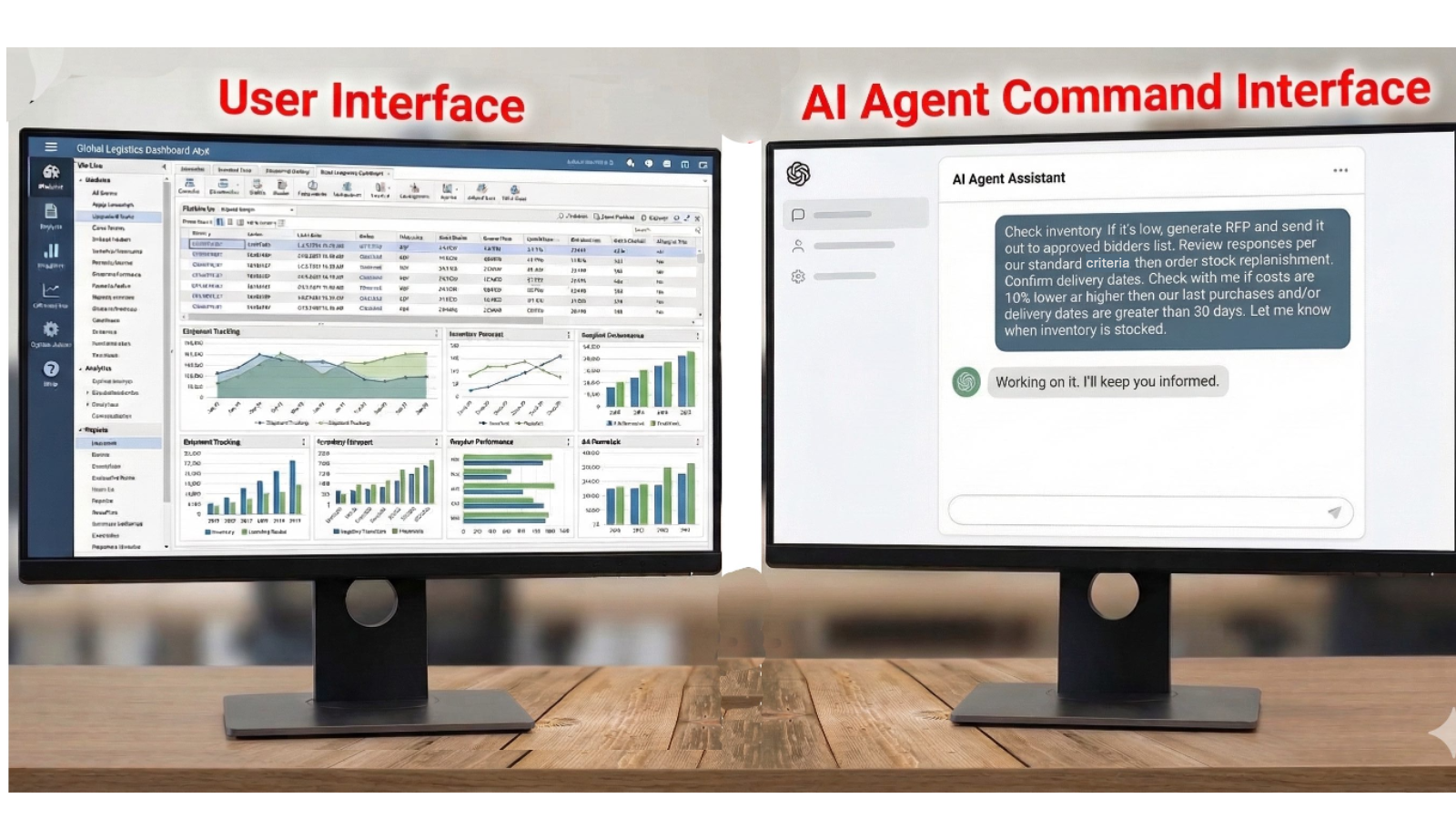
The constraint used to be: Can we afford to build and ship this? Now the constraint is: Do we know what to test? And can we get in front of users fast enough to learn? Agile is no longer a serial process. AI Agents can run multiple things in parallel for the same or less cost. You can now test multiple versions of the same business at once (or simultaneously be testing different businesses). While you can be simultaneously testing five pricing models, ten messages or twenty UX flows, the “user interface” may no longer be a screen at all. Testing might be to find prompt(s) to AI Agent(s) deliver needed outcomes.  The bottleneck is no longer engineering. It’s moving up the stack to judgment, customer insight for desired outcomes and distribution.
Agents
AI Agents will change every category of software – including yours. Today, software applications are built to give users information and then expect the users to do the work via a user interface of dashboards, alerts, workflow tools and reports. But customers buy software because they want to get a job done, not to look at more screens. Getting the job done is what AI Agents (orchestrated by tools like OpenClaw) will autonomously enable.
What that means is, if your current product tells a user what to do next, an AI Agent will eventually do that step for them. And if your competitor’s product does the task automatically while yours still waits for a human click, you no longer have a competitive product. The next generation of applications won’t just put information on a screen, they’ll act just like an employee.
They’ll resolve the support ticket, book the meeting, qualify the lead or reorder the inventory. And when products move from software-as-interface to software-as-outcome, pricing will move from seats to results; per resolved ticket, per booked meeting, per closed lead.
(The search for Product/Market fit will become the search for AI Agent/Customer Outcome fit. Minimum Viable Products (MVPs) will become Minimum Productive Outcomes (MPOs.) More on this in the next post.)
Hardware
For hardware founders, the shift is just as significant. Hardware is still constrained by physics, capital, supply chains, and manufacturing cycles. While you can’t fake your way past cutting metal, building prototypes or taping-out a chip, AI will let you kill bad ideas faster. Now, before you build a physical prototype, you can simulate more design variants, create digital twins, and stress-test assumptions earlier and much cheaper than before. The result is that you accelerate learning and discovery (at times getting to failure faster) and in startups, that’s a feature, not a bug.
And once AI is embedded as part of the system, the product itself changes. Adding AI as a backend of a camera means the camera can now become a surveillance system, a vibration sensor, a machine tool failure prediction system. A robot becomes a factory worker. The moat is no longer just the hardware. It’s the combination of what the hardware can sense and what the AI can do to use that data to decide and act.
The Sunk Cost Trap
Founders who started pre-2025 typically have built a technical stack optimized for a world where software development was bespoke and expensive. While Agile development and DevSecOps made us lean, they operate in a serial fashion, and startups hired a team sized for this structure. Companies that have spent years developing a “moat” of proprietary code and features are waking up to the fact that AI is commoditizing most of their tech stack. This leaves startups trying to raise money for a business model that may be partially (or wholly) obsolete.
None of this may be obvious to a founding team when you’re heads down trying to ship a product and searching for product/market fit.
Technical stack, product features, user interface, number of employees, all of these sunk costs become reasons not to pivot: How can we throw away years of work? Our VCs funded this specific idea. Customers still want a UI. The team believes in this roadmap. Our customers aren’t ready for this. (Chris is a perfect example. He built something genuinely impressive, and likely still competitive, but the business model around it needs to change.)
Some sunk costs continue to be assets; deep domain knowledge, customer relationships, proprietary data, hard-won regulatory approvals, physical integrations – those are worth keeping. In Chris’s startup – that’s his airframe integration.
The sunk costs that are liabilities are a large engineering team built for slow software cycles, a pricing model based on seats, a product roadmap built around features rather than outcomes. These are what is known as the “Dead Moose on the table” – something so obviously wrong but that no one wanted to challenge.
The founders who survive will be the ones who can look at what they’ve built and ask: if I were starting this company today, using today’s tools in today’s market, what would I actually build?
That’s uncomfortable when you’ve raised money on a specific thesis. But it’s less uncomfortable than your investors telling you they’re not going to fund your next round, and going out of business defending an obsolete plan.
Lessons Learned
- You don’t get to run a 2024 (or earlier) playbook in 2026
- Everything has changed – fund raising, tech, business models
- Agile development is changing to parallel development
- The search for Product/Market fit will become the search for AI Agent/Customer Outcome fit.
- Minimal Viable Products (MVPs) will become Minimal Productive Outcomes (MPOs.) More on this in the next post
- The sunk cost mindset will put you out of business
- Defensible moats may still be found in having proprietary data, deep understanding of customer outcomes, getting regulatory lock-in, or being a Program of Record
- If you’re not losing sleep, you haven’t understood what’s happening
- Founders who survive will get out of the building to take stock, pivot and course correct
Filed under: Customer Development, Teaching, Technology, Venture Capital |