
How doubling the absolute temperature of metals is solving major energy issues? Find out!
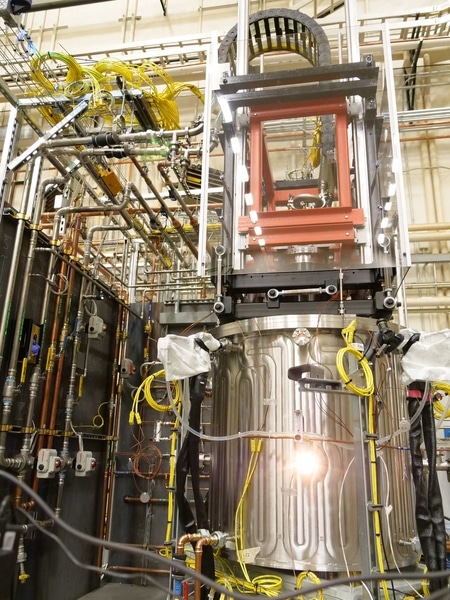
Thermal batteries store energy in the form of heat, but designing systems that can operate at very high temperatures remains a challenge. Materials must tolerate repeated heating and cooling cycles without succumbing to corrosion, expansion, or structural fatigue. Fourth Power, founded by MIT Professor Asegun Henry, is taking a different approach by using molten metal to transport heat, which is then stored in carbon bricks, offering a novel way to improve efficiency and durability.

The underlying principle is tied to the fact that when the absolute temperature of a material is doubled, thermal radiation rises to 16 times its intensity. This effect is used to generate electricity. The company has also demonstrated thermophotovoltaic cells with conversion efficiencies above 40 percent.
The system stores energy by heating graphite blocks to temperatures between 1,900°C and 2,400°C using excess electricity. When power is needed, heat is transferred to molten tin, which circulates through graphite components. As the liquid metal flows, it emits radiation that is directed toward thermophotovoltaic cells for power generation. The use of graphite helps reduce chemical reactions with the molten metal and allows operation at higher temperatures than conventional metal-based systems.
Operating at higher temperatures increases the rate of heat transfer and reduces the physical size required for a given power output. This reduces system cost, particularly for large-scale installations. The technology is being developed for applications such as grid storage, power generation support, and energy supply for large electricity users including data centers.
Engineers involved in the project focused first on identifying materials that could withstand the required temperatures, and then designed the system around those constraints. The approach differs from conventional methods that prioritize system design before material selection.
The company is preparing a 1-megawatt-hour demonstration system at its facility in Bedford, Massachusetts. A larger configuration could deliver 25 megawatts of power with 250 megawatt-hours of storage. The system is modular, allowing operators to combine power and storage units to adjust output and duration.