
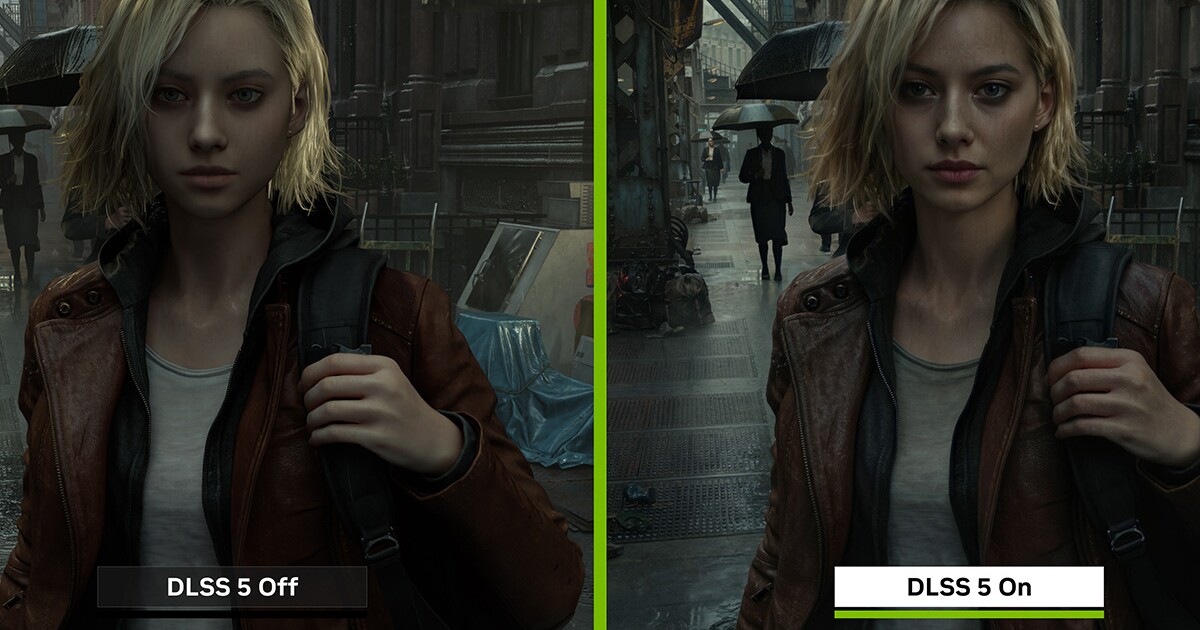
Nvidia’s DLSS is a clutch of machine learning-powered image rendering technologies that come in handy for boosting the frame rate in your games and improving lighting and image quality. They use the processing power of graphics cards to make this happen on your computer.
The latest version, DLSS 5, is described as a neural rendering model that “infuses pixels with photoreal lighting and materials,” and Nvidia says it’s the company’s biggest advancement in computer graphics since it first cracked ray tracing (a technique for realistically simulating light in 3D scenes) back in 2018.
“DLSS 5 is the GPT moment for graphics – blending handcrafted rendering with generative AI to deliver a dramatic leap in visual realism while preserving the control artists need for creative expression,” said Jensen Huang, Nvidia’s founder and CEO. You can see a demo of this vision in the brief video below:
Announcing NVIDIA DLSS 5 | AI-Powered Breakthrough in Visual Fidelity for Games
That’s a lot to take in, in just over a minute. Previous versions of DLSS made great advances in improving gaming experiences for players by leveraging machine learning to eke out more performance from the hardware you already have.
Most recently, we got multi frame generation in DLSS 4.5, which essentially conjured up to five additional frames for every one frame your GPU could render in fractions of a second, making for massive gains in smoothness and responsiveness. This is the sort of breakthrough that people would typically embrace with open arms, particularly when RAM and GPU prices are through the roof to the point of becoming inaccessible for most gamers looking to upgrade their rigs.
With DLSS 5, Nvidia’s doing something different. It uses an AI model to tack on lighting and materials to enhance frames, while maintaining consistency even at 4K resolution so you don’t have weird artifacts hovering around on screen.
Nvidia says it understands that game tech should help precisely represent the developer’s artistic intent – but the implementation seems to be veering away from that drastically enough to draw plenty of negative reactions (check out Kotaku’s coverage, and head to the comments in Digital Foundry’s analysis). You can see the AI slop effect in the overtly sharpened facial features in the clips of Starfield and Resident Evil Requiem above, and even in Hogwarts Legacy below.
NVIDIA DLSS 5 Reveal | Hogwarts Legacy
There are some bits that don’t look all that awful, like lamp posts and cauldrons close to the foreground – but what you see are imagined details from a bunch of algorithms superimposed onto painstakingly created elements to look ‘better.’ What seems to be happening is that we’re seeing a lot of unnatural details that are detracting from the experience. It also appears to add wholly different treatments to certain scenes: grim environments can end up seeming a lot brighter and less foreboding to walk through.

Nvidia
All that said, it’s worth noting that developers will have control over intensity, color grading and masking applied in their titles with DLSS 5 switched on, which means they’ll have a say in how their games end up looking with AI-generated enhancements.
The company also notes it’ll only arrive this (Northern Hemisphere) fall, which gives it – and the studios behind DLSS 5-supporting titles like Starfield, Assassin’s Creed Shadows, and Where Winds Meet – time to gather and respond to players’ feedback before rolling the tech out widely. Hopefully they’re all listening.
Source: Nvidia