
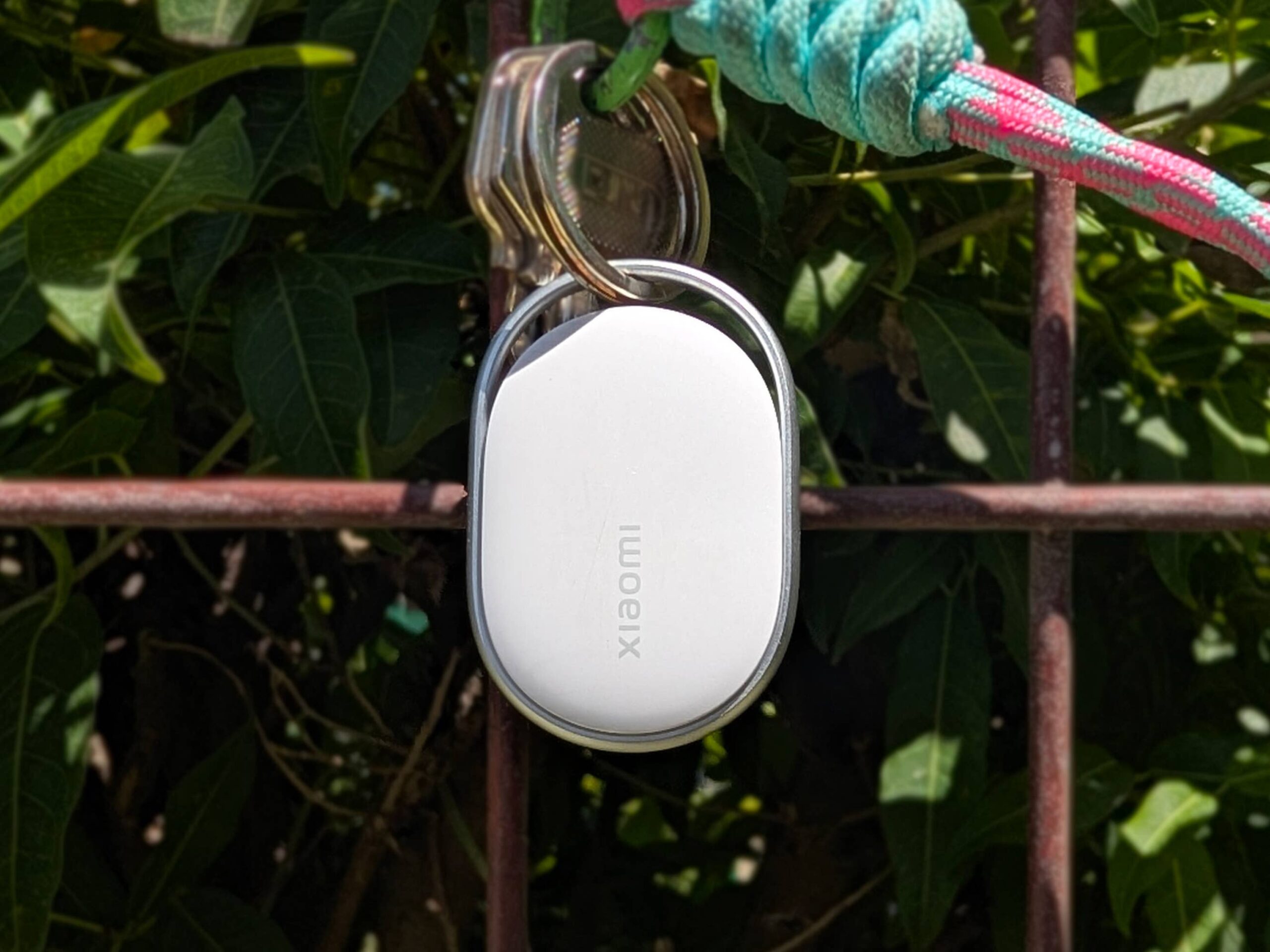
Xiaomi just launched its first smart tag, featuring a stunning design and a very competitive price. We dive deep into its battery life and accuracy to see if this “AirTag killer” lives up to the massive hype.
Ever since I got my phone, it feels like one more thing I must constantly check alongside my wallet and keys. With so many items to remember, losing one happens all too often. That is why I started using smart Bluetooth GPS trackers, or smart tags. They are compact, lightweight, and make it simple to monitor belongings and find them when misplaced. Xiaomi recently launched the Xiaomi Tag, a cheaper option compared to premium alternatives.
The new Xiaomi Tag stands out as a sleek and elegant tracker with a competitive price, though it skips UWB (ultra-wideband) connectivity. I put it through its paces to compare performance and features to other trackers and determine if it is a worthwhile addition to my arsenal.
Design and Battery
Most trackers I have tested feature circular, rounded-square, or elliptical shapes. The Xiaomi Tag takes a unique approach with an elongated design. It has a central polycarbonate puck held by an integrated metal ring. This setup makes it look like a premium keychain accessory. The metal loop lets you attach it directly to a keyring or carabiner without needing an extra holder or case.
Though it appears wide, the tag is thin and light. It measures 46.5 x 31 x 7.2 mm, so it slips easily into a wallet or pocket without bulging. At just 10 grams, it is lighter than many competitors, such as the AirTag 2 (review) or Galaxy SmartTag 2 (review).

The Xiaomi Tag carries an IP67 rating for dust and water resistance, so you can attach it to pets or bags without worry. The removable battery lid feels secure and well-sealed. A central button activates it from sleep mode or resets the device.
The top panel covers the replaceable CR2032 battery. A notched edge makes it easy to pry open with a nail or tool. Swapping the battery is simple, though you will rarely need to do so given its long life. Xiaomi rates battery life at over one year, which matches most trackers. Samsung’s Galaxy SmartTag 2 offers up to two years in low-power mode.
Pairing and Dual Network Compatibility
The Xiaomi Tag uses Bluetooth 5.4 and NFC (iOS devices). It works with both Android and iOS. On supported Android devices, pair it via the Find Hub app. Notably, the Xiaomi Home app does not support it, even when pairing with a Xiaomi phone or tablet.
Pairing with an Android device
With the app installed and your Google account signed in, remove the battery pull-tab. The tag becomes discoverable automatically. Ensure Bluetooth and location are enabled if it does not appear right away. Xiaomi suggests manual scanning for Find Hub devices if needed, but in my tests, multiple tags paired instantly across devices.
Setting it up on the host Android phone or tablet only takes just a few taps, including policy confirmation. You can then rename the tag and assign a category to change its icon. Subsequently, you can start seeing the tag on the maps.

Pairing with an iPhone
On iPhone or iPad, use the Apple Find My app and select the third-party device option. Also, turn on the Bluetooth on your device. Pairing is as quick as with a standard AirTag or AirTag 2.

Management such as unpairing and pairing again happens in the same section. However, there’s one drawback to remember, and that’s the Tag lacks anti-tampering protection. If lost, anyone can reset and pair it with another device. I wish there were safeguards to prevent easy re-pairing without first removing it from the original phone.
I tested switching between Android devices on the same account without issues. It’s possible that future updates will add account-based restrictions for better security.
Features and Accuracy
The crowdsourced network depends on the paired ecosystem. Android uses Find Hub (via nearby Android devices), while iOS uses Find My. Location data remains encrypted in both cases, so neither platform accesses your information.
In my tests, Android provided faster and more accurate location updates than iOS, likely due to device density in the area. This means results will still vary by location and ecosystem traffic.
Nearby tracking is simple, with a graphical indicator showing distance based on circle size. It lacks the precise guided navigation of UWB-enabled trackers like Samsung’s Galaxy SmartTag or Apple’s AirTag. Moreover, position lock-in feels slower, even when the tag is just meters away, which is a common issue with non-UWB models.

For nearby tracking, you can ring the tag for audible alerts. The sound is modest but sufficient for quiet rooms. It does not match the louder output of the Galaxy SmartTag 2 or Solum trackers.
Another more important to note is that you only get live location coordinates and does not support location history, unlike Samsung’s Galaxy SmartTag or some third-party options. If you plan on making it as GPS tracker alternative to your car, then this will disappoint you. Still, for a budget tracker, it handles basic tracking well.
Other features include lost mode, location sharing with contacts and airlines, separation alerts, and unwanted tracking notifications, which are supported on both Find Hub and Find My.
Xiaomi Tag is IP67 dust and water resistance
Xiaomi Tag hanging on a screen
Xiaomi Tag is available in white finish
Xiaomi Tag design and color
Xiaomi Tag smart trackers
Xiaomi Tag smart trackers
The Xiaomi Tag comes with an integrated keyhole ring.
Xiaomi Tag clipped on a water bottle
Use the Google Find Hub app on Android.
Xiaomi Tag and Xiaomi 15T smartphone
Conclusion
I had high expectations for the Xiaomi Tag. It lacks location history and UWB, so nearby precision and lock-in speed is in the lower spectrum. However, its affordable price and dual-network compatibility make it excellent value.
Overall, the Xiaomi Tag delivers reliable, budget-friendly tracking with thoughtful design. It is a smart choice if you prioritize affordability and cross-platform flexibility over premium precision features.
It is not yet available in the US, but third-party retailers may offer it soon. In the EU, it sells for €17 / £12 ($19) each, or €59 / £44 ($69) for a four-pack. It is much cheaper than the $29 Galaxy SmartTag 2 or AirTag 2.
For tracking multiple items, the four-pack offers great savings. If testing one, start with a single unit. It comes only in white colorway.