
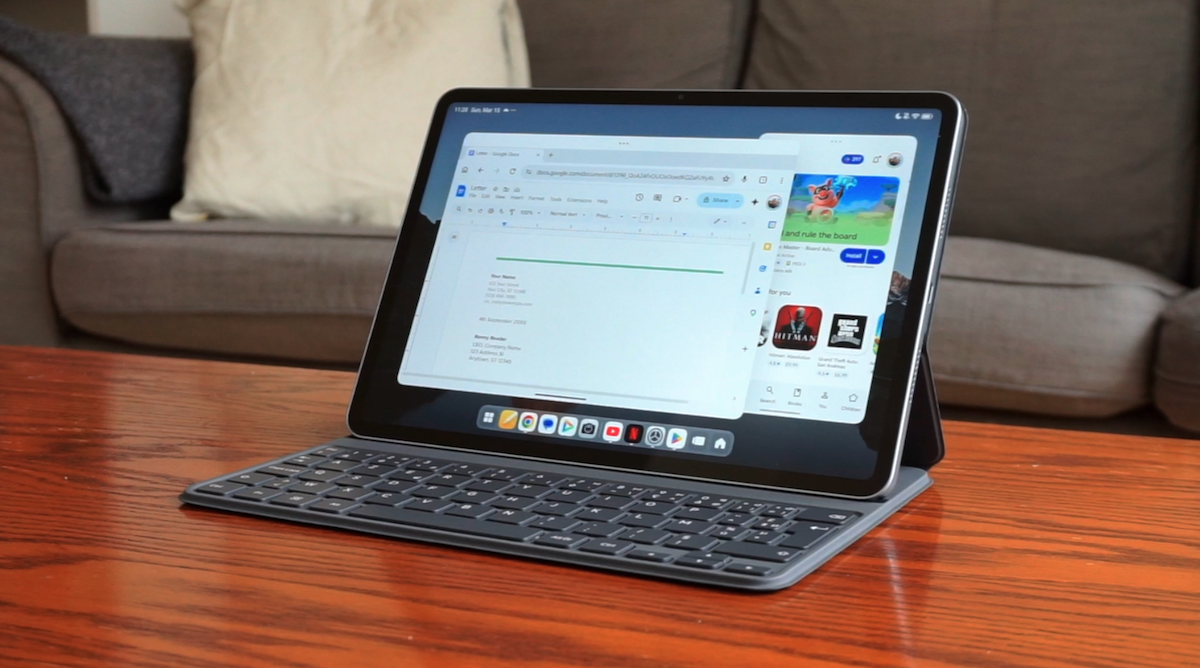
At this point in time, I think it’s fair to say that Xiaomi’s “Pad” line of tablets has shown that it’s got what it takes to take on competing rivals, such as the likes of Samsung and Honor, for example. With that in mind, the company’s latest Xiaomi Pad 8 series aims to win over fans and potential buyers thanks to a combination of hardware and performance.
Between the Xiaomi Pad 8 and Pad 8 Pro however, it’s understandable that Xiaomi’s more affordable tablet model loses out on some muscle in order to bring down its price to a more wallet-friendly level. That being said though, is the Xiaomi Pad 8 still worth getting despite the differences in hardware? Let’s take a look.
Xiaomi Pad 8 Specs
- 11.2 inches (IPS), 2136 x 3200 pixels, 144Hz
- Aluminum casing
- Snapdragon 8s Gen 4
- Starts at 8GB RAM/128GB Storage
- Android 16, HyperOS 3
- 13MP Main + 8MP front
- 9200mAh, 45W charging speeds
- Other: Face unlock, WiFi 7, Bluetooth 5.4
Design and Display

Much like the Xiaomi Pad 7 (and the 8 Pro, for that matter) the Xiaomi Pad 8 comes with a sleek design with pretty much the same dimensions. Available in black, blue and green, it looks and feels premium thanks to its aluminum unibody, although it does resemble the iPad Pro line a bit, especially with the slim bezels surrounding the display—not that we’re complaining, of course.
Speaking of the display, you get a sharp 11.2-inch IPS screen with a resolution of 2136 x 3200 pixels, and it does come with a 144Hz refresh rate, which should make for a smoother visual experience in general. One downside though is that it’s not too bright, peaking at just around 800 nits of brightness, so some consideration should be made when trying to view the display outdoors. It also features a quad-speaker setup that’s reasonably loud, although there’s sadly no support for 3.5mm audio connectivity.
Internal Specs and Performance

Powering the Xiaomi Pad 8 is the Qualcomm Snapdragon 8s Gen 4, an “almost” flagship-tier chip which sits just below the 8 Elite and 8 Gen series processors. This is accompanied by 8GB of RAM, although you can also get the tablet in a slightly more expensive 12GB RAM configuration. That said, the Xiaomi Pad 8 ran and felt smooth in general, aside from a couple of stutters that I noticed when I was first setting up the device.
Of course for moderate usage such as web browsing, social media app use and content streaming, the Xiaomi Pad 8 will be more than capable. With that said though, there were times when I noticed that the tablet got a bit warm after some gaming, which is something to keep in mind.

Nevertheless, the tablet was able to handle graphics-intensive games like GRID Legends, and was also able to keep up when I ran it in workstation mode—for those unfamiliar with it, Workstation mode essentially switches the user interface to a more desktop-like environment, with floating windows and real-time multitasking.
The tablet was able to handle graphics-intensive games like GRID Legends, and was also able to keep up when I ran it in workstation mode.
The Xiaomi Pad 8 is also equipped with 128GB of internal storage, although there’s a more generous 256GB variant on offer, as well. One caveat however is the lack of expandable storage, which means that you won’t be able to use your micro SD cards on here, unlike on the Redmi Pad 2, for example.
Software and Battery

For software, the Xiaomi Pad 8 runs on Android 16, which is layered with Xiaomi’s own HyperOS 3. Naturally, this means that the device comes with pre-loaded apps from Xiaomi and third-party developers, in addition to what Google already ships with the tablet. The good news however is that you can uninstall a lot of these, or at least disable them.
As this is the global version of the tablet, you’re getting access to Google Play services like Gmail, Maps, and the Play Store, to name a few. You also get support for AI features like Google Gemini and Circle to Search, which all in all makes for a standard Android experience. One thing to note however is that unlike Pixel or Samsung devices, updates on Xiaomi tablets are a bit on the slower side, as our device is still on the October 2025 security patch.
As for its battery, the tablet can easily last more than a day’s worth of use thanks to the massive 9,200mAh battery inside—by comparison, other similarly-priced devices like the base model 2025 iPad and Samsung Galaxy Tab S10 Lite come with smaller batteries at around 7,800mAh and 8,000mAh, respectively.
Camera Hardware
Lastly, we have the cameras—unlike smartphones, most tablets just seem to include cameras for the sake of having them, and they’re often relegated to video meeting tasks. Unsurprisingly, the Xiaomi Pad 8 features a basic camera setup (13MP on the rear, 8MP in front), which should be good enough to take basic photos of documents and receipts, and even give callers a clear view of you during video calls. We have a handful of samples below.
So Should you Buy It?
At a price of around $400 (when converted), the Xiaomi Pad 8 comes with a great set of hardware features such as its display, battery and processor which easily out-perform those seen on rivals such as the Galaxy Tab S10 Lite, for example. It also helps that the tablet comes with an incredibly-sleek design, which makes it an ideal travel companion for those situations that a laptop might be a bit too much to bring along.
There are of course factors to consider, such as the lack of microSD card support, missing 3.5mm connectivity, and slow software updates. On its own however it’s a very capable performer, and gets a lot of the basics right for not much cash.