
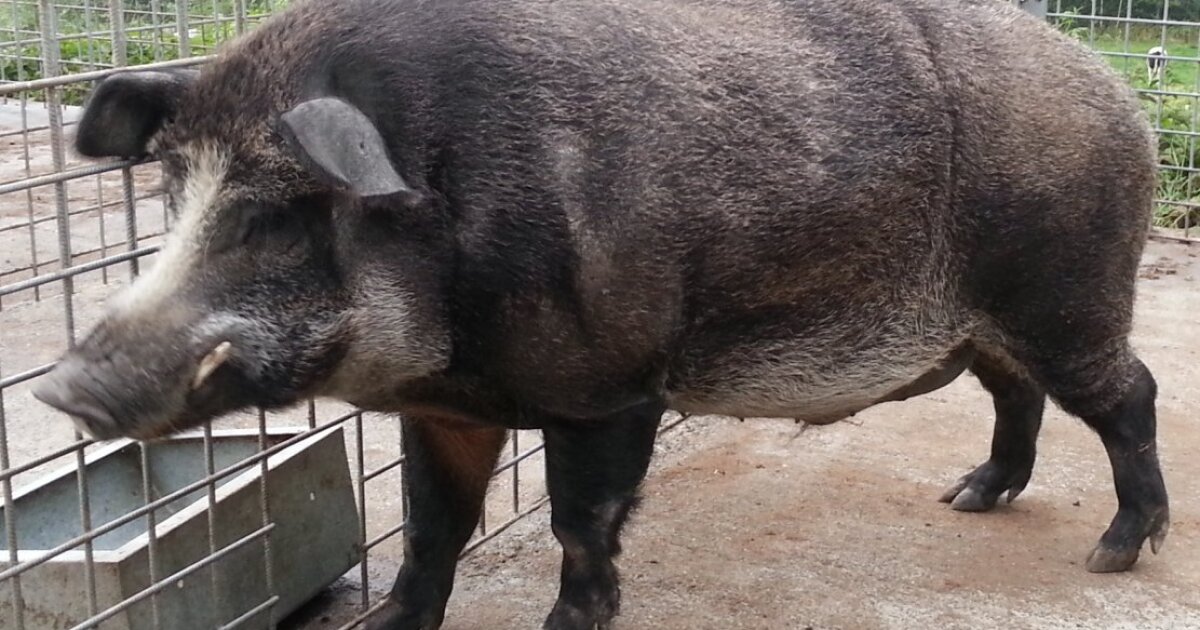
When escaped domestic pigs bred with wild boar after the Fukushima evacuation, researchers gained a rare chance to observe large-scale hybridization. New findings show that maternally inherited rapid breeding accelerated genetic turnover, quickly diluting pig ancestry in the wild population. The result offers a novel lens on how fast-breeding traits can quietly reshape wildlife genetics.
In the months after the 2011 Fukushima Daiichi nuclear disaster, abandoned farms across the evacuation zone became an unlikely natural experiment. Escaped domestic pigs bred with wild boar, creating a large-scale hybrid population. More than a decade later, genetic analyses of those animals revealed something unexpected: the maternal pig lineages did not preserve pig genes, they sped up their disappearance.
A new genetic study, published in the Journal of Forest Research, led by Professor Shingo Kaneko of Fukushima University, with co-author Donovan Anderson of Hirosaki University, analyzed the genetic signatures left behind by this hybridization event. The researchers initially assumed domestic pig genes would linger in the wild population, perhaps even boosting numbers through hybrid vigor.
Instead, when they compared two kinds of genetic markers, one passed down only from mothers and another inherited from both parents, they found something counterintuitive. Wild boar carrying domestic pig mitochondrial DNA, genetic material passed down through the maternal line, often had very little pig DNA left in the rest of their genome. The maternal line traced back to domestic pigs, but most of the broader genetic material had already been replaced.
The research team found that the explanation turned out to be surprisingly simple: it was speed.
Domestic pigs do not follow the once-a-year breeding cycle typical of wild boar. They can reproduce multiple times per year. If that faster rhythm persisted in escaped females and was passed to their daughters, it would act like a fast-forward button for evolution. More litters mean more generations in the same span of time, and more chances for pig DNA to be diluted as hybrids repeatedly mated with wild boar.
That is exactly what Kaneko, Anderson and their colleagues observed. Within just a few years of the accident, many hybrids were already several generations removed from the original cross. In numerous cases, individuals carrying pig mitochondrial DNA were more than five generations past the first hybridization event, suggesting reproduction had proceeded faster than a single annual cycle would allow.
In other words, the maternal pig lineage may have been shuffling the genetic deck at double speed.
Fukushima’s circumstances were unusual, but the biology behind the finding is not. Wherever domestic animals and their wild relatives interbreed, fast-breeding maternal lineages could be quietly reshaping populations in similar ways.
“While it has been previously suggested that hybridization between rewilded swine and wild boars can contribute to population growth, this study demonstrates, through the analysis of a large-scale hybridization event following the Fukushima nuclear accident, that the rapid reproductive cycle of domestic swine is inherited through the maternal lineage,” explained Professor Kaneko.
Even if domestic genes do not ultimately dominate, a brief burst of accelerated reproduction may still influence how quickly populations grow and spread. The genetic signature of domestic ancestry can fade while its reproductive cycle briefly reshapes the population’s trajectory.
The researchers caution that their estimates rely on a relatively small domestic pig reference group and on microsatellite markers rather than full genome sequencing. That leaves some uncertainty around the precise proportions of pig ancestry in individual animals. Still, the pattern was consistent: maternal pig lineages were associated with faster generational turnover and lower levels of pig nuclear DNA.
Future studies will need broader domestic reference datasets, genome-wide sequencing, and additional genetic markers to more precisely track how rewilded lineages evolve over time. The team also notes that analyzing more individuals carrying the swine mitochondrial haplotype could help clarify how domestic traits persist, or fade, across generations.