
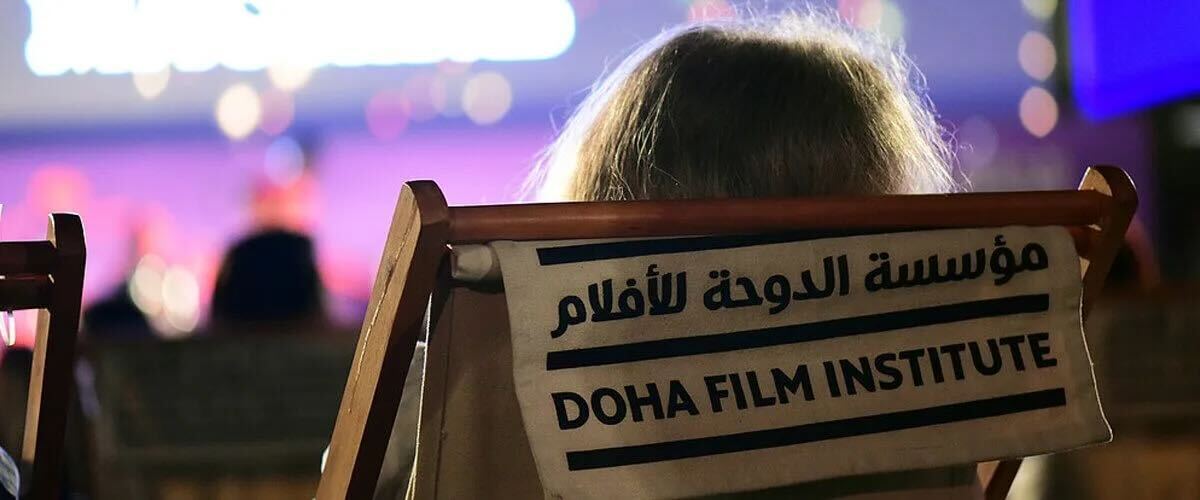
Filmmakers taking part in the Doha Film Institute’s Qumra 2026 have told Qatar News Agency that the programme continues to play a crucial role in supporting emerging cinematic voices worldwide, despite regional developments prompting this year’s edition to be held online.
Now in its 12th year and running from 27 March to 8 April, Qumra brings together more than 49 projects from over 39 countries, offering funding, mentorship, and access to industry experts across all stages of filmmaking. Participants said the initiative goes far beyond financial support, providing sustained guidance, technical expertise and opportunities to refine projects from script to screen.
In light of recent developments in the region, the Doha Film Institute opted to host this year’s edition online to ensure the safety of guests, project teams and participants.
Several directors shared insights into their works, from early concepts to near-completion.
Director Ali Madi Al Hajri, whose film “Memorandum of Understanding” is part of the programme, said to QNA: “The desire to work in cinema is the most important thing, followed by perseverance and proving oneself through meaningful work.”
He added: “For seven years, I have been discovering something new each year…supporting institutions exist. What must be done is to knock on doors and not be intimidated.”
Director Nadia Al Khater, behind the film “Like a Shooting Star”, told QNA that while financial support is essential, the technical guidance, mentorship and networking opportunities offered by Qumra are “of utmost importance and rarely found elsewhere.”
Meanwhile, director Hamad Al Hajri discussed his film “When News Breaks You”, a co-production involving Qatar, Palestine, Greece, Lebanon and Turkey, telling QNA that it sheds light on the struggles of Arab journalists, particularly in Gaza, while highlighting their professionalism and resilience.
He noted that the Doha Film Institute was the only institution to support his project alongside Katara Studios and the Al Jazeera Center for Public Liberties and Human Rights.
French-Moroccan director Yassine Wahrani, whose film “Where the Sun Never Sets” is a co-production between Morocco, France and Qatar, told QNA he valued Qumra’s global standing and its determination to proceed this year despite ongoing challenges, reaffirming its commitment to supporting promising voices.
Qumra remains the region’s longest-running initiative of its kind, with this year’s selection spanning feature films, shorts, television and web series. Of the 49 participating projects, 47 received support through the Institute’s grants programme, while five are backed by the Qatar Film Fund. Fifteen projects come from filmmakers based in Qatar, including 10 Qatari nationals.