
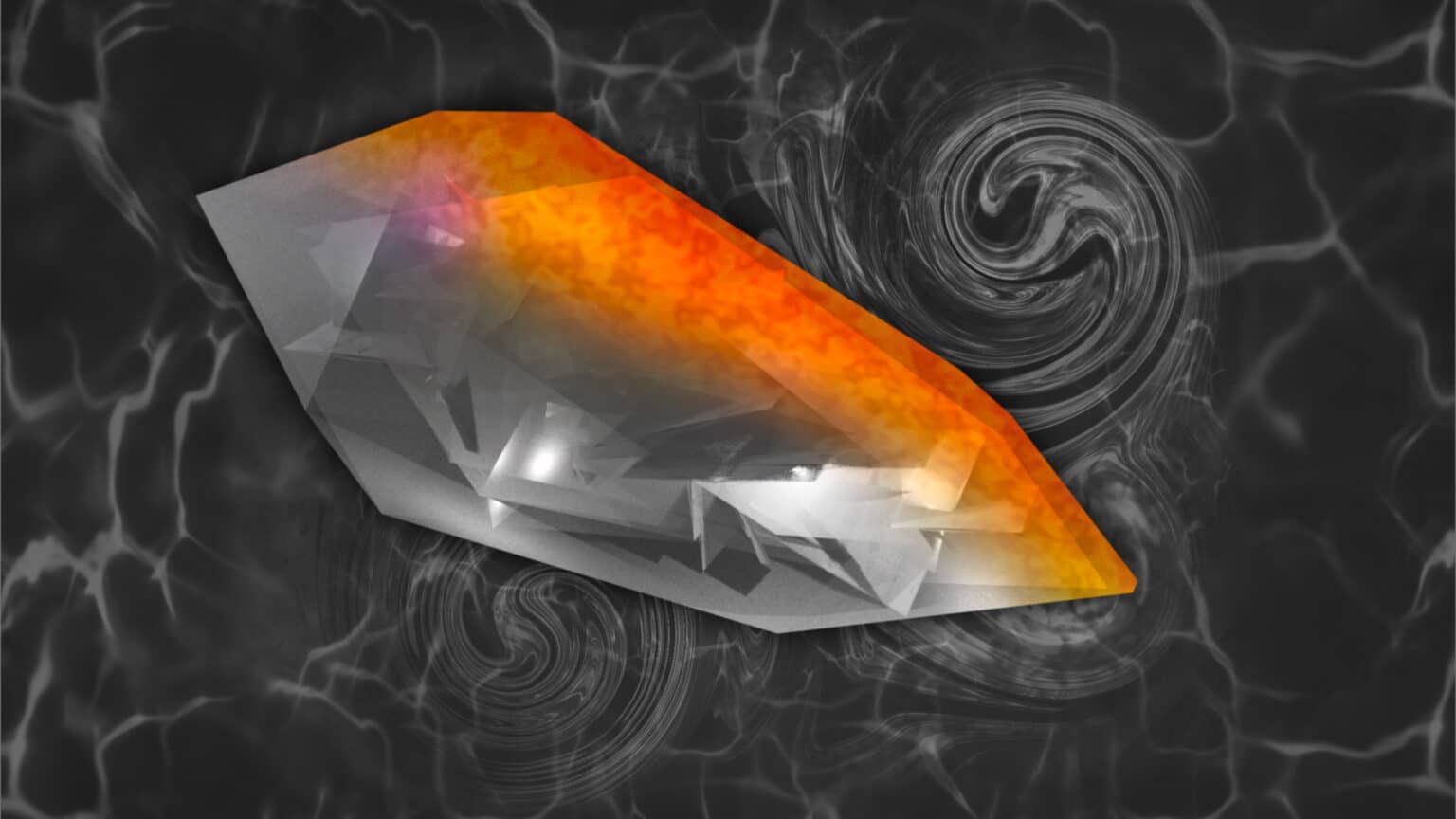
A new electronics pathway that uses orbital currents instead of spin, enabling efficient, low-cost orbitronic devices without magnets, voltage, or rare materials, and advancing next-gen semiconductor technologies.

A team of physicists at NC State University has demonstrated a method to generate electrical current using the orbital motion of electrons, potentially unlocking a new class of ultra-efficient electronic devices. The study centres on “orbitronics,” an emerging field that leverages an electron’s orbital angular momentum rather than its charge or spin. Electrons inherently possess three properties—charge, spin and orbital motion—but most modern electronics rely primarily on charge, while spintronics exploits spin. Orbitronics aims to go further by tapping orbital behaviour for data processing and transport.

The key advance comes from harnessing “chiral phonons”—collective atomic vibrations that move in circular patterns. Researchers showed that these vibrations can directly transfer angular momentum to electrons, generating orbital currents in materials without requiring magnetic fields or external voltage. This eliminates a major bottleneck in orbitronics. Traditional approaches rely on magnetic materials or complex inputs, adding cost and limiting scalability. The new method instead works with abundant, lightweight materials such as quartz, significantly lowering barriers to practical deployment.
Notably, the research demonstrates orbital current generation in non-magnetic materials for the first time, a milestone that simplifies device architecture. The process also introduces what researchers describe as an “orbital Seebeck effect,” where thermal energy drives orbital motion—opening pathways for energy-efficient electronics. The implications are substantial for next-generation semiconductor design. Orbitronic systems could enable faster data processing with lower power consumption, aligning with industry demands for energy-efficient computing hardware.
While still in its early stages, the work provides a scalable mechanism for generating orbital currents, addressing a long-standing challenge in the field. Researchers say it also deepens understanding of how atomic structure and electron dynamics interact, which could accelerate development of practical orbitronic devices. As computing workloads continue to rise, orbitronics may emerge as a viable alternative to conventional electronics—offering a new foundation for high-efficiency chips and advanced electronic systems.