
President Donald Trump signed a second executive order in an attempt to “fix” college sports — this one coming on the heels of the biggest weekend of the year for NCAA basketball.
The White House announced on Friday, April 3, that the latest executive order is focused on transfer and eligibility rules for college athletes, potentially limiting how those athletes can be compensated for their name, image and likeness (NIL).
The order also creates policies that prevent schools from cutting scholarships or other opportunities for women’s and Olympic sports in order to pay their athletes.
Schools that violate the executive order could face financial penalties from the federal government.

President Donald Trump claims he will sign an executive order to keep the annual Army-Navy college football game in an exclusive time slot, protecting it from any potential College Football Playoff expansion. “The Army-Navy Game is one of our Greatest American Traditions – Unmatched Patriotism, Courage, and Honor! This incredible Tradition is now at risk […]
Whether or not the new executive order is legal is still up for debate.
The order comes just under a month after Trump hosted a college sports roundtable, which included more than 50 people in politics, business, and college and professional sports discussing the future of college athletics.
During that meeting, Trump promised to sign an executive order “because that’s the only way this is going to be solved.”
“So I’m going to sit down, and I’m going to write an executive order based on many of the sentiments made [at the meeting], many of the sentiments I’ve been hearing over the last year about what a disaster this is for colleges, the players, the families, ruining families, ruining everything,” Trump said at the time.

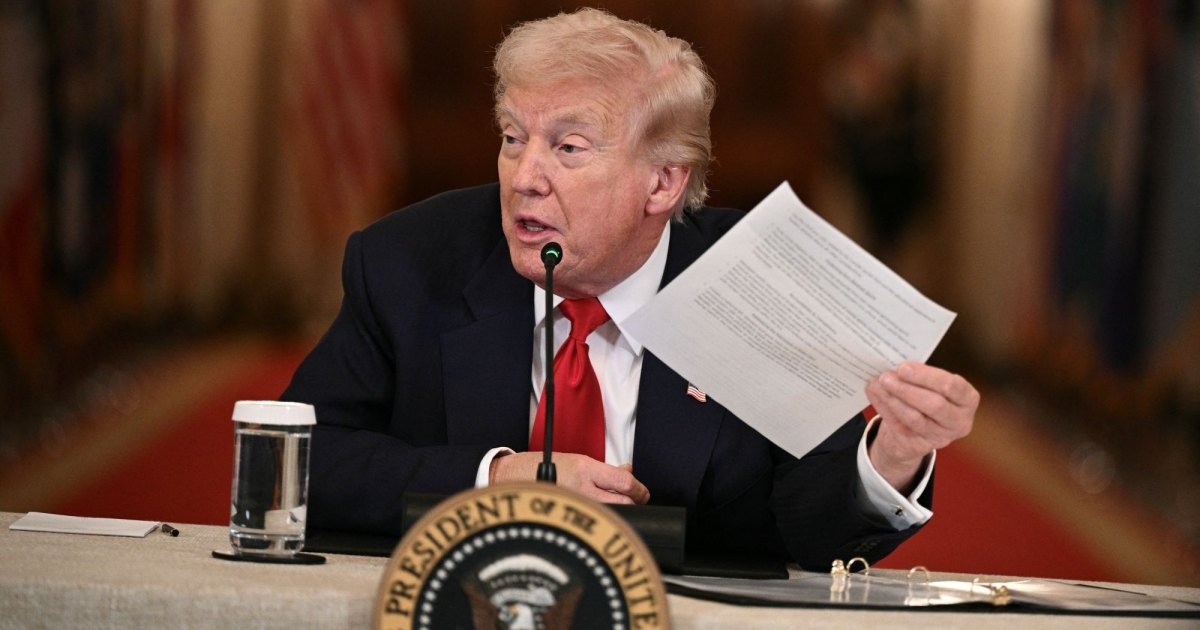
US President Donald Trump speaks during a roundtable to “save college sports” on March 6 Brendan SMIALOWSKI / AFP via Getty Images
Friday’s executive order limits athletes to one unrestricted transfer as an undergraduate student, as well as college eligibility to five years. It would not take effect until August 1.
“College sports cannot function without clear, agreed-upon rules concerning pay-for-play and player eligibility that can’t be endlessly challenged in court, as is the case now,” the White House said in a Friday news release regarding the order.
Multiple lawyers and college sports experts who spoke to ESPN said they believe the executive order will be deemed unconstitutional and unenforceable if – or when – it is challenged in court.
Even Trump himself — during that March meeting with college sports executives — admitted that his administration would likely be sued over the order.

Hockey star Hilary Knight fired back over President Donald Trump’s joke about inviting Team USA’s gold medal-winning hockey team to the White House. “We just thought the joke was distasteful and unfortunate,” Knight, 36, told reporters on Wednesday, February 25. “I think, just the way women are represented, it’s a great teaching point to really […]
It’s not the first time Trump has used the threat of pulling federal funding from colleges as a so-called negotiating tactic. In September, he threatened to withhold funds from Harvard University, but a federal judge deemed the order illegal.


Despite the questions of the order’s legality and enforceability, multiple NCAA conferences have released statements in support of the order, including the Big Ten.
“The Big Ten Conference would like to thank President Trump for his leadership and continuing efforts to protect college athletics and joins him in urging Congress to quickly pass legislation addressing the critical issues undermining its long-term stability,” said Big Ten Commissioner Tony Petitti in a Friday statement.
He continued, “Consistent with President Trump’s executive order, the bipartisan SCORE Act thoughtfully addresses name, image, and likeness for student-athletes, protecting academic and athletic opportunities provided through women’s and Olympic sports programs, and expands resources to support student-athletes on and off the field. We will continue to work with a broad coalition of college sports stakeholders and members of Congress to enact this legislation.”