
Fueled by Thailand’s role as a leading automotive manufacturing hub and booming adventure tourism destination, this year’s Bangkok Motor Show felt as much like a SEMA-style overland exhibition as it did a full-blown international auto show. In our time on the show floor, we could hardly step over to a new booth without tripping on the guy lines of a carefully staged campsite or smacking into the snorkel of a hardcore off-roader or full-blown camper rig loaded up with all the rugged aftermarket components necessary (or not necessarily necessary) to overland the country’s thick jungles and verdant mountains.
Truth be told, we didn’t have the Bangkok Motor Show penned in on our 2026 editorial calendar of important, must-cover RV and overland shows. But when New Atlas founder, chairman and lifelong motorhead Mike Hanlon took the opportunity to attend, he quickly found his camera’s storage card so overloaded with all manners of rooftop tent, pitched awning and meticulously curated indoor base camp, he had to swap in another just to get photos of the actual factory-spec cars and trucks he was there to see.
Perhaps this shouldn’t have come as a surprise. RVs, particularly trucks and 4x4s built up with aftermarket camping and off-road components, sit right at the intersection of two industries critical to Thailand’s economy: automotive manufacturing and tourism/outdoor adventure.
Dubbed the “Detroit of the East,” Thailand is the largest automotive manufacturer in Southeast Asia and 10th largest globally. Even though the country lacks its own homegrown auto brands, it builds vehicles for a who’s who of major global automakers from Japan, China, the US and Europe, manufacturing over 1.5 million automobiles per year for export and domestic sale. The automotive industry accounts for over 10% of the GDP, making it one of the most important in the country.
Mike Hanlon/New Atlas
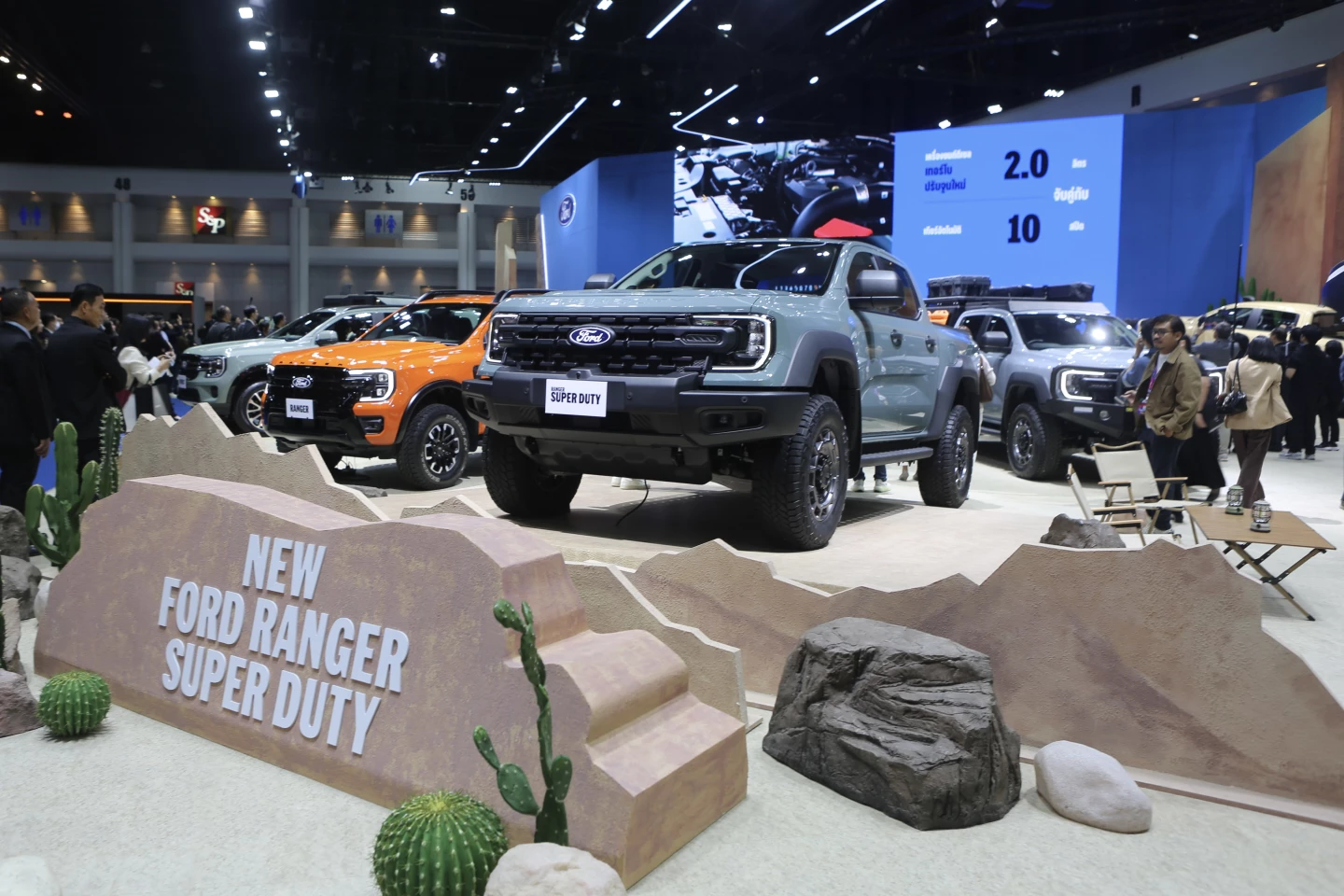
So it follows that Thai-built vehicles were a major attraction of the Bangkok show, and Ford shined a particularly bright, powerful spotlight on the all-new Ranger Super Duty. The envy of countries in which it won’t be sold (e.g. Ford’s USA home base), the first-ever Ranger Super Duty was developed in Australia to package big truck capabilities into a midsize platform.
That means up to 4,370 lb (1,982 kg) of payload – more than double what’s available across the traditional Ranger lineup – within the same small, nimble footprint as any other Ranger. It basically appears like an angelically gorgeous Goldilocks riding in on a unicorn to truck camping and overlanding fanatics, before even getting into the available single cab, turbodiesel V6, factory snorkel, steel bumper, long-range 130-L fuel tank or high-strength steel underbody armor.
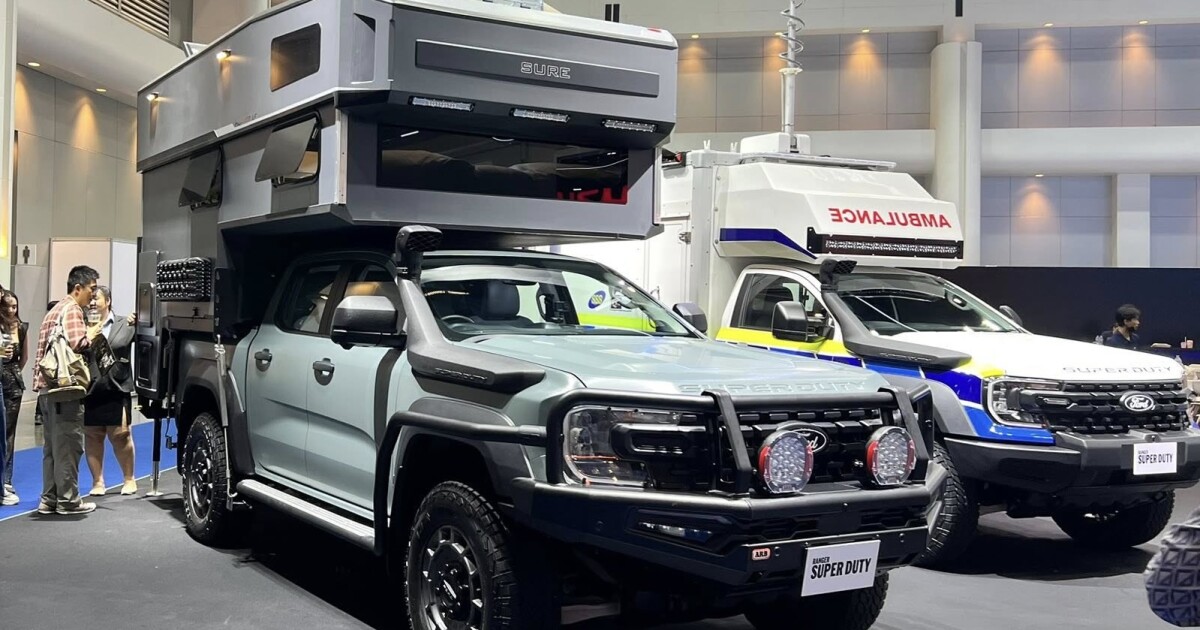
Ranger Super Duty production for Australia, New Zealand, Asia and all other targeted global markets is being handled entirely by AutoAlliance Thailand, a manufacturing joint venture between Ford and Mazda. And while we had previously been low-key keeping an eye on major Australian camper canopy and truck specialists for a look at the world’s first camping rig built aboard the new Super Duty, that camper instead came from the country of Super Duty manufacture … and what an epic machine it is.

Sure Camper
Possibly the most conspicuous among the multitude of Super Duties on display at Ford’s booth, the camper truck was put together by Chon Buri-based pickup camper specialist Sure Camper. The oversized, hard-sided module really drives home Ford’s point that the Ranger Super Duty is a “midsize truck that can do things no other midsize truck can do.” In this case, it can put its reinforced chassis and rear axle to work in carrying much more than the small, ultralight campers and toppers to which other Rangers and midsize trucks are limited.
In the case of Sure Camper’s LF Hopper, that hefty load equates to a large, luxurious telescopic pop-top camper that extends out past the end of the bed for extra space. Using its power-lift roof, the camper opens up loads of headroom inside while offering a lower drive height to more easily manage tunnels and underpasses. The upper roof shell also covers over the wide front window and side windows, protecting them from damage.
The complete LF Hopper floor plan packs in a wet bathroom, as well as a kitchen block, dinette and alcove bed. One particularly unique highlight is the rotating console that allows the kitchen fridge to be accessed from outside via a hatch on the sidewall.

Sure Camper
Thailand’s automotive industry isn’t solely focused on churning out full vehicles. In fact, the country’s 2,200-company-strong auto parts manufacturing segment accounted for over 40% of the auto industry’s total 2022 revenue of $37.6 billion, according to a report from Thailand’s Department of International Trade.
The country’s parts building expertise was very much on show in Bangkok, with many vehicles arriving looking like the type of specially outfitted car or truck you’d expect at SEMA.

Toyota Motor Co
Toyota held the world premiere of the Thai-built Land Cruiser FJ at last year’s Japan Mobility Show. To celebrate the little 4×4’s Thai debut, Toyota showed the standard version flanked by a series of concept variants, each dressed to the nines in aftermarket hardware to a particular theme. The concept series included what to our knowledge is the first new FJ camping rig in the world: the Nature Explorer Concept.
Australian off-road specialist ARB, which itself splits manufacturing between Melbourne and Rayong, Thailand, did the heavy lifting for the concept, supplying an expandable hardshell rooftop tent, auxiliary lighting and other add-ons. This rig is then ready to take advantage of the FJ’s compact, nimble off-road-centric design on expeditions lasting days or weeks.

Toyota Motor Co
Beyond making an exemplary marketing term, “nature” serves as the underpinning of the other major Thai economic engine at play here. Like the auto industry, tourism accounts for over 10% of the country’s GDP – and some estimates even spike that number over 20% when taking both direct and indirect tourist expenditures into account. Natural endowments like beautiful beaches, rainforests and national parks helped entice just shy of 33 million visitors in 2025, and the country is focusing in on surging segments like ecotourism and adventure travel as it seeks to get back to pre-pandemic levels approaching 40 million visitors a year.
Both eco and adventure tourism have been growing steadily, and Thailand’s efforts thereof haven’t gone unnoticed internationally. Last year, it was announced the country ranked in the top three destinations among developing countries in the comprehensive Adventure Tourism Development Index.
“East Asia boasts a diverse landscape of adventure tourism destinations, with Thailand leading the way. Its well-developed infrastructure, positive image and excellent transportation networks make it a top choice for adventure travelers,” the US-based Adventure Travel Trade Association said at the time.
The ATTA developed the Index in collaboration with George Washington University.
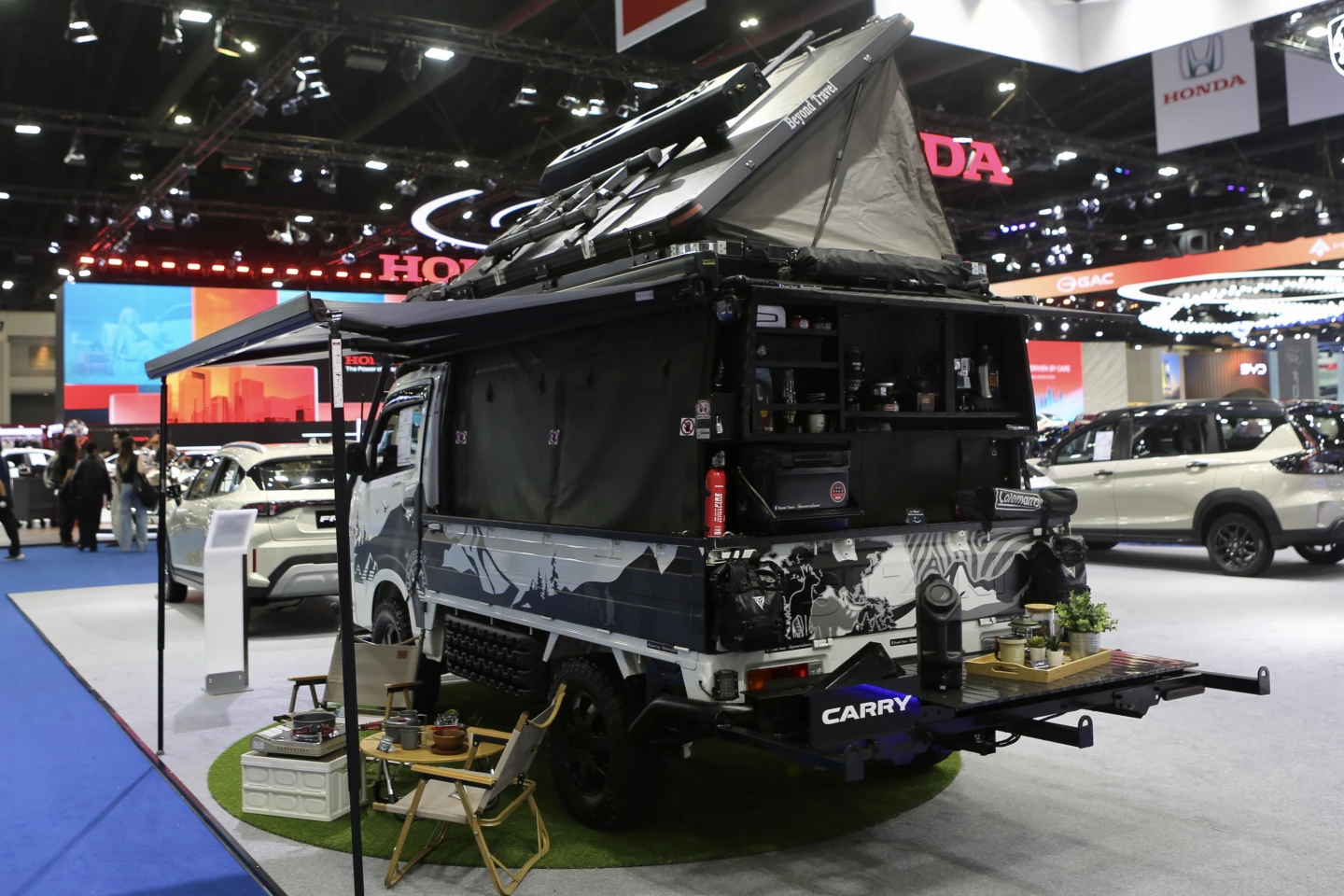
And while you don’t need a radical off-road rig like the gnarly Suzuki mini-overlander below to enjoy the country’s wealth of natural beauty and adventure opportunity, it sure wouldn’t hurt. Suzuki didn’t give the show vehicle a fancy name beyond the “Carry” nameplate of the small truck underpinning the accessory-heavy rig but used it as a demonstration of the ฿395,000+ (approx. US$12,225+) multipurpose truck’s versatility and ability to meet the diverse needs of commercial and private buyers.
Mike Hanlon/New Atlas
We’re definitely sold … especially for that USD price.
If there’s a company that best exemplifies Thailand’s growing automotive/adventure cross segment, it’d have to be Carryboy. Based in Bangkok, it’s one of the world’s largest manufacturers of fiberglass truck caps, canopies and accessories. It made some serious noise at the 2024 Bangkok show in revealing one of the world’s first Toyota Hilux Champ micro-camper trucks, and this year, it moved beyond the truck with the debut of the Carryboy x Farizon Campervan.

Carryboy
We already took an in-depth look at this camper van, available for prices starting at ฿2.8 million (approx. US$85,550), and it’s so far proven our most popular RV article of the year … by a long shot. There’s surely a number of reasons for that, but we have to think a feverish interest in Chinese electric vehicles, and their ever-increasing driving ranges, is among the largest.
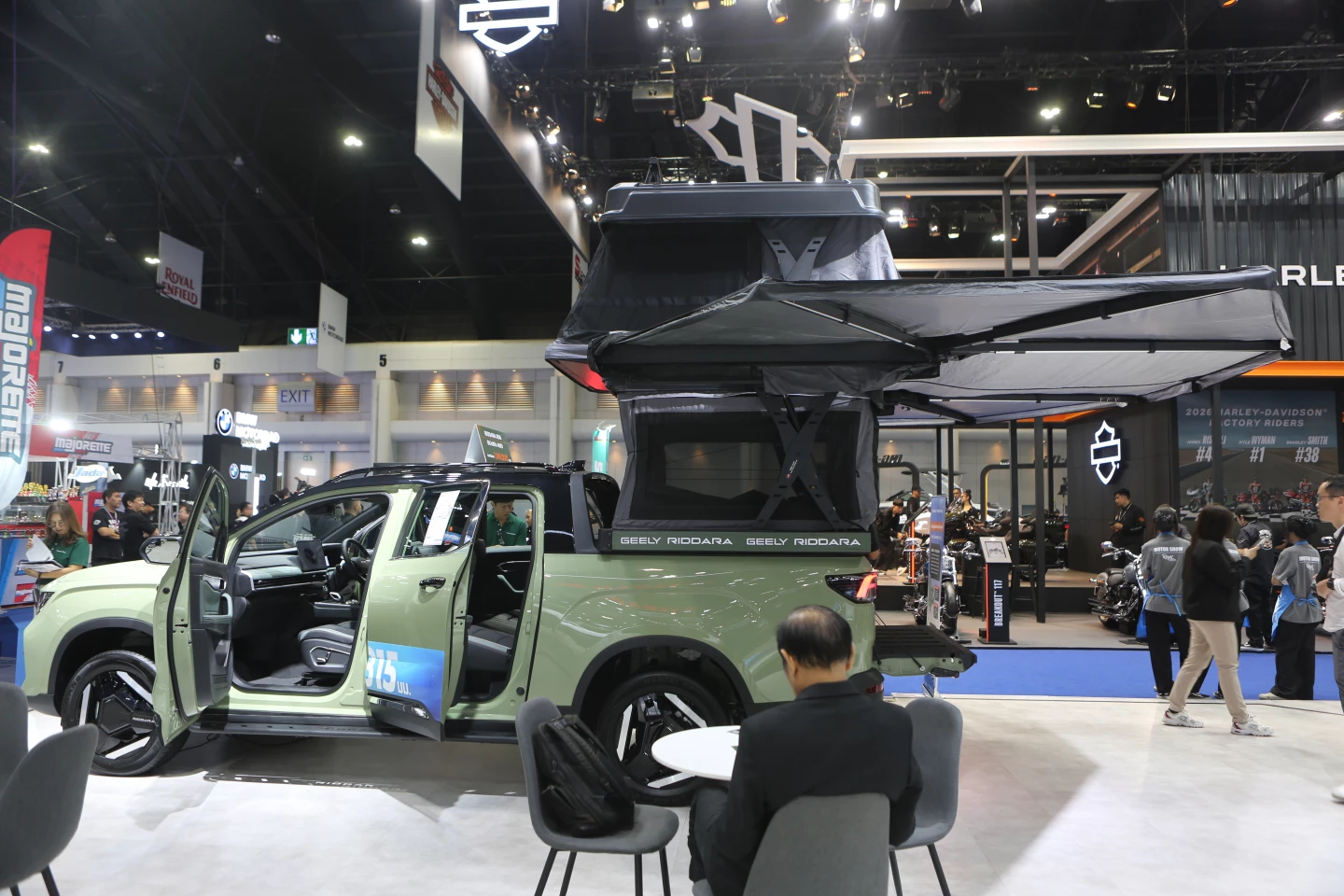
While the Carryboy x Farizon van’s 231 miles (372 km) of range isn’t particularly impressive, falling short of existing VW ID. Buzz and Kia PV5 camper vans, what we think RV enthusiasts are really keen to see are campers built on range-maximizing electrified vehicles that offer north of 1,000 km (620 miles). We didn’t see a camper van or motorhome advertising that kind of range in Bangkok, but this RD6 pickup truck topped with a two-story Wildland camping topper could get it done.
Mike Hanlon/New Atlas
Aimed squarely at off-roaders and adventurers, the RD6 from Geely truck brand Riddara offers multiple powertrain options. The one on show was an all-electric 4WD model, but the “Super Hybrid” range-extended electric model offers more than 1,000 km of combined range – quite a trip between pit stops.
The world might not be quite ready for the limited ranges and extended stops involved with contemporary all-electric RVs and overland rigs, but it’s definitely itching for high-mileage range-extended electric variants that can sip fuel efficiently, out-travel many traditional ICE vehicles, fuel up quickly and deliver zero-emissions driving in pristine wilderness spaces and city centers (62 miles/100 km’s worth, in the RD6 PHEV’s case).
And lest you think that towering scissor-lifted truck house destroys every last sign of aerodynamics, you’ll notice it doesn’t extend over the driver’s cab. In fact, Wildland has designed it to pack down below cab level when closed. That’s not to say the added 550 lb (250 kg) of weight won’t slow you down, but it’s a more aerodynamic choice than many pickup camping options.
Have a look through the gallery for more examples of inventive camping and adventure vehicles fresh off their appearance in Bangkok.