

TL;DR
- Before LG shuttered its smartphone division, it had a final trick up its sleeve — the prototype LG Rollable phone.
- LG’s rollable prototype is out in the open following two YouTube videos showing the device teardown and a hands-on feature overview.
- It turns out the LG Rollable was more mature of a prototype than we could’ve expected, complete with software tricks, sound effects, and animations.
The fall of LG’s smartphone division wasn’t exactly surprising to Android fans, but it certainly was disappointing. LG had a knack for creating risky and innovative Android phones no other brands could rival — one of its final phones was the swivel-screen LG Wing. It’s easy to wonder what could’ve been, and thanks to a couple of tech YouTubers, we don’t have to.
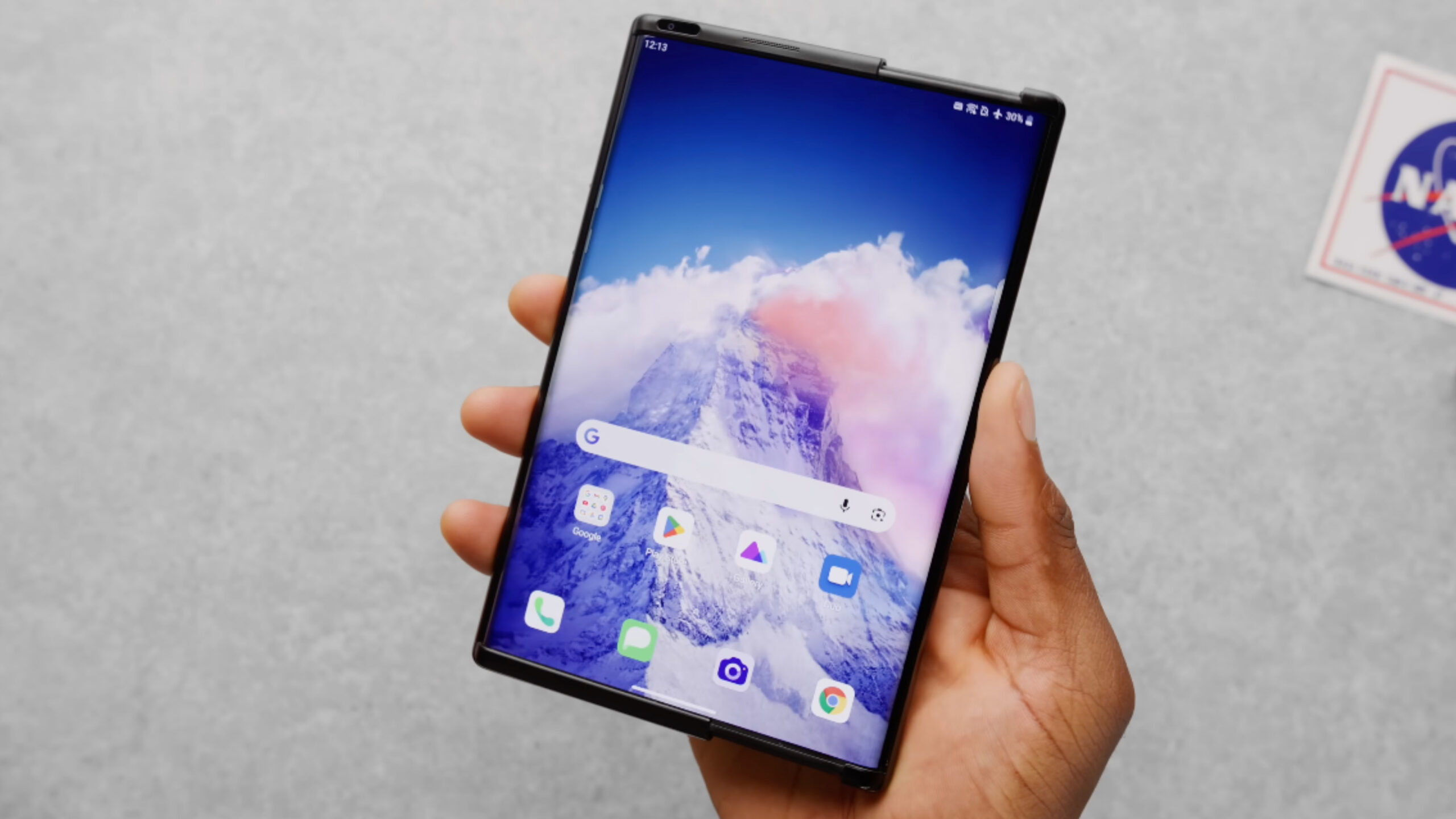
Zack Nelson of JerryRigEverything tore down the canceled LG rollable phone prototype in a video earlier this month, and now, Marques Brownlee (MKBHD) is sharing his own hands-on YouTube video. Nelson shocked the Android community by successfully taking apart and re-assembling the LG Rollable prototype, but what would it have been like to actually use it daily? Brownlee gives us a taste of what we could’ve expected from the LG Rollable, had it actually came to market.
Rather than use a folding display, the LG Rollable opts for a curved flexible OLED that slides out with the help of inbuilt motors. The standard 6.7-inch screen extends to a nearly 7.5-inch panel with a simple swipe, and since displays are measured diagonally, it feels bigger than that. Under the hood, there are twin-geared motors working with spring-loaded arms to open and close the rollable phone with simple gestures.
As a proof of concept, Brownlee shows the LG Rollable using the strength of its motors to move a laptop, which is certainly impressive.
Don’t want to miss the best from Android Authority?


MKBHD shows that a three-finger swipe extends or retracts the rollable screen, but that’s not all. Every time the phone is opened or closed, a sound effect plays, presumably to hide the noise of the motor working behind the scenes. If you open the rollable phone from the lock screen, you’ll see the default wallpaper shift in an engaging animation that looks like a blooming flower. Between the sound effects and wallpaper animations, it’s easy to think the LG Rollable was closer to mass production than we ever knew.
When the rollable display is fully stowed, it’s partially hidden behind a transparent glass casing on the back. That means the LG Rollable actually has a rear display that can show things like the camera, calendars, timers, and now-playing content when the screen is in its most compact form. For example, someone could use the 64MP main camera or 12MP ultrawide camera on the back as a selfie shooter with the rollable screen closed.
The rollable form factor forced LG to get creative. As both sides of the LG Rollable feature curved portions of the display, there isn’t any room on them for traditional buttons. Instead, the volume rocker is capacitive using the screen itself, and the power button oddly lives right under the rear camera arrangement.
The software appears polished, too. Apps like settings appear in a two-column layout when the LG Rollable is extended, and automatically switch to a condensed view when the device is closed.
The question on everyone’s mind is whether it’s a viable alternative to a foldable. The answer seems to be yes, but if you were hoping for a crease-less device, you’ll end up disappointed. Brownlee shows that, while less pronounced than even modern foldables, the LG Rollable does have visible display creases when unrolled. Those hoping for a new curved display concept might enjoy Samsung Display’s slidable phone shown off at MWC 2026.
Is the LG Rollable the game-changer that never was or just another gimmick? Let us know your thoughts in the comments below.
Thank you for being part of our community. Read our Comment Policy before posting.