
Kuttichathan: The Enigmatic Spirit Deity of Kerala’s Tantric Traditions
Kuttichathan occupies a unique position in the religious landscape of South India, particularly in Kerala and certain regions of Tamil Nadu. Unlike the major deities of the Hindu tradition, Kuttichathan represents a class of spirit beings that exist at the intersection of folk worship and tantric practices. He is revered as a powerful entity capable of granting boons and causing disturbances, embodying the dual nature of divine forces that can both protect and challenge devotees.
Iconographic Representation
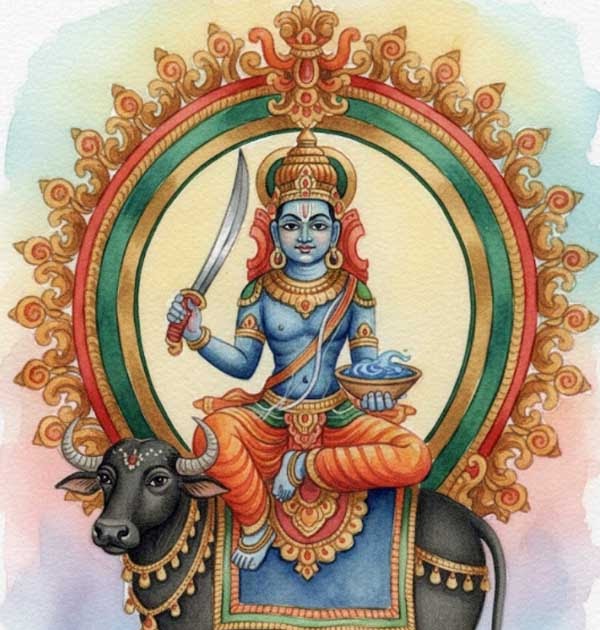
The iconography of Kuttichathan is distinctive and laden with symbolic meaning. He is traditionally depicted as a two-armed figure mounted upon a buffalo, an animal that carries profound significance in Hindu religious symbolism. The buffalo represents raw power, the untamed forces of nature, and the earthly realm. By riding this creature, Kuttichathan demonstrates his mastery over these primal energies.
In his right hand, Kuttichathan typically wields a cudgel or sword, instruments that symbolize his protective authority and his capacity to ward off negative forces. These weapons also represent his role as a guardian who can punish wrongdoers and defend his devotees. The left hand holds a bowl, which signifies his ability to receive offerings from worshippers and to grant wishes and blessings. This bowl may also represent abundance and the fulfillment of desires, essential aspects of his worship.

The Nature and Character of Kuttichathan
Kuttichathan is primarily understood as a spirit entity rather than a god in the traditional sense. In Hindu cosmology, there exists a complex hierarchy of beings ranging from the supreme Brahman to various classes of spirits, nature deities, and supernatural entities. Kuttichathan belongs to a category of beings known as Bhutas or Pretas—spirits that inhabit the liminal spaces between the divine and earthly realms.
His character is marked by ambivalence. He is neither entirely benevolent nor wholly malevolent, reflecting the Hindu understanding that cosmic forces operate beyond simple moral categories. This dual nature makes him particularly approachable for those seeking assistance in matters that conventional deities might not address—personal vendettas, protection from enemies, material prosperity, and resolution of complex worldly problems.
Role in Tantric and Occult Practices
Kuttichathan holds a central position in tantric and occult traditions of Kerala. Practitioners of various esoteric disciplines, including magicians and tantric specialists, frequently invoke his presence and power. These rituals often involve elaborate procedures including mantras, yantras (mystical diagrams), and specific offerings designed to appease and control this potent spirit.
The worship of Kuttichathan often involves possession rituals where devotees or specialized mediums enter altered states of consciousness, believed to be inhabited by the deity himself. These possession states are accompanied by distinctive dance forms and vocalizations that are considered expressions of Kuttichathan’s presence. Through these mediums, the deity is believed to communicate directly with worshippers, offering guidance, predictions, and solutions to problems.
Symbolism and Deeper Meanings
Each element of Kuttichathan’s form carries layers of spiritual significance. The choice of a buffalo as his mount connects him to Yama, the god of death, who also rides a buffalo. This association suggests Kuttichathan’s connection to the underworld, ancestral spirits, and the mysteries of life and death. It also indicates his authority over karmic consequences and his ability to influence destiny.
The two-armed form, while simpler than the multiple-armed depictions of major deities, represents focused power and direct action. Unlike the cosmic deities who maintain universal order, Kuttichathan operates in the immediate realm of human concerns, requiring fewer symbolic attributes to represent his more specialized functions.
Worship Practices and Cultural Significance
The worship of Kuttichathan is predominantly a cultic practice, meaning it is maintained by specific communities and lineages rather than being part of mainstream temple worship. Devotees typically establish shrines in their homes or in designated sacred spaces, often at the boundaries of villages or in locations considered spiritually charged—crossroads, ancient trees, or cremation grounds.
Offerings to Kuttichathan traditionally include items associated with both appeasement and invocation: alcohol, meat, flowers, incense, and specially prepared ritual foods. These offerings reflect his nature as a spirit who accepts substances that orthodox brahminical traditions might reject, positioning him firmly within tantric and folk religious frameworks.
Attribution of Unexplained Events
In traditional communities where Kuttichathan worship is prevalent, unexplained phenomena, sudden misfortunes, mysterious illnesses, and unusual occurrences are often attributed to his influence. This attribution serves a cultural function, providing explanations for events that lie outside rational understanding while simultaneously offering ritual solutions through appropriate worship and appeasement.
This aspect of Kuttichathan’s character reflects the Hindu understanding that the cosmos contains numerous agencies and powers, not all of which operate according to predictable patterns. By acknowledging Kuttichathan’s role in mysterious events, devotees maintain a worldview that accommodates the inexplicable while providing means to address it.
Kuttichathan represents an important dimension of Hindu religious practice that often remains overlooked in discussions focused solely on major deities and orthodox traditions. His worship demonstrates the inclusive and diverse nature of Hindu spirituality, which accommodates numerous forms of divine and spiritual entities, each serving specific functions in the lives of devotees. Through his fierce form and ambivalent nature, Kuttichathan continues to fulfill vital religious and psychological needs for communities in South India, offering a direct, accessible means of engaging with supernatural forces in the complex journey of life.