
Politics
/
April 23, 2026
The breach of decorum says a lot about the crisis of the court—and that’s a good thing.
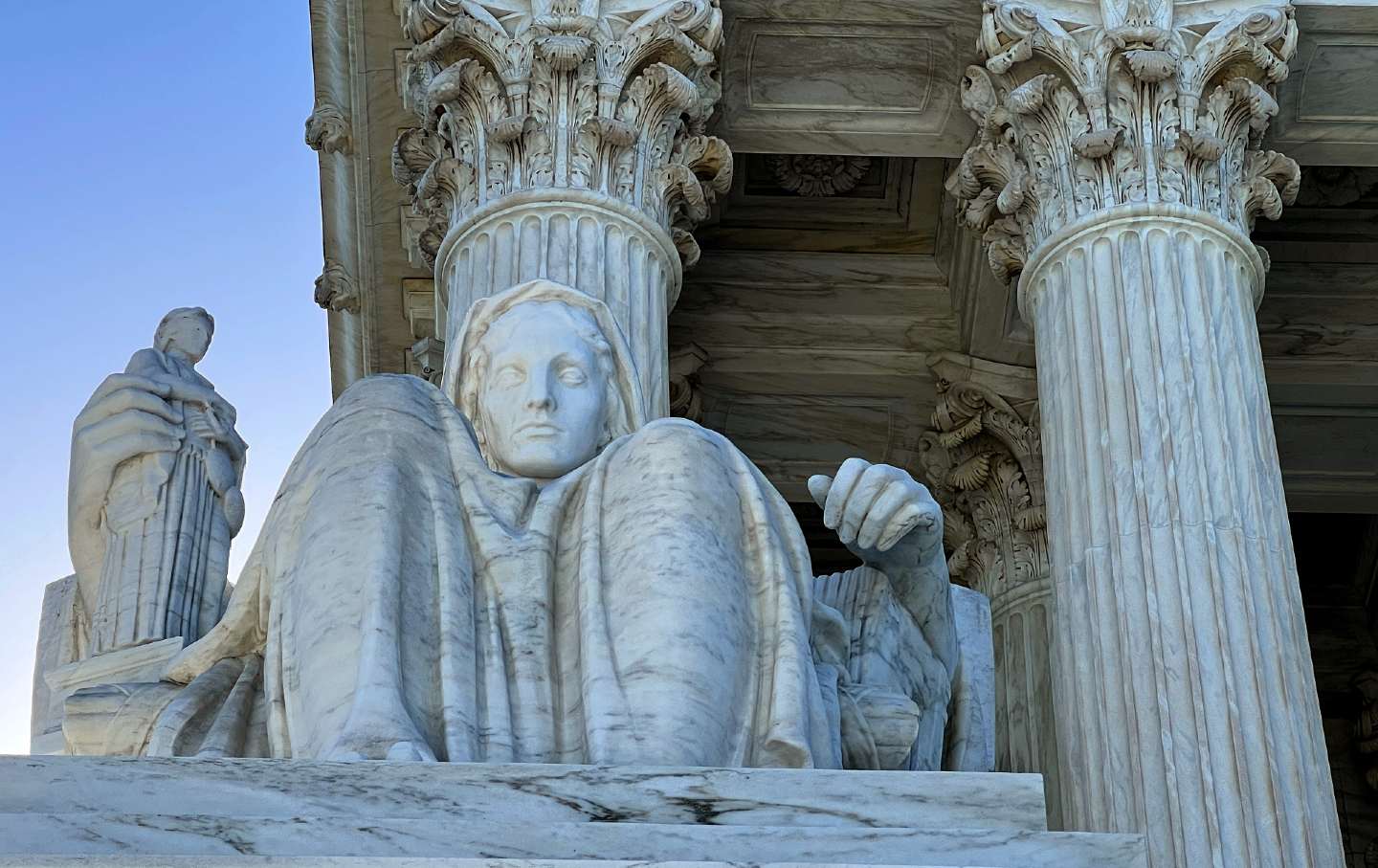
The statue Contemplation of Justice, above the west front plaza of the US Supreme Court Building.
(Chip Somodevilla / Getty Images)
The Supreme Court justices have been running their mouths. Justices Clarence Thomas, Sonia Sotomayor, and Ketanji Brown Jackson have all spoken recently about the state of the court—while casting some not-so-collegial shade on their colleagues. At an event in early April, Sotomayor made a pointed comment about a colleague (clearly meant to be alleged attempted rapist Brett Kavanaugh) who she said did not have the “life experience” necessary to appreciate how his love for racial profiling hurt others—an objectively true statement that she later apologized for, for no reason. Thomas accused “progressives” of trying to undermine the Declaration of Independence, which isn’t true except for the part where the Declaration only contemplates freedom for wealthy white men. Justice Jackson was perhaps the most critical, excoriating the court for its use of the shadow docket.
Soon after those comments, Jodi Kantor and Adam Liptak published an article in The New York Times that relied on a trove of leaked memos and e-mails from the justices about the proverbial birth of the shadow docket. This followed an article, also in the Times, alleging a “cat fight” between Jackson and Justice Elena Kagan, which is exactly the kind of thing that would never get published if two men were having a normal professional disagreement over brandy or whatever. And just this week, Republican reputation-washer Mollie Hemingway came out with a new book about Justice Samuel Alito—and apparently everybody has been blabbing to her for reasons surpassing understanding.
There’s always a lot of gossip surrounding the court. But the public comments from the justices, as well as the leaks, feel different. What’s emerged from their speeches and spills is that the justices are deeply divided on the state of the court and the country.
The press has responded with some pearl-clutching. Supreme Court justices do not usually air criticisms of each other, so there’s a feeling like another important norm is being breached. But I think these public comments are a good thing. The Supreme Court is a political institution, and the justices are political creatures. All the sniping is doing is revealing the politics behind the court, and I think the public is better off knowing how these nine people really think.
Especially right now. The conservative theocrats on the Supreme Court are drunk with their own power—to the point where they often don’t feel the need to explain themselves and instead issue pronouncements via the shadow docket, without the benefit of a full hearing. They have become the enforcement arm of the white wing’s political and cultural agenda. Pretending that the court is still remotely interested in “doing law” as opposed to “doing politics” isn’t doing anybody any favors.
The alarm bells should be raised, and the loudest alarms should be coming from the liberals on the court. Partisans like me can scream all we want about the Roberts court’s utter disregard for precedent and established legal principles. But we’re fundamentally outsiders, offering our best guess as to what’s happening inside a black box based solely on what that box spurts out. And, at least in my case, I don’t mind telling you that my analysis is colored by my strong bias toward human decency, democracy, and the protection of minority rights.
Current Issue

The justices themselves are, or can be, the best source for what’s really going on at the court. If they point out problems, that should carry more weight than the total tonnage of talking heads.
But speaking out does not come naturally for the justices on the court. Traditionally, the Supreme Court speaks only through its opinions. If there is a disagreement that they think the public should be aware of, that’s what the dissent is for. The justices are conditioned to let their writing do the talking, both out of a sense of professionalism and because they want to avoid seeming “political.”
That reticence extends all the way down to the Supreme Court clerks who work for the justices, and the reporters who cover the institution. While Congress leaks like a sieve, and there’s a new tell-all book about the president every month, the Supreme Court almost never leaks. Think about it this way: The Kantor/Liptak story is based, in part, on memos sent 10 years ago. Reporting on the Supreme Court is like doing astronomy; you’re reporting on events you can only see years and years after it happened.
The Supreme Court’s functional vow of omertà makes the institution the most secretive, most opaque branch of government. Given how much power these people have, the lack of information should be unacceptable to the general public. These people purport to tell us what rights we have. They tell us who can vote, and what we can vote for. They tell us that children should be sacrificed on the altar of the Second Amendment—and LGBTQ+ children should simply be sacrificed. And yet they are less communicative, and are under less scrutiny from the press, than a town supervisor with a Facebook account.
I’d argue that the traditional method of court communication with the public fails the current moment in at least three ways.
- The idea that these people are impartial, apolitical, impassive arbiters is as antiquated as the idea that leeches are a viable medical treatment. As I said, continuing to pretend that these people are apolitical actually does a disservice to everybody concerned about their government. We’re better off if they explain their politics (or their jurisprudence as shaped by their politics, if that makes it easier for them) than if they continue to pretend that their politics don’t matter.
- Most people paying attention know that the Supreme Court is political in some way, but they don’t always know how. That knowledge deficiency leads a lot of people, both in the media and in the political classes, to make wild assumptions about where the court’s politics lie, and how those politics are expressed. It is simply not the case that the liberals on the court “always stick together,” as the orange man would have us believe, nor is it the case that conservative justices regularly break from the party line on issues of national import. The best way to combat misinformation from other political actors is for Supreme Court justices to explain themselves in clear language.
- It’s 2026. People can hit up LeBron on Instagram and ask him why he made a bounce-pass in the third quarter and potentially get a response from the man himself. The Supreme Court’s inaccessibility is, again, antiquated. People expect some level of access to their key government decision makers. It is well past time for the court to join the 21st century [insert 10,000-word rant about how oral arguments should be televised].
The solution is simple. The justices should talk more. They should sit for more interviews. They should sit for at least a few hostile interviews or, at a minimum, talks where their interlocutor isn’t a former clerk or professorial ally. The justices cannot rely on the public to read and understand their opinions, nor can they count on the political press to accurately reflect the impact of those opinions. They should tell us, directly, what they think the court is doing and why.
Popular
“swipe left below to view more authors”Swipe →
That’s the carrot—the idea that these people can do a better job of controlling their own narrative if they communicate more. The proverbial stick should be a press corp that is on these people like they hold the fate of the free world in their hands (which they often do). I remain amazed that these people can walk out of their offices without running into a gaggle of reporters shouting questions and demanding answers. That needs to change.
We’re about to hit May, which is the start of decision-season for the Supreme Court. The court will be issuing major rulings on trans rights, birthright citizenship, and the Voting Rights Act—which they’re likely about to kill, unleashing Jim Crow levels of racism back into our electoral process. The justices will issue these rulings and then… drive home. Reporters won’t be hounding them. Nobody will ask them so much as a follow-up question. Ten years from now, we’ll learn that Clarence Thomas actually texted Sam Alito that Black people secretly hate the Voting Rights Act—and that Alito believed him because Thomas and the guy who washes the family flags are the only Black people Alito speaks to.
The point is simply this: The Supreme Court is a political institution and it must be treated like one. The press should cover it like they cover all the other branches of government, and the public should expect communication and transparency from this branch, just like all the others.
The time for treating the justices like they are above the political fray has passed. They are in the muck with the rest of us. They have put themselves in that muck with their own decisions. It’s time for everybody else to start acting like it.
From illegal war on Iran to an inhumane fuel blockade of Cuba, from AI weapons to crypto corruption, this is a time of staggering chaos, cruelty, and violence.
Unlike other publications that parrot the views of authoritarians, billionaires, and corporations, The Nation publishes stories that hold the powerful to account and center the communities too often denied a voice in the national media—stories like the one you’ve just read.
Each day, our journalism cuts through lies and distortions, contextualizes the developments reshaping politics around the globe, and advances progressive ideas that oxygenate our movements and instigate change in the halls of power.
This independent journalism is only possible with the support of our readers. If you want to see more urgent coverage like this, please donate to The Nation today.
More from The Nation
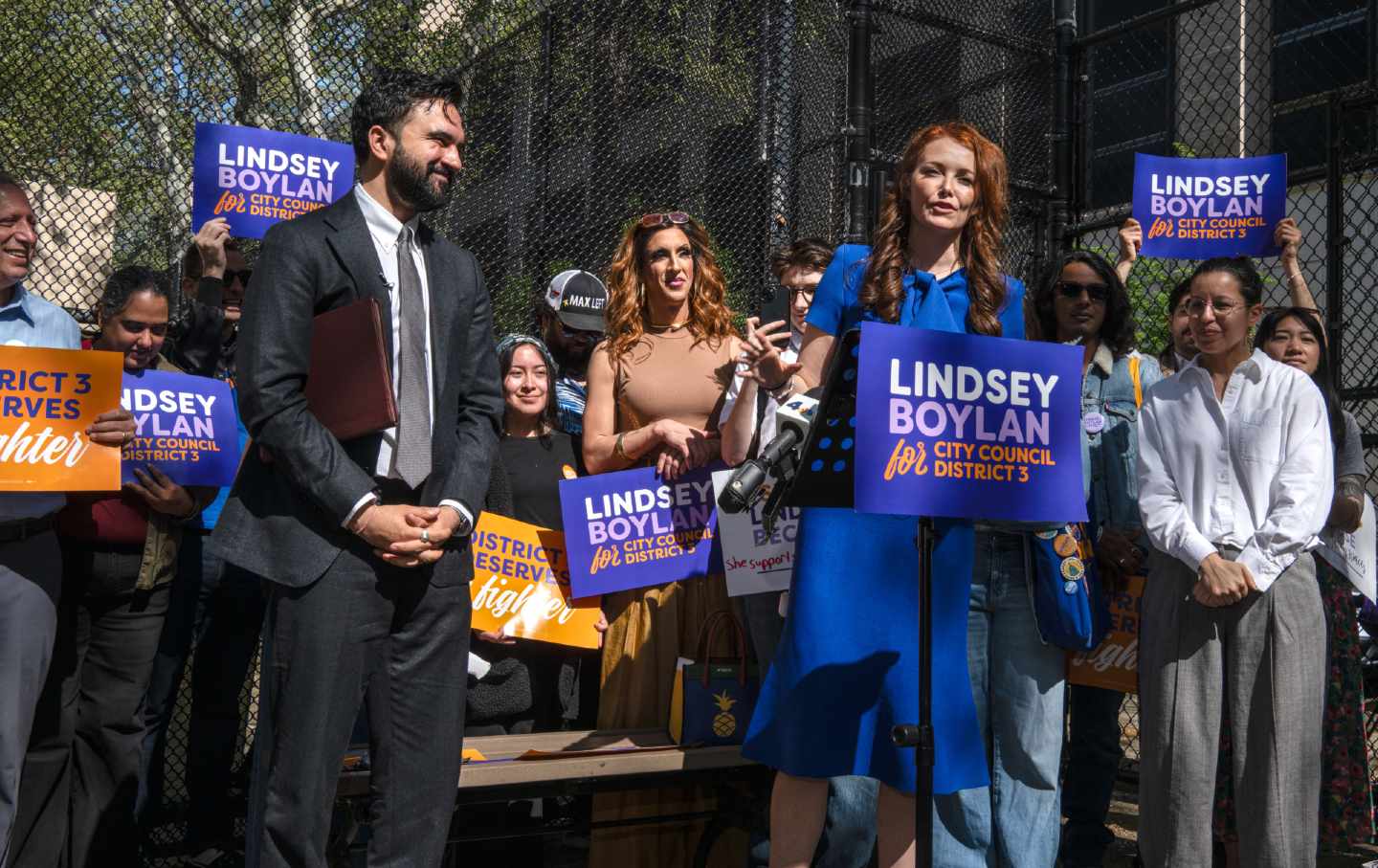
The first woman to accuse Cuomo of sexual harassment is running for City Council. Her progressive campaign has been backed by Zohran Mamdani.
Ilana Cohen

Around 40 small boats, carrying an estimated 300 people on board, sailed from Barcelona on April 13, 2026, headed to Gaza.
OppArt
/
Felipe Galindo

Jeff Bezos said The Washington Post would no longer publish opinion pieces critical of free markets. Recent editorials show just how seriously the paper has taken this mandate.&nb…
Nathan Robinson