
As researchers look for less invasive ways to study cellular processes, quantum sensing is emerging as a tool to observe biological activity at previously inaccessible scales.
A team at Washington University in St. Louis has demonstrated the use of quantum biosensors inside living cells to measure changes in temperature and magnetism. The work, shared via a preprint on bioRxiv, focuses on using nanodiamond-based sensors to probe mitochondrial activity.

The approach relies on engineered nanodiamonds containing defects that trap electrons sensitive to environmental changes. These quantum states respond to variations in temperature and magnetic fields, enabling precise measurements at the nanoscale. To introduce the sensors into cells, the researchers used macrophages, which naturally ingest foreign particles, allowing the nanodiamonds to be internalized without invasive procedures.
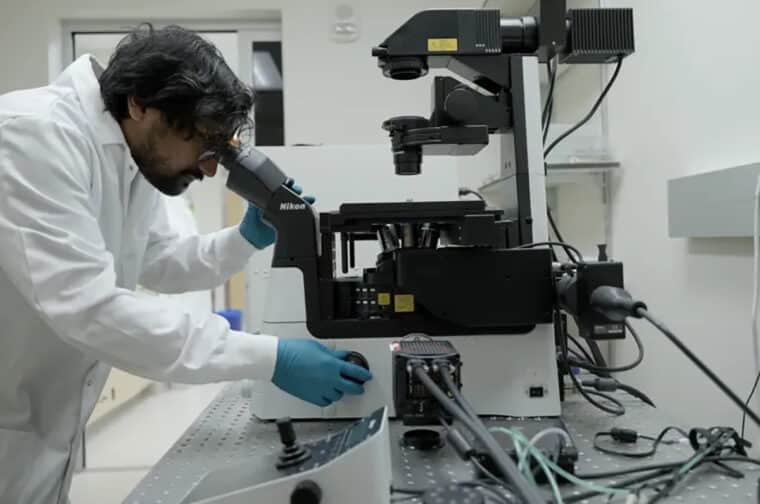
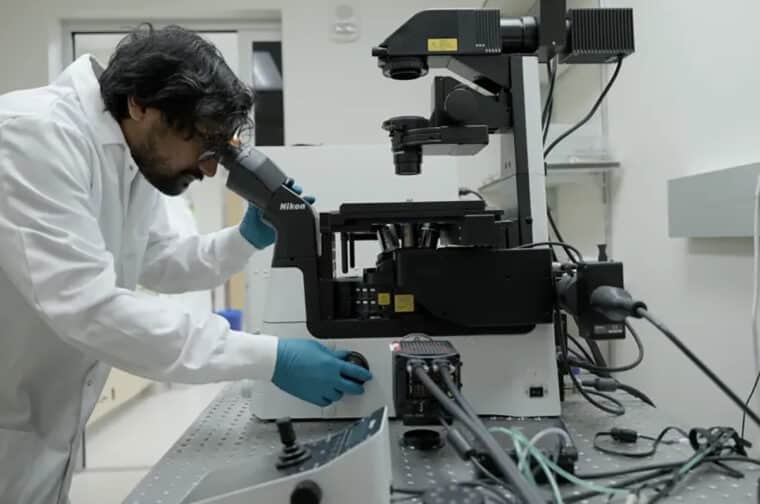
Using a specialized microscope, the team tracked how these quantum sensors behaved within the cellular environment. The measurements revealed subtle magnetic fluctuations and temperature shifts linked to mitochondrial processes, including the movement of iron-containing molecules involved in metabolism.
Previous methods for measuring such signals inside cells have often disrupted normal cellular function. By contrast, the nanodiamond-based approach allows simultaneous measurement of multiple parameters within living cells, offering a less intrusive alternative.
The research was led by Shakil Kashem, with contributions from physicists, biologists, and engineers, highlighting the interdisciplinary nature of the work. The findings suggest potential applications in studying metabolic disorders and diseases linked to mitochondrial dysfunction.
“Our findings suggest that the movement of iron-containing molecules seems to play an important role in metabolism,” says Chong Zu, assistant professor, at Washington University. “We want to create a new technique for measuring mitochondrial health, which could lead to novel therapies.”