
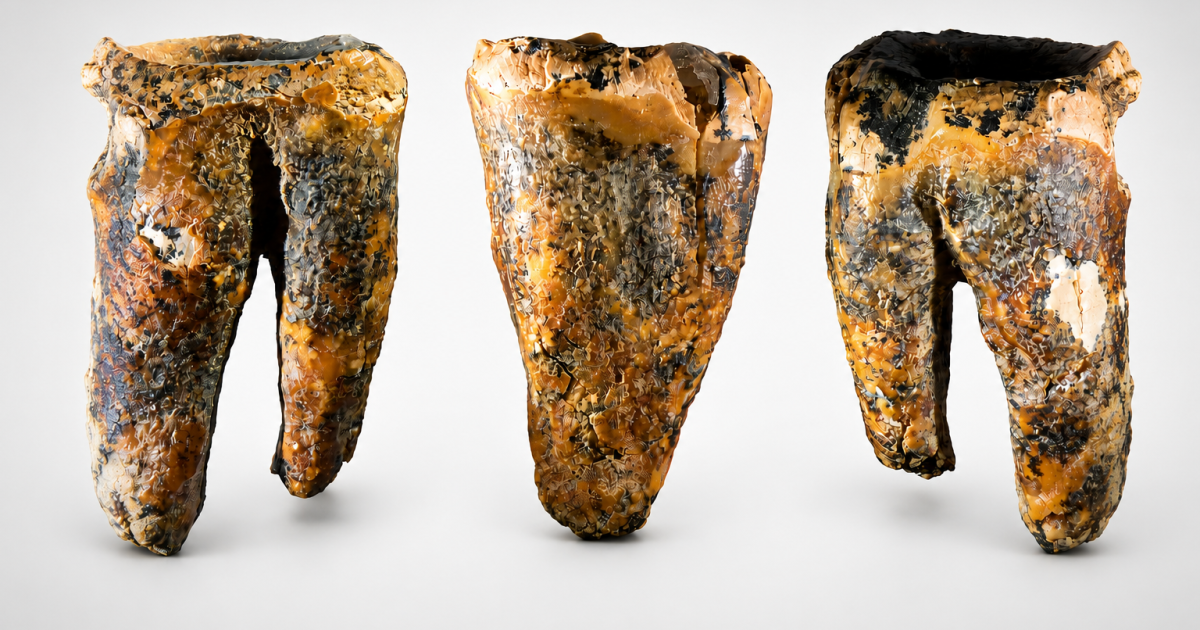
Few of us enjoy the dentist – but next time you’re in the chair, think about how lucky you are not to have been visiting a Neanderthal tooth doctor. New research on a single tooth from a Russian cave has found that its center is marked with the kind of grooves made by stone tools used as rudimentary drills.
The tooth, dating back nearly 60,000 years, is now our oldest evidence of dental procedures being performed.
While finding the tooth – at Chagyrskaya Cave, a rich source of Neanderthal fossils in southern Siberia – was an achievement in its own right, what it revealed was even more remarkable.
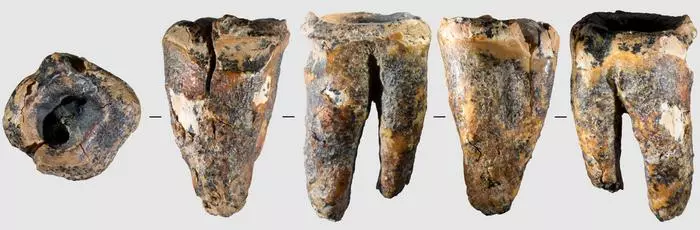
At the center of the molar, scientists noticed a deep hole extending into the area that would have housed nerve endings. What’s more, marks on the tooth and the overall shape of the hole hinted at purposeful modification not the result of an accident.
“We were intrigued by the unusual shape of the concavity on the tooth’s chewing surface,” says Alisa Zubova of Peter the Great Museum of Anthropology and Ethnography (Kunstkamera), St. Petersburg. “It differed from the normal morphology of the pulp chamber and did not match the typical pattern of carious lesions seen in Homo sapiens. Moreover, distinctly visible scratches suggested that the concavity was not the result of natural damage but of intentional actions.”
Yes, the researchers confirm, the procedure would have been painful – but the hollowing-out of the tooth by a stone “drill” tool suggests it was done to alleviate a condition far more unpleasant and risky long-term. Infections back then could easily result in death, and there’s evidence that Neanderthal communities used plants as medicinal tools to treat such ailments and pain.
This is the first time such a practice has been observed in a species not Homo sapiens.
“This finding currently represents the world’s oldest evidence of successful dental treatment,” the authors note in the study. “The damage documented on the Neanderthal tooth from Chagyrskaya Cave in Siberia points not only to intentional pulp removal but also to antemortem wear – wear that could only have developed if the individual kept using the tooth while alive. We also identified areas of demineralization where remnants of carious damage were preserved, further indicating that the concavity in the tooth was associated with treatment.
“Computed microtomography revealed changes in dentin mineralization consistent with severe caries,” the team adds. “Human manipulation of carious lesions has already been documented for the Upper Paleolithic, Mesolithic, and later periods. We therefore hypothesized that the damage we observed could also represent traces of such medical intervention – but from a significantly earlier period.”
The scientists conducted a thorough investigation of the fossil, using modern technology and what we know of the Neanderthal societies of the region. Because of this, they’re confident of their research.
“To interpret the concavity on the occlusal surface of the tooth, we conducted experimental manual drilling on a series of specimens: a modern human tooth and two H. sapiens teeth from a Holocene archaeological collection of uncertain temporal and cultural provenance,” says researcher Lydia Zotkina.
“Comparison of the microscopic traces on the original Neanderthal specimen with those produced experimentally revealed a clear match,” she adds. “The findings demonstrate that drilling a carious lesion using a sharp, thin stone tool is entirely effective, permitting the rapid removal of damaged dental tissue.”
The research was published in the journal PLOS One.
Source: Peter the Great Museum of Anthropology and Ethnography via EurekAlert!