
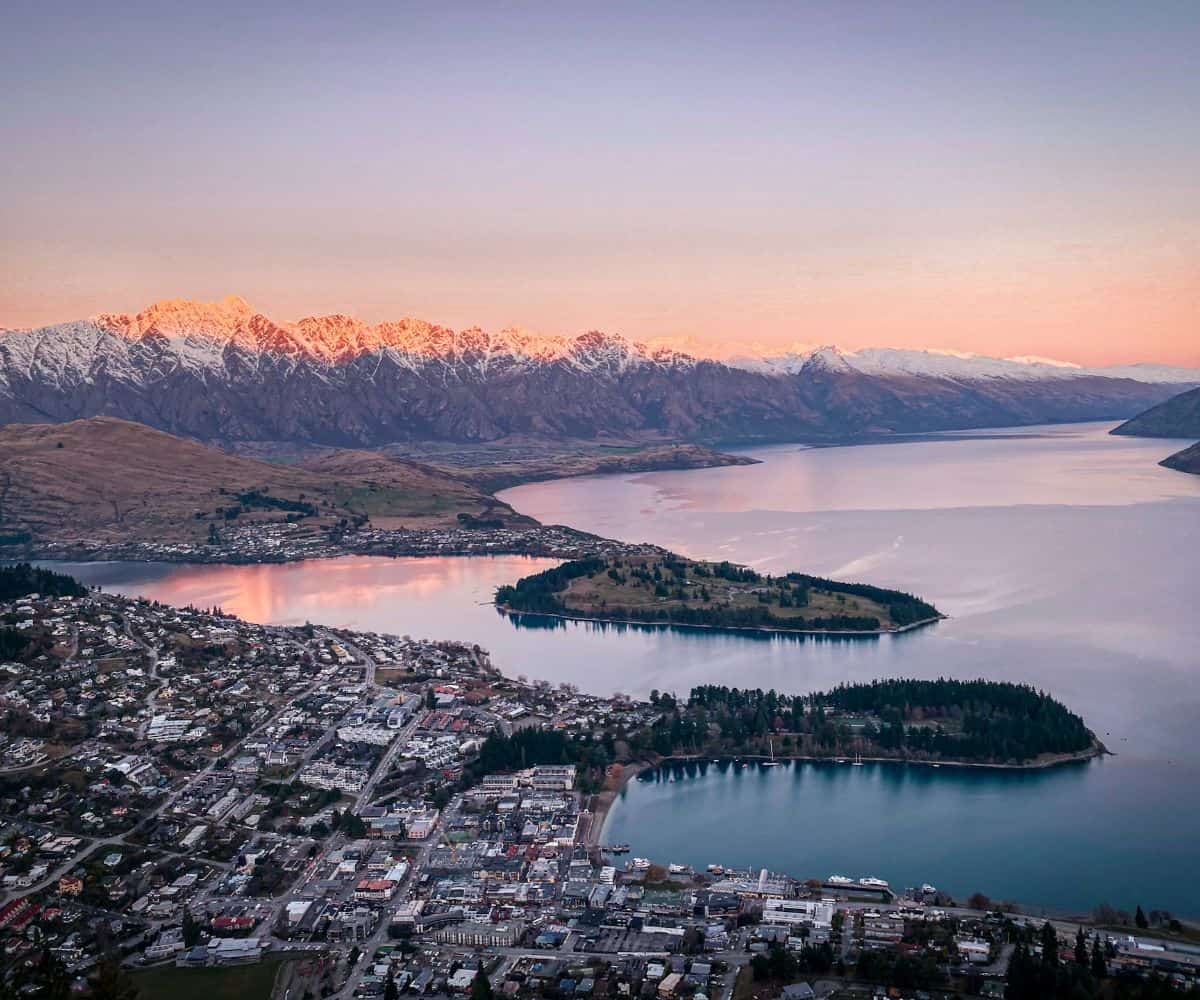
Most first-time visitors to New Zealand’s South Island put Queenstown on the itinerary without much deliberation. It’s the world’s adventure capital – a title and a reputation deservedly earned and as such one of the headline ‘must-visit’ destinations in New Zealand.
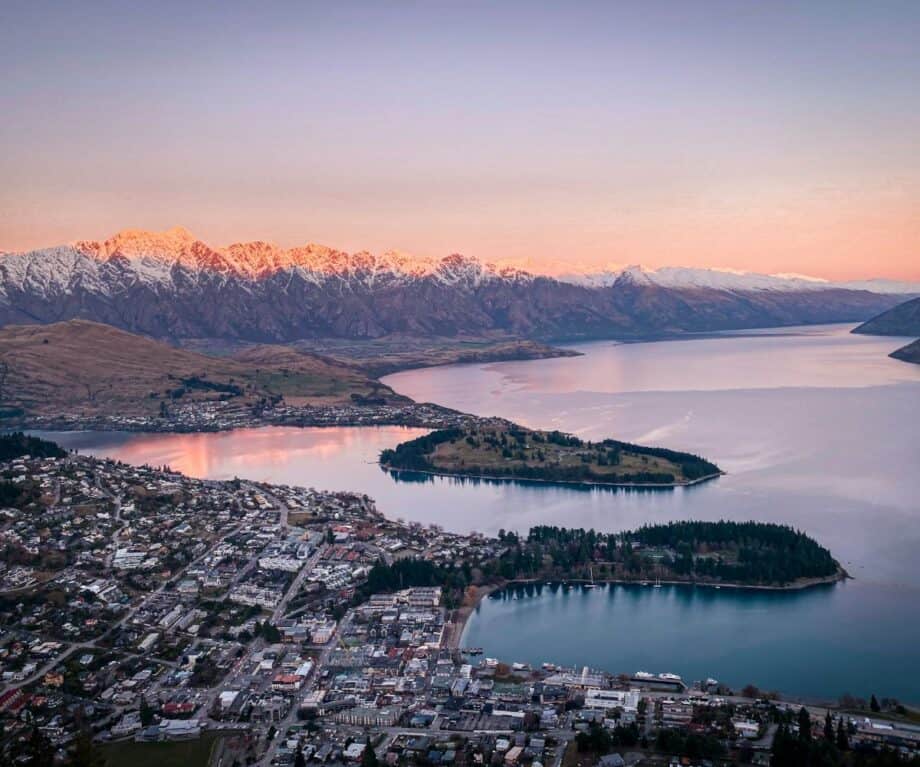
Most people will have heard of Queenstown even if they can’t tell you where it is in New Zealand, but once they know its tiny airport welcomes international flights from Sydney, Melbourne, Brisbane and the Gold Coast as well as domestic shifts it becomes the default answer when anyone asks where to base themselves in the Southern Lakes.
That’s not wrong, but Wānaka sits 45-minutes away and travellers who find their way there tend to stop asking whether they made the right call fairly quickly.
Queenstown: where to start
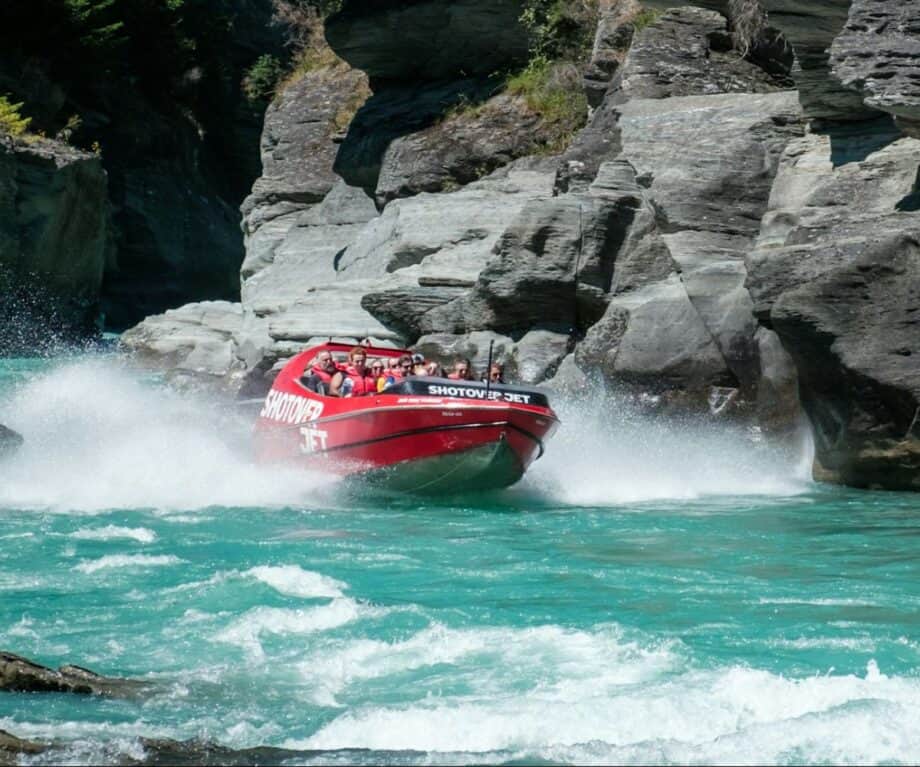
Just to put the adventure capital label into perspective: bungy jumping was invented here. AJ Hackett’s original Kawarau Bridge site still runs, alongside the Nevis, which drops 134 metres above a remote river gorge and remains one of the more serious things you can voluntarily do with a Tuesday afternoon. The Shotover Jet is probably the next best known adrenalin thrill as it speeds you through a narrow schist canyon at close to 90km/h.
At the other end of the pace spectrum, the TSS Earnslaw, a coal-fired steamship built in 1912, still crosses Lake Wakatipu to Walter Peak Station, where the high-country farming demonstration is less cheesy than it sounds. It runs all season long and even when the Earnslaw is wintered there are still cruise options across the lake. For those who prefer to get their kicks from speeding downhill on snow, there are two ski resorts – The Remarkables and Coronet Peak – operating within thirty minutes’ drive. If downhill on two wheels is more your thing then Coronet and the trails around the Skyline Luge in summer are your playground.
Beyond Queenstown, but very much magnetic to the Wakatipu must-do list are the Sounds and Glenorchy. Taking a day trip to Milford Sound or Doubtful Sound (the latter being ever so slightly more stunning and therefore booked up faster) is a long day trip but a manageable one – unless you opt for a magnificent overnight cruise, or even an opulent fly-cruise-fly option.
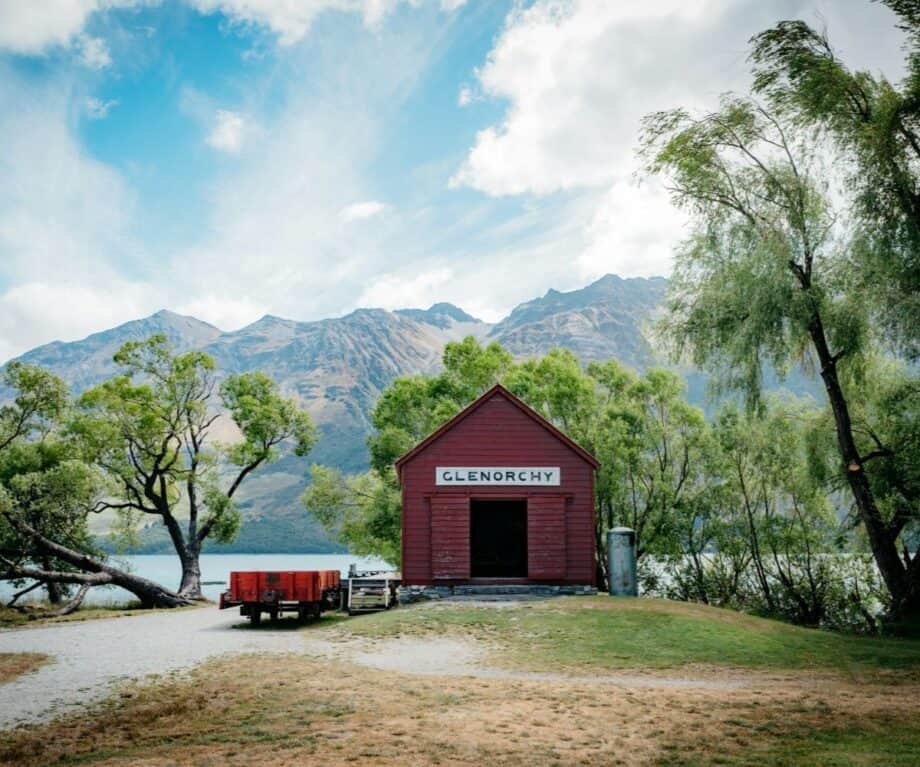
Glenorchy is home to Paradise. And until very recently it was exactly that, still is if you’ve never been before. Forty-five minutes from Queenstown along a lake road that passes between water the colour of pewter and mountains dropping almost vertically into it, the town sits where the Dart River meets the northern end of Lake Wakatipu. The peaks above it served as Rohan and Lothlórien in the Lord of the Rings films. A jet boat up the Dart (or a jet boat up and a kayak back), or a morning on horseback into the valley beyond, is a different New Zealand entirely from what most visitors see. So making it your must-see could be the standout moment in your trip.
The Gibbston Valley, twenty minutes east of Queenstown en route to Central Otago is a designated International Dark Sky Park with some groundbreaking vineyards and some fabulously friendly cellar doors. Much of the grapes here are Pinot Noir growing in schist soils with cool overnight temperatures and hot, dry summers. Several cellar doors operate along the gorge road; Peregrine’s architecture alone is worth the drive and for something a little less commercial pop into The Church.
Queenstown serves up location (it truly is a stunning lake setting), adventure and thrills, a mighty and varied food scene, and access to the parts of New Zealand where ‘those’ photos are taken. It’s an obvious, easy and beautiful place to start your Southern Lakes trip and while people do avoid it because of its adrenalin reputation and a fear of commercialism, we know how to find those still-authentic spots.
Wānaka: fall in love with life by the lake
While we’re here to make a comparison, Wānaka really deserves its own platform and positioning. It is my favourite place in the Southern Lakes after visiting many times and even before living in Central Otago but for visitors on a once-in-a-lifetime trip it can get overlooked. Here’s why (and why you definitely don’t want to miss it)…
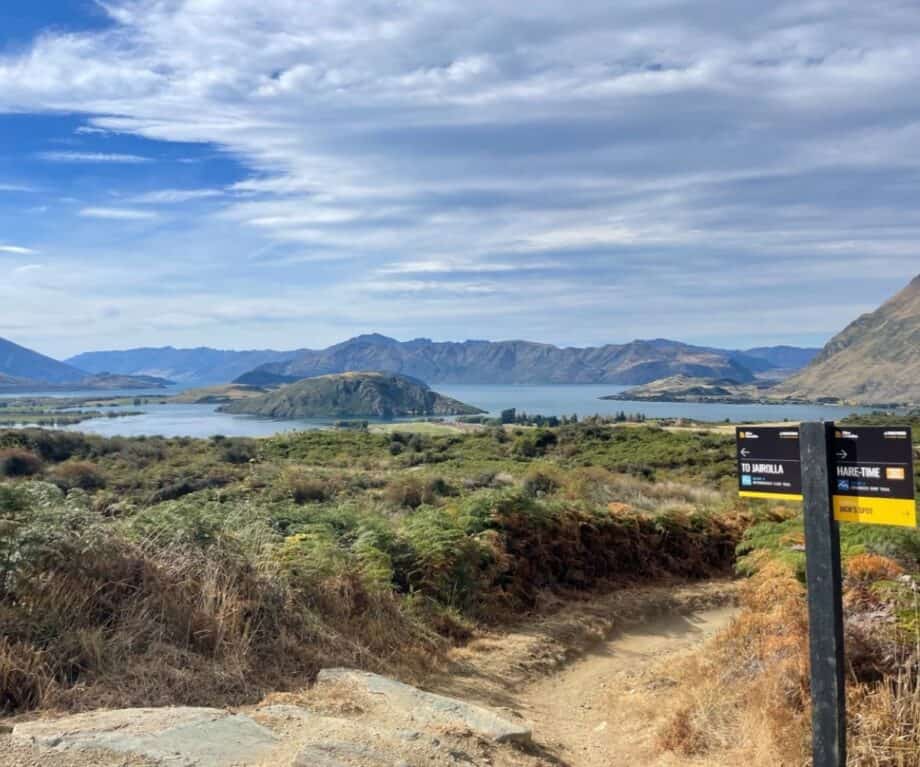
Smaller town, wider lake, quieter everything. Life happens around the lake in Wānaka and that’s a reflection of the town’s work to preserve its size and limit development or commercialisation over the years. It’s also your gateway to the Matukituki Valley, which runs west from the lake’s edge into Mount Aspiring National Park. There, beech forest gives way to open valley floors and eventually the east face of Mt Aspiring itself. Merely driving into the valley a little way with a picnic will have you glued to your camera, but there are hiking options for a range of experience and ability too.
Wānaka’s most famous hike is Roys Peak, particularly a pre-dawn tramp in time to watch the sunrise over the lake. If you’ve seen almost-aerial view images of Lake Wānaka, then they were most likely taken from this trail. It’s the trail where the car park is smaller than you’d imagine and always busy, except in the depths of winter.
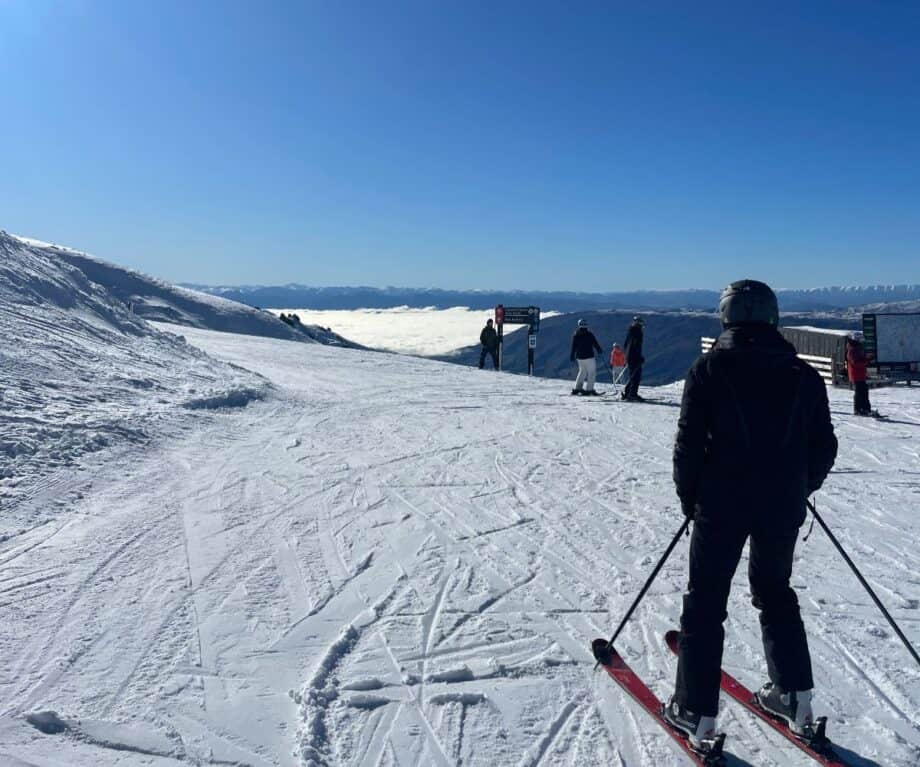
If you go wandering towards Mt Aspiring you’ll pass the gate for one of Wānaka’s two ski fields: Treble Cone (the other being Cardrona). You can be at the base of the lifts within a 40-minute drive of the town centre – no ski-in/out here but amazing access all the same.
Treble Cone’s north-facing terrain and altitude hold snow well into spring, and the absence of Queenstown’s lift queues on a Saturday is something skiers notice immediately. The fact that Treble, or TC as the locals call it, only has two lifts tells you just how much terrain there is to play on, and that before the hike to the Summit for those seeking deep powder play.
Lake Wānaka is swimmable from myriad places around the shoreline, and because its a glacial lake its temperature barely fluctuates. There are enough kayaks and SUPs for everyone to hire. The tramping trails don’t get overcrowded.
To hint at the year-round appeal of Wānaka: the heli-skiing and heli-biking access from here reaches terrain that lift systems don’t touch. The poplar rows in April (the southern hemisphere’s autumn), gold against the Buchanan Peaks. That Wānaka Tree in still water at first light. These things are real and they’re not performed for tourists, which is partly why the people who come here keep coming back.
Arrowtown: Where heritage and the finer things reside
Twenty minutes from Queenstown and about 45-minutes from Wānaka, Arrowtown sits alongside the Arrow River in the Wakatipu Basin, the Crown Range rising steeply behind it to the west. The main street, Buckingham Street, was established during the Otago gold rush and has the heritage buildings to prove it. The Chinese settlement at the edge of town where miners lived through the 1860s is more affecting than most people expect, partly because it isn’t presented as an attraction so much as simply left there.
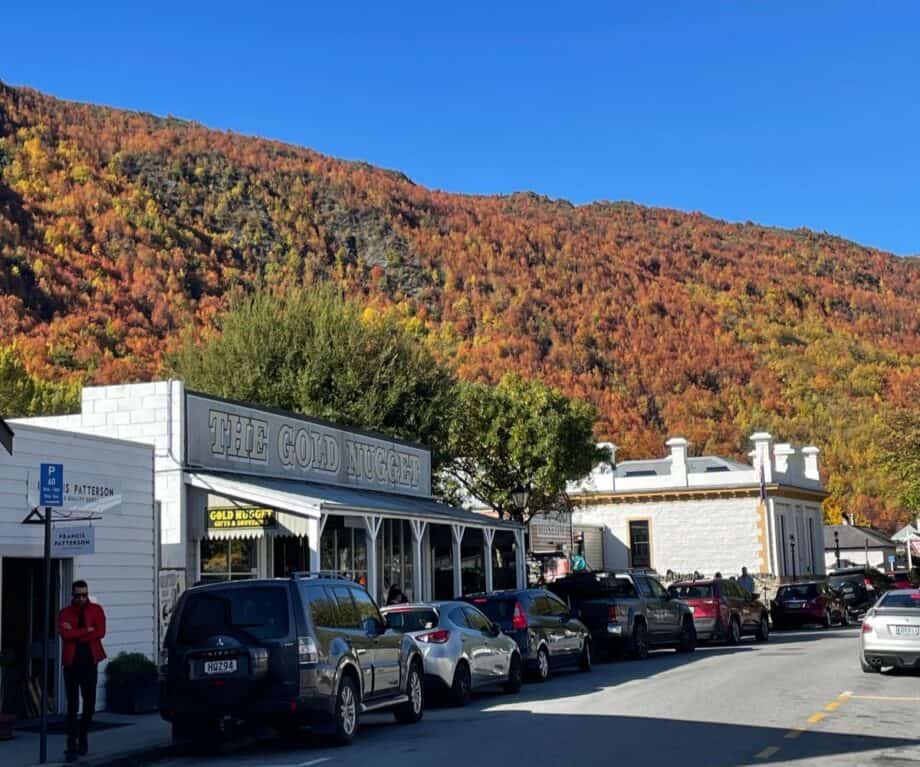
Autumn here is something specific: much like the Wānaka tree it’s something that the locals simply accept and adore, yet social media has introduced it to the rest of the world and made it a thing. Autumn colours inject an energy of colour into the hillside and along these olde worlde streets when autumn strikes in late March. The Arrowtown Autumn Festival runs each year through the month of April.
A few restaurants here have built reputations that extend well beyond the region. Others, like Swiftsure from Waiheke Island’s Man ‘O War winery, have spotted an opportunity to bring something from the North Island to the discerning palate of Southern Lakes residents and the abundant international crowd passing through each year. And because tipping isn’t a part of New Zealand culture, all your budget can be dedicated to these delicious menus and stunning wine lists.
Everything you need to plan your trip in 2026
Queenstown or Wānaka?
Three or more nights in each makes more sense than trying to decide. Queenstown for the first few nights if you’re arriving internationally, to get your bearings and cover the big experiences. Wānaka for the middle of the trip, when you’ve adjusted to the scale of the landscape and want space to move through it at your own pace. Arrowtown for a few nights at the end before heading back to the airport and when you want somewhere that doesn’t feel like it’s optimised for visitors.
It’s quite the investment of time, if you’re not here for long, but if you’ve got six weeks or more, this gives you space to get to know each destination for its highlights and quirks. Then you’ll know where to base yourself when you come back for longer next time!

Kate Stinchcombe-Gillies
Kate Stinchcombe-Gillies is CMO of Release NZ. Release NZ represents a portfolio of luxury holiday accommodation in Wānaka and Queenstown – their passion being to connect guests to everything that makes this part of the world so special. If you would like to be a guest blogger on A Luxury Travel Blog in order to raise your profile, please contact us.
Did you enjoy this article?
Receive similar content direct to your inbox.
Please enable JavaScript in your browser to submit the form