
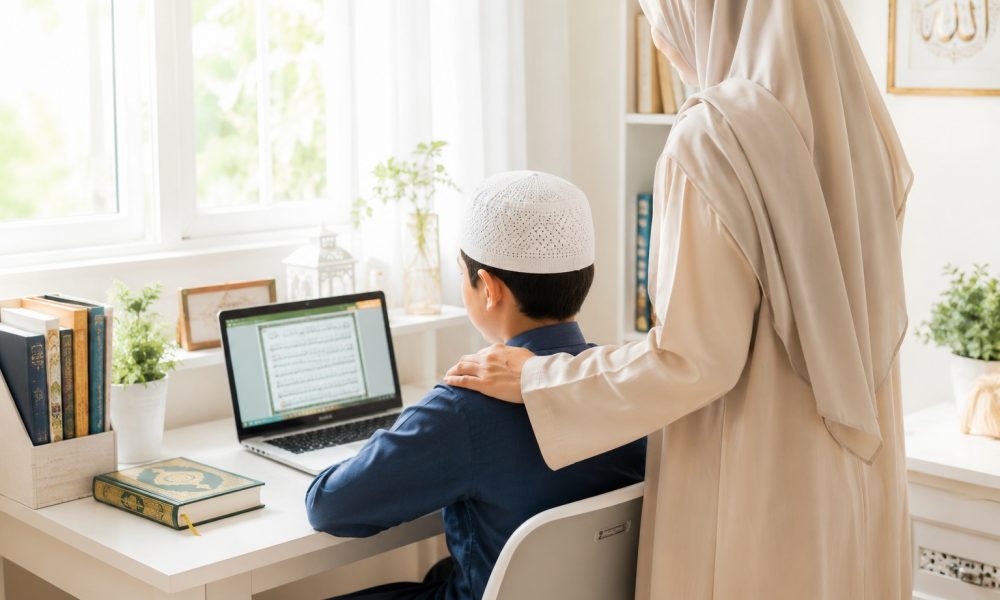
It’s been almost a decade since I wrote about Choosing a Good Quran Teacher. Back then, the brave new world of online Quran study was just opening up. Many parents have since turned to online Quran lessons for their children due to convenience and cost-effectiveness in our post-COVID world.
Unfortunately, there are serious safety concerns that parents must be hypervigilant about, particularly in the online class setting. Hearing about more and more children becoming victims of sexual abuse from “talented Quran teachers” is a wake-up call to all parents.
As a nitpicky Quran teacher since 2011, my convictions in finding the best Quran teacher for your children have now changed – prioritizing your child’s safety is of the utmost importance.
Rules for Online Quran Lessons
Keep supporting MuslimMatters for the sake of Allah
Alhamdulillah, we’re at over 850 supporters. Help us get to 900 supporters this month. All it takes is a small gift from a reader like you to keep us going, for just $2 / month.
The Prophet (SAW) has taught us the best of deeds are those that done consistently, even if they are small.
Click here to support MuslimMatters with a monthly donation of $2 per month. Set it and collect blessings from Allah (swt) for the khayr you’re supporting without thinking about it.
These rules are especially important if families are working with a Quran teacher online.
–Only the parents’ contact information should be shared with the Quran teacher. Whether it’s text messages, emails, phone calls, or anything else, the Quran teacher should never be able to directly and privately contact the student. Make sure your child is joining video calls from a device that has the parent’s login information displayed in the call. If sending voice messages for review homework, ensure your child is either using your phone to do so, or forwarding messages to you that they have sent to their teacher.
–Personal information about the child and family should not be shared. Where the child goes to school, the family’s home address, the child’s schedule of weekly activities, and other information that can help the Quran teacher find your child in person are dangerous to share. Although this may be difficult to avoid or seem obstructive to the child developing a positive relationship with their teacher, it is important to protect the safety of your child.
–All video lessons should be conducted in a communal area and with parent supervision. The parent should be able to see the screen and overhear the entirety of the lessons. This measure is to hold the Quran teacher accountable for their speech and actions during each and every lesson. It might be very challenging to arrange a productive environment for Quran lessons with other noisy children and activity in the home. It may also seem like a waste of time not to take care of other things, such as making dinner or exercising, while the child is occupied. Having your child in an adjacent room and being on a three-way video call with the teacher, child, and parent present may be a good workaround for this. Some teachers will not allow parents to be in the room or watch lessons. If the teacher will not concede after you’ve explained your concerns for your child’s safety, find another teacher.
–No photos or videos should be exchanged. Lessons should not be recorded by the teacher. You and your child should not be sending photos or videos to their teacher. This will be more complicated with social media in the mix, particularly if the teacher can access you or your child’s social media profiles. There may be instances where the teacher would like your child to listen to audio or watch videos for homework. In that case, these should be sent directly to you, the parent. The teacher should never record lessons with your child because you can’t ensure how those videos will be used.
–Establish body safety and boundaries with your children. Teach your child about the importance of keeping their private areas covered at all times and to not discuss their private areas with others. In the context of video Quran classes, your child should understand that only faces and hands should be shown during the video lessons. If the Quran teacher makes a request to see more of them, the child should firmly say “no” and promptly alert the parent. If the Quran teacher ever shows more of themselves than their face and hands, the child should also promptly alert the parent. Tell your child they can also hang up the video call or leave the room immediately if they feel uncomfortable or scared.
–Discuss the online safety plan with your child. Your child should be aware of all the safety measures you are taking so they can comply with them. This includes ensuring they will not accidentally share their personal contact information with their teacher. Transparency with your children is key to ensuring your plan works.
Communicating Your Rules with Your Kids’ Quran Teacher
The rules that you have come up with for your child’s safety don’t need to be kept secret. Go ahead and clearly communicate what your expectations are to your children’s Quran teacher. You can use the message template below to send as a text or email (You’re welcome!):
Dear xx,
As we begin our Quran learning journey with you, we want to ensure our child’s safety. We have some rules in place that we want to inform you of so you can respect the boundaries we’d like you to uphold. They are:
- You should only contact me outside of Quran classes. You will not have my child’s contact information.
- Please do not ask about personal information about my child and family, such as which school or masjid we attend.
- All video lessons are conducted in a communal area in our home and with adult supervision. We apologize for any background noise or distractions in advance, and please let us know if we need to make changes to have smoother lessons.
- Do not exchange photos or videos with my child during or outside of class.
-
Our family has discussed this online safety plan and body safety. My child is aware that you know the safety rules as well and will report any concerns they have directly to me.
With transparency and straightforward communication with their Quran teacher, your plan should be successful, inshaAllah! Hopefully, such a clear outline of what is acceptable for your family will deter any potential predators from preying on your child and family.
Conclusion
As Muslims, we take pride in learning how to read and memorize our Sacred Scripture in its original form–a gift hardly any other religious communities enjoy. Teaching our children how to read the Quran is an important goal for many Muslim parents and a lifeline to their faith once they become adults. However, ensuring child safety while undergoing online Quran study is of the utmost importance, arguably much more important than teaching your children how to read Quran.
As a Quran teacher myself, I’d much rather children learn how to read/memorize Arabic suboptimally than expose them to harm from a teacher who can create the next Mishary al Afasi. If a parent decides to use an online Quran teacher, it is essential that they stay engaged with their children’s lessons to ensure abuse or exploitation is not taking place.
Related:
– Safeguarding Children In Today’s World: An Islamic Perspective On Child Sexual Abuse Prevention And Protection
– [Podcast] Raising Children As Huffadh | Sh Fatima Barkatullah