
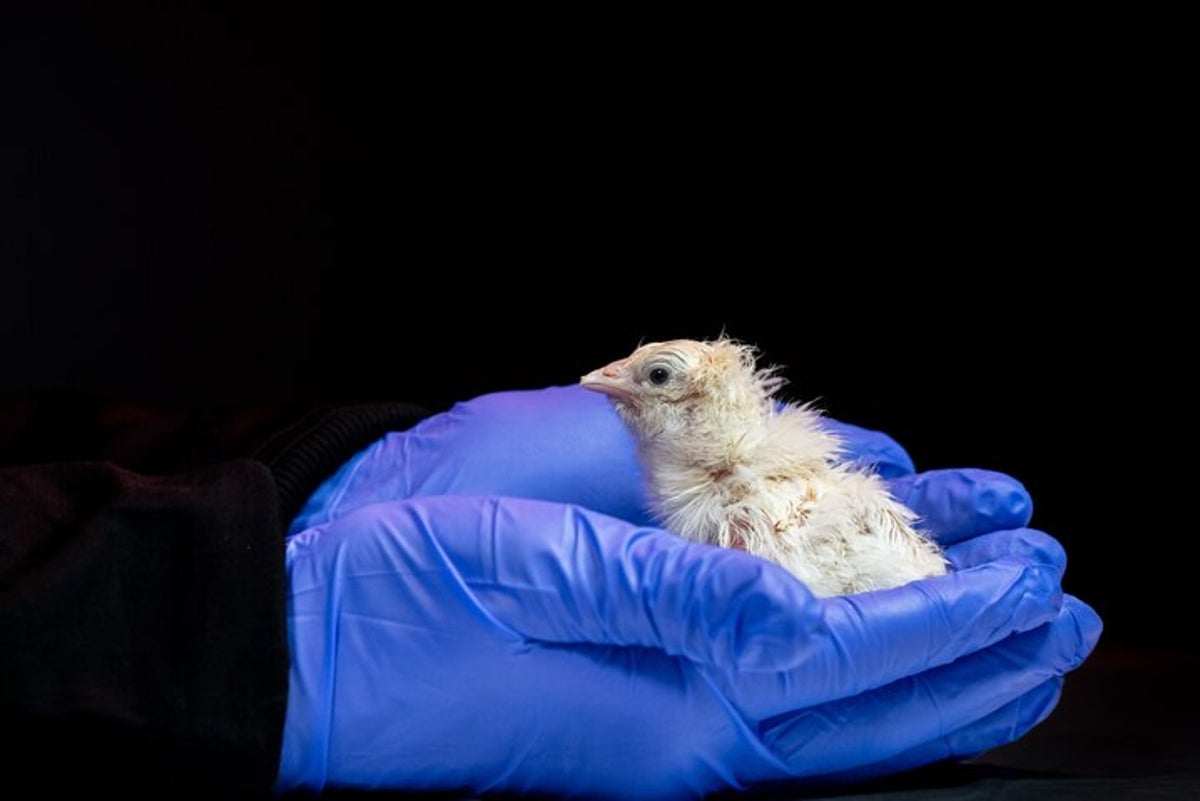
Colossal Biosciences—the same company that claimed to “de-extinct” the dire wolf and touted a “woolly mouse” bearing mammoth genes—announced the development of an “artificial egg” that it says is a step toward “resurrecting” extinct birds, including New Zealand’s South Island giant moa and Mauritius’s famous dodo.
Many scientists disagree with the entire notion of “de-extinction.”
“Nothing will ever bring back a mammoth; nothing will ever bring back a dodo,” says Victoria Herridge, an evolutionary biologist at the University of Sheffield in England. “Extinction really is forever.”
On supporting science journalism
If you’re enjoying this article, consider supporting our award-winning journalism by subscribing. By purchasing a subscription you are helping to ensure the future of impactful stories about the discoveries and ideas shaping our world today.
But Colossal’s “artificial egg” technology is intriguing. In past work in mammals, scientists have proposed impregnating closely related, still existent species with lab-created embryos carrying the genetic material of an extinct species. That isn’t possible for birds, however. Instead something replicating the environment inside an egg is needed, and while scientists have tried to develop egg-free incubation systems, these have had minimal success.
According to a Colossal Biosciences’ press release, its scientists developed “a semi-permeable silicone-based membrane housed inside a rigid hexagonal support cup”—an artificial environment designed to keep moisture inside the embryo while delivering oxygen and keeping out contaminants.
Colossal said that, in theory, the system will work for any size of egg, whether it hatches a hummingbird or a moa, and that it had successfully hatched 26 chickens. But the company’s release offered no detail on how many embryos were originally obtained, how many were loaded into the artificial eggs, how long the chicks survived or what could be said about their health other than that the chicks were “healthy” when they hatched. Colossal Biosciences did not respond to a request for comment.
The company also said that it has “not released a peer-reviewed paper or publicly available dataset accompanying the artificial egg results. Independent scientists have not yet evaluated the methodology.”
Previously, scientists have come up with artificial casings that can enable chicken or quail embryos implanted inside to grow into full-fledged chicks. The hatching rate for those systems remains low, making them inefficient and unpredictable, says Mike McGrew, a professor specializing in embryology at the University of Edinburgh. “If Colossal’s hatch rate is higher, then that would be useful,” he says, adding that the tech would be particularly helpful to conservation efforts if it can be expanded to species with larger eggs, such as Emus and species of ducks.
Nic Rawlence, an evolutionary geneticist at the University of Otago in New Zealand, told Nature that he could see the artificial eggs potentially supporting breeding of the Kākāpō (Strigops habroptilus), a flightless parrot that is endangered on New Zealand. “That’s what Colossal should be focusing on rather than bringing in the whole de-extinction angle,” he said.
Some experts are more skeptical of the practicality of Colossal’s system. Chris Elphick, an ornithologist at the University of Connecticut, says that, as it stands, Colossal’s technique seems to involve pouring the contents of a natural chicken egg into an artificial shell. “You could just leave the embryo in the egg that it’s already in for any existing species,” he says.
Certainly, many existing captive breeding programs, such as those in place for the critically endangered ‘Akikiki in Hawaii, are leading to growing population numbers without artificial eggs, says Michael Parr, president of the American Bird Conservancy. Using artificial eggs may be a more expensive way of reaching the same results.
“A lot of these species, it’s not so much the breeding that’s not working, it’s what happens when you reintroduce them to the wild and what were the conditions that caused them to become rare or near extinction in the first place,” he says.
Elphick says that the same hurdles would exist if technology were to ever actually make the de-extinction of moas possible. “Apart from the technical issues, there’s the practical issues,” he says. “Where [are] you going to put them? [Humans] destroyed their habitat; there’s a reason they’re extinct.”
Herridge agrees that the priority should be conservation and argues against “de-extinction” as a way of framing Colossal’s projects. “They’re synthetic biology experiments at the moment,” she says. “They’re actually about creating novel organisms, something completely new.”
The company has said that it might be able to match specific traits associated with a lost species. “We want to create functional versions of extinct species,” said Beth Shapiro, Colossal’s chief science officer, to Scientific American when the company announced three “dire wolf pups,” which were actually gray wolves sporting 20 genetic edits. “We don’t have to have something that is 100 percent genetically identical.” The company also announced a program targeting the extinct bluebuck antelope.
Herridge argues that scientists don’t know enough about the ecology of any lost species to actually replicate its function in the ecosystem.* And the work allows us to dream of mammoth herds rather than wrestle with the challenges of elephant conservation on a crowded, warming planet, she adds.
“It doesn’t deal with any of the underlying problems that are currently facing our wild places and biodiversity today,” Herridge says.
*Editor’s Note (5/21/26): This sentence was edited after posting to better clarify Victoria Herridge’s comment.