
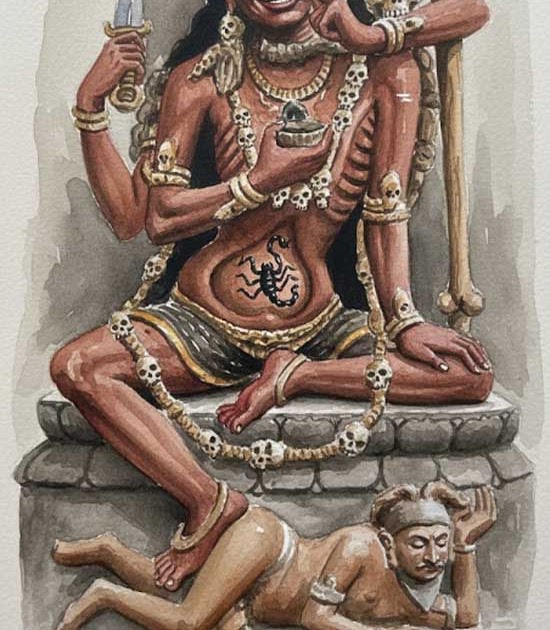
The Khatvanga: Sacred Skull Staff of Hindu Goddesses and the Dance of Transcendence
The khatvanga stands as one of the most potent and enigmatic symbols in Hindu iconography, particularly associated with fierce manifestations of the Divine Mother such as Chamunda, Kali, and other tantric goddesses. This sacred implement, fashioned entirely from human remains—a skull mounted upon a femur bone—carries profound spiritual significance that transcends its macabre appearance.
The Physical Form and Construction
Unlike conventional weapons crafted from metal or wood, the khatvanga derives its entire structure from the human skeletal system. The skull, seat of consciousness during life, crowns the femur, the longest and strongest bone in the human body. This deliberate construction from bodily remnants is not arbitrary but deeply symbolic, representing the raw material of mortal existence transformed into an instrument of divine realization.

Symbolism of Impermanence and Detachment
The khatvanga serves as an uncompromising reminder of mortality and the impermanent nature of physical existence. Hindu philosophy, particularly as expressed in Vedantic teachings, emphasizes that attachment to the physical body constitutes a primary source of spiritual ignorance. By wielding this staff of bones, goddesses like Chamunda embody the transcendence of bodily identification and the fear of death itself.
The skull component specifically represents the ego—the false sense of individual self that must be surrendered for spiritual liberation. In tantric practice, contemplation of death and decay serves as a powerful tool for developing vairagya (dispassion) and understanding the temporary nature of worldly phenomena.
Divine Feminine Power and Transformation
Fierce goddesses who carry the katvanga represent the transformative aspect of divine energy that destroys ignorance and delusion. Chamunda, in particular, embodies the power that annihilates negative forces, both external and internal. The Devi Mahatmya describes such goddesses as protectors who vanquish demons representing vices and spiritual obstacles.
The katvanga in their hands signifies mastery over death itself—not as destruction but as transformation. Death, in Hindu understanding, represents transition rather than termination. The goddess wielding this implement demonstrates sovereignty over the cycle of birth and death, guiding devotees toward liberation from samsara.
Connection to Tantric Practice
In tantric traditions, the khatvanga holds special significance as a symbol of the siddhi (spiritual accomplishment) attained by yogis who practice in cremation grounds. These ascetics meditate surrounded by death to develop fearlessness and recognize the eternal atman beyond bodily existence. The katvanga represents their spiritual achievement and freedom from worldly attachment.
The staff also symbolizes the sushumna nadi—the central energy channel in yogic physiology through which kundalini energy rises. The skull at the top corresponds to the sahasrara chakra, the crown center where individual consciousness merges with universal consciousness.
Protective and Purifying Aspects
Despite its fearsome appearance, the katvanga ultimately serves protective and purifying functions. The goddesses who bear it guard devotees against spiritual dangers and the demons of ignorance, desire, and fear. The implement becomes a channel for divine grace that burns away karmic impurities and false identifications, preparing the soul for ultimate realization.