
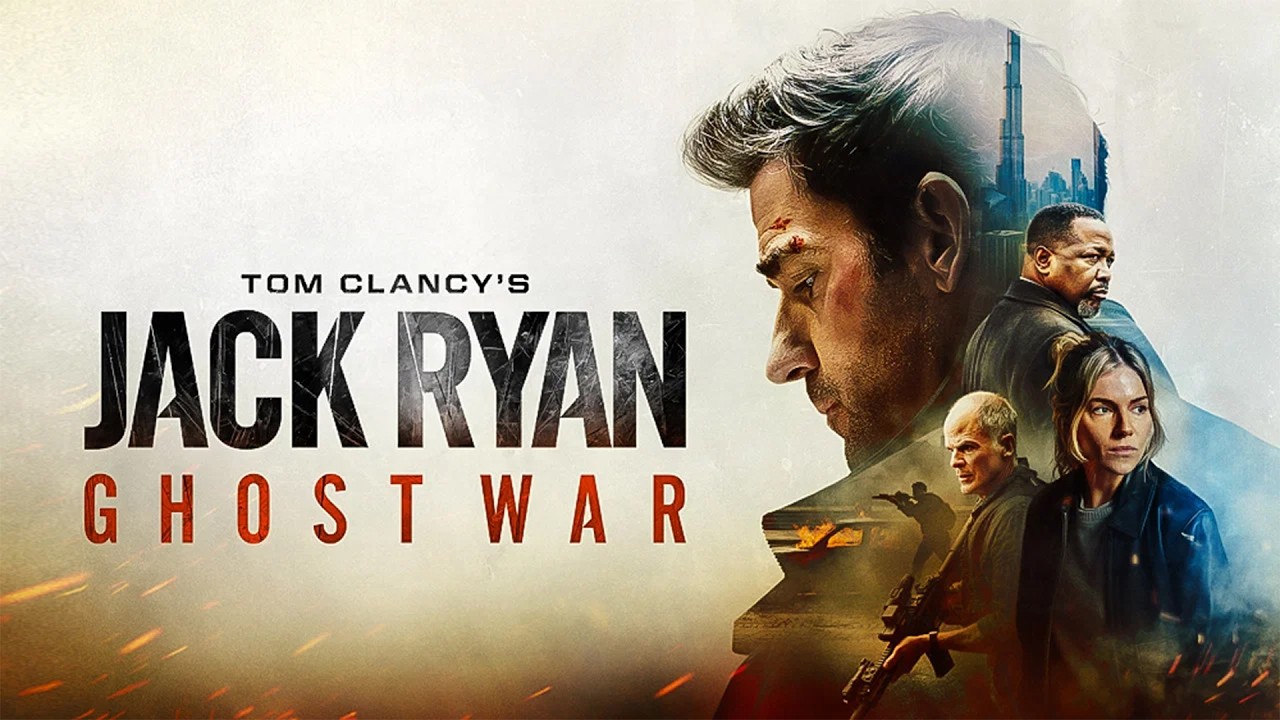
A high-stakes espionage thriller about institutional betrayal, surveillance paranoia, and geopolitical chaos
When intelligence systems collapse, trust becomes the deadliest weapon.
Tom Clancy’s Jack Ryan: Ghost War follows CIA analyst-turned-operative Jack Ryan as he reunites with former allies to confront a shadow network capable of infiltrating global intelligence systems and manipulating international conflict from within. Andrew Bernstein blends political conspiracy, global espionage, military action, and surveillance paranoia into a fast-moving geopolitical thriller shaped by betrayal, covert warfare, and collapsing institutional trust. The film explores state secrecy, intelligence manipulation, political corruption, cyberwarfare, loyalty, and emotional exhaustion through escalating international conflict and relentless action spectacle. Its polished streaming-blockbuster aesthetic and large-scale global action sequences create a loud and tension-driven cinematic experience throughout. Ultimately, the movie becomes both a modern espionage action thriller and a reflection on how intelligence systems built around secrecy become vulnerable to internal collapse and manipulation.
➡️ Implication: Modern espionage thrillers continue evolving through surveillance paranoia and institution-collapse storytelling.
Why It Is Trending: Franchise recognition and audience fascination with geopolitical conspiracy thrillers
Audiences continue engaging with globally scaled espionage stories centered on intelligence betrayal and covert warfare.
The film gained major attention through the return of John Krasinski as Jack Ryan following the popularity of the streaming series. Viewers strongly connected with the movie’s large-scale global action, intelligence conspiracies, and political tension surrounding institutional infiltration. The project’s fast-paced action and international locations also strengthened streaming visibility considerably. Online audiences especially discussed the film’s connection to contemporary fears surrounding cyberwarfare, government secrecy, and surveillance-driven geopolitical instability.
➡️ Implication: Global espionage franchises continue attracting audiences through political paranoia and institutional distrust.
Elements Driving the Trend: Surveillance paranoia, institutional collapse, and globalized action spectacle
The film builds tension through escalating intelligence failures and betrayal within trusted systems.
Jack Ryan’s pursuit of a hidden enemy creates psychological urgency beneath the film’s large-scale action sequences. Themes of political corruption and surveillance manipulation strengthen the movie’s modern geopolitical relevance considerably. The narrative’s globe-trotting structure and militarized action amplify blockbuster momentum and streaming accessibility throughout. Its emphasis on infiltration and internal institutional decay creates ongoing suspense and paranoia. Together, these elements create a commercially accessible but politically anxious espionage-thriller experience.
➡️ Implication: Surveillance-driven institutional paranoia increasingly defines modern spy-thriller storytelling.
Virality of Movie (Social Media Coverage): Divisive reactions fueled by franchise expectations and blockbuster fatigue
The film generated major online discussion because of its connection to the successful Jack Ryan streaming franchise.
Audiences frequently debated whether the film successfully translated serialized espionage storytelling into a standalone feature-length format. Social-media reactions strongly focused on the movie’s action scale, London and Dubai set pieces, and the shift toward louder blockbuster spectacle compared to earlier seasons. Some viewers praised the action and franchise continuity, while many criticized the film’s heavy exposition, generic plotting, and emotionally shallow storytelling. This polarized response significantly strengthened online conversation and visibility.
➡️ Implication: Modern franchise espionage films increasingly generate debate surrounding spectacle versus narrative depth.
Critics Reception: Mixed reactions toward spectacle-heavy espionage storytelling
Critical responses praised the film’s action scale and franchise continuity while criticizing its narrative structure and emotional depth.
Reviewers highlighted John Krasinski for maintaining Jack Ryan’s grounded emotional sincerity despite the increasingly exaggerated blockbuster scale. Wendell Pierce also received praise for bringing emotional gravitas and institutional credibility to James Greer. Critics frequently commended the movie’s polished visuals, action choreography, and geopolitical pacing. However, many reviewers criticized the screenplay for excessive exposition, weak emotional stakes, and formulaic espionage plotting. The film’s spectacle-heavy structure became both its primary commercial appeal and biggest creative criticism.
➡️ Implication: Streaming-era espionage thrillers increasingly struggle balancing franchise spectacle with psychological depth.
Awards and Recognitions: Franchise visibility driven more by commercial presence than prestige recognition
Unlike prestige espionage dramas, Ghost War generated stronger mainstream franchise visibility than awards momentum.
The movie benefited primarily from the popularity of the Jack Ryan streaming universe and the continued audience recognition surrounding John Krasinski’s version of the character. The film’s large-scale action sequences, international production design, and streaming visibility strengthened commercial engagement considerably. While critics remained divided, the project maintained strong audience attention through franchise loyalty and geopolitical-action appeal. Its release on Prime Video reinforced its position within streaming-era franchise espionage entertainment.
➡️ Implication: Streaming espionage franchises increasingly prioritize global commercial visibility over prestige-cinema recognition.
Director and Cast: A franchise-driven ensemble shaped by institutional paranoia, loyalty, and geopolitical conflict
Directed by Andrew Bernstein, the film prioritizes large-scale action, global espionage spectacle, and fast-moving conspiracy tension over the slower psychological realism of earlier Jack Ryan stories.
John Krasinski returns as Jack Ryan, balancing emotional sincerity, strategic intelligence, and action-hero determination while navigating institutional betrayal and escalating geopolitical chaos. His performance maintains the grounded relatability that helped define the streaming series despite the movie’s expanded blockbuster scale. Wendell Pierce strengthens the emotional and institutional core of the narrative as James Greer, bringing gravitas, political wisdom, and restrained emotional depth to the film’s increasingly chaotic espionage environment. Sienna Miller adds emotional tension and ambiguity as Emma Marlow, reinforcing the movie’s themes of trust and manipulation. Supporting performances from Michael Kelly, Betty Gabriel, Max Beesley, and JJ Feild reinforce the film’s sprawling intelligence-world atmosphere and geopolitical scale. Bernstein directs the ensemble through relentless pacing, tactical urgency, and blockbuster momentum while maintaining the franchise’s core focus on institutional distrust and covert operations.
➡️ Implication: Modern streaming-era espionage franchises increasingly prioritize ensemble-driven geopolitical spectacle and fast-paced conspiracy storytelling.
Conclusion: A surveillance-driven spy thriller about betrayal, secrecy, and collapsing institutional trust
Tom Clancy’s Jack Ryan: Ghost War transforms modern intelligence warfare into a fast-moving spectacle shaped by surveillance paranoia, geopolitical instability, and institutional betrayal. Its globe-spanning action and conspiracy-driven storytelling create a commercially polished but emotionally divisive viewing experience. Andrew Bernstein approaches espionage through streaming-era blockbuster pacing and large-scale tactical spectacle rather than slow-burn psychological tension. John Krasinski and Wendell Pierce anchor the film through grounded performances that preserve emotional continuity amid escalating action chaos. Its themes of state secrecy, infiltration, political corruption, and intelligence-system collapse remain culturally relevant within modern surveillance-era anxieties. Ultimately, the movie becomes both a global action thriller and a reflection on how modern intelligence systems become increasingly unstable when trust inside institutions begins to disappear entirely.
➡️ Implication: Surveillance-driven institutional thrillers will continue shaping modern streaming-era espionage cinema.
What Movie Trend Is Followed: Surveillance-driven espionage thrillers exploring institutional distrust and geopolitical instability
Tom Clancy’s Jack Ryan: Ghost War follows the growing trend of modern espionage thrillers centered on intelligence-system collapse, cyberwarfare, internal betrayal, and global institutional paranoia.
Rather than focusing only on heroic spy operations, the film explores how modern intelligence agencies become vulnerable to infiltration, misinformation, and political manipulation from within. Similar contemporary spy thrillers increasingly blend surveillance anxiety, geopolitical instability, covert warfare, and morally ambiguous institutions into large-scale action-driven narratives. The movie also reflects broader cultural fears surrounding cyberattacks, government secrecy, global instability, and collapsing public trust in institutions. Its fast-paced action structure and conspiracy-heavy storytelling strengthen the film’s modern streaming-era espionage identity throughout. This creates a commercially accessible but politically anxious blockbuster-thriller experience.
➡️ Implication: Surveillance-driven institutional paranoia continues reshaping modern espionage-thriller cinema.
Trend Drivers: Audience fascination with institutional betrayal and intelligence conspiracies
Audiences increasingly connect with stories exposing corruption and instability inside powerful intelligence systems.
Narratives centered on infiltration, political secrecy, and covert manipulation create stronger suspense than traditional hero-versus-villain spy structures alone. Viewers strongly engage with protagonists navigating systems where allies and enemies become increasingly difficult to distinguish. The blending of cyberwarfare and global political instability also strengthens contemporary relevance and streaming accessibility considerably. These conspiracy-driven thrillers often generate stronger audience engagement through paranoia and geopolitical fear.
➡️ Implication: Institutional distrust increasingly drives modern espionage-thriller storytelling trends.
What Is Influencing Trend: Expansion of surveillance-era geopolitical thrillers
Modern espionage filmmakers increasingly portray intelligence work through technological paranoia and global instability.
Contemporary spy thrillers now focus heavily on cyberwarfare, surveillance systems, internal corruption, and covert geopolitical manipulation rather than Cold War espionage nostalgia alone. Films exploring institutional collapse and hidden intelligence operations continue influencing commercial action cinema strongly. Directors increasingly favor fast-paced global action and conspiracy structures over slower psychological realism. This storytelling style aligns closely with modern streaming-era blockbuster expectations and surveillance anxieties.
➡️ Implication: Surveillance-era geopolitical storytelling increasingly defines contemporary franchise espionage cinema.
Macro Trends Influencing: Rise of politically anxious blockbuster entertainment
Global audiences increasingly support action thrillers reflecting institutional instability and geopolitical fear.
Modern commercial thrillers frequently examine government secrecy, intelligence manipulation, cyberwarfare, and collapsing institutional trust through large-scale spectacle and conspiracy narratives. These stories also increasingly reflect anxieties surrounding technological surveillance and invisible political influence within global systems. Narratives about institutional betrayal resonate strongly during periods of political polarization and distrust globally. The trend strongly supports conspiracy-driven streaming-era action cinema.
➡️ Implication: Politically anxious institutional thrillers continue expanding within commercial action cinema.
Consumer Trends Influencing: Preference for fast-paced conspiracy-driven streaming thrillers
Modern audiences increasingly seek high-intensity espionage stories combining geopolitical relevance with blockbuster spectacle.
Viewers strongly engage with narratives exploring covert operations, intelligence conflict, and hidden conspiracies through globally scaled action sequences. Online communities also amplify franchise-driven spy thrillers centered on institutional corruption and surveillance paranoia. Younger streaming audiences especially support fast-moving geopolitical action stories with interconnected franchise mythology. These trends strongly support modern streaming-era espionage franchises.
➡️ Implication: Conspiracy-driven streaming thrillers increasingly strengthen audience engagement within modern action cinema.
Audience Analysis: Mainstream action audiences drawn to geopolitical conspiracy thrillers
The film mainly appeals to viewers aged 18–55 interested in espionage franchises, political action thrillers, military conspiracies, and surveillance-era geopolitical storytelling.
These audiences value fast pacing, large-scale action, intelligence intrigue, and institutional conflict. Fans of modern spy franchises and streaming action series will strongly connect with the movie’s global scale and conspiracy-driven tension. Mainstream streaming audiences especially engage with narratives exploring betrayal, covert warfare, and hidden institutional manipulation. The film’s franchise familiarity and action-heavy structure strengthen its commercial accessibility considerably.
➡️ Implication: Streaming-era espionage thrillers continue attracting globally mainstream action audiences.
Conclusion: An espionage-thriller trend where institutions become the greatest threat
The trend reflected in Tom Clancy’s Jack Ryan: Ghost War shows how contemporary spy cinema increasingly transforms intelligence systems, surveillance networks, and geopolitical institutions into unstable environments shaped by betrayal, secrecy, and internal collapse. These narratives resonate because they combine large-scale action spectacle with culturally relevant anxieties surrounding surveillance, cyberwarfare, and institutional distrust. Intelligence operatives trapped inside morally compromised systems create stronger suspense and modern relevance within contemporary espionage storytelling. The rise of surveillance-driven conspiracy thrillers also reflects broader audience fears surrounding invisible power structures, technological manipulation, and geopolitical instability. These projects succeed through fast pacing, institutional paranoia, and globally scaled action spectacle. Ultimately, the trend represents a broader movement toward surveillance-era espionage storytelling shaped by political anxiety and conspiracy-driven blockbuster realism.
➡️ Implication: Surveillance-driven institutional thrillers will continue shaping the future of modern streaming-era espionage cinema.
Final Verdict: A surveillance-era action thriller about institutional collapse, geopolitical fear, and covert manipulation
Tom Clancy’s Jack Ryan: Ghost War succeeds because it transforms modern intelligence warfare into a high-intensity spectacle shaped by surveillance paranoia, institutional distrust, and geopolitical instability. Instead of relying solely on classic espionage mystery, the film emphasizes cyberwarfare, infiltration, and collapsing systems of global security. Andrew Bernstein creates a commercially polished action thriller driven by conspiracy tension, relentless pacing, and blockbuster-scale geopolitical conflict. The movie’s global action sequences and fast-moving espionage structure strengthen its mainstream streaming appeal throughout. Its themes of intelligence manipulation, surveillance, loyalty, and institutional corruption create a politically anxious and commercially accessible viewing experience. Ultimately, the movie becomes both a modern spy blockbuster and a reflection on how global intelligence systems become increasingly unstable when secrecy and mistrust dominate institutional power.
➡️ Implication: Surveillance-driven espionage thrillers continue redefining streaming-era geopolitical action cinema.
Audience Relevance: Appeals to viewers seeking fast-paced geopolitical conspiracy entertainment
The film strongly connects with audiences drawn to large-scale espionage thrillers and intelligence-based action franchises.
Its themes of covert warfare, surveillance paranoia, and institutional betrayal create strong entertainment value beneath the conspiracy-heavy narrative. Viewers interested in modern spy franchises and military thrillers will connect with the movie’s tactical urgency and global action scale. The fast pacing and franchise familiarity strengthen streaming accessibility considerably. This creates strong mainstream franchise and action-thriller appeal.
➡️ Implication: Global conspiracy-driven action thrillers continue attracting mainstream streaming audiences.
What Is the Message of Movie: Institutions built on secrecy eventually become vulnerable to collapse
The film explores how intelligence systems become dangerous when internal trust disappears.
Jack Ryan’s mission reflects the growing instability inside global institutions shaped by surveillance, political manipulation, and covert power struggles. The narrative suggests secrecy and unchecked intelligence operations slowly create systems vulnerable to corruption and internal betrayal. Institutional paranoia increasingly becomes unavoidable throughout the conflict. The film ultimately portrays trust as the most fragile and valuable resource inside modern intelligence warfare.
➡️ Implication: Contemporary spy thrillers increasingly examine institutional instability through surveillance-era paranoia.
Relevance to Audience: Reflects modern anxieties surrounding cyberwarfare and institutional distrust
The film resonates because its conspiracy themes feel closely connected to modern geopolitical fears.
Audiences strongly connect with stories exploring surveillance systems, cyber manipulation, hidden power networks, and covert global conflict realistically. The narrative also reflects broader anxieties surrounding technological control, misinformation, intelligence secrecy, and unstable political systems within modern society. Its conspiracy-driven structure deepens suspense and mainstream accessibility considerably. This relevance strengthens the movie’s commercial and cultural resonance globally.
➡️ Implication: Surveillance-driven geopolitical thrillers continue strengthening mainstream audience engagement.
Social Relevance: A reflection on secrecy, manipulation, and institutional instability
The film examines how modern intelligence systems create environments shaped by fear, misinformation, and invisible power struggles.
Its portrayal of surveillance networks and covert manipulation reflects broader conversations surrounding cybersecurity, intelligence ethics, political influence, and global instability. The story also explores how loyalty and morality become increasingly fragile inside systems driven by secrecy and institutional self-preservation. Rather than presenting clear moral binaries, the film portrays intelligence operations as emotionally exhausting and ethically compromised. This gives the blockbuster thriller deeper political resonance beneath its action spectacle.
➡️ Implication: Modern espionage thrillers increasingly explore political anxiety through institutional conspiracy storytelling.
Performance: Grounded franchise performances strengthen the blockbuster spectacle
The performances reinforce the movie’s emotional continuity and institutional tension.
John Krasinski delivers a grounded performance balancing intelligence, emotional sincerity, tactical determination, and growing institutional distrust as Jack Ryan. Wendell Pierce brings gravitas, restraint, and emotional authority as James Greer. Sienna Miller strengthens the film’s emotional and political ambiguity through Emma Marlow’s morally uncertain presence. Supporting performances from Michael Kelly and Betty Gabriel further reinforce the movie’s sprawling intelligence-world atmosphere and geopolitical scale.
➡️ Implication: Ensemble-driven performances increasingly define streaming-era espionage franchises.
Legacy: Part of the rise of surveillance-era streaming espionage franchises
The film aligns with the growing expansion of politically anxious streaming-action franchises within modern commercial entertainment.
Its focus on cyberwarfare, intelligence instability, and global conspiracies reflects contemporary audience demand for surveillance-driven geopolitical thrillers. The project also strengthens the evolution of streaming-era spy franchises built around interconnected institutional conflict and large-scale serialized storytelling. Over time, the movie may remain culturally associated with the transition from grounded espionage realism toward blockbuster conspiracy spectacle within streaming action cinema.
➡️ Implication: Surveillance-driven geopolitical franchises continue shaping contemporary streaming action entertainment.
Success: Defined by franchise familiarity, action spectacle, and geopolitical paranoia
The film’s success comes primarily through recognizable franchise identity and commercially accessible conspiracy storytelling.
Audience engagement is driven by the movie’s globe-spanning action, intelligence intrigue, fast pacing, and surveillance-era political anxiety rather than emotional subtlety or prestige realism alone. Mainstream viewers strongly responded to the film’s blockbuster spectacle and returning characters from the streaming series. The movie succeeds through tactical action, conspiracy momentum, and franchise continuity. Its streaming visibility further strengthened its position within modern commercial espionage entertainment considerably.
➡️ Implication: Streaming-era espionage thrillers increasingly prioritize global accessibility and action-driven institutional paranoia.
Insights: The film transforms modern intelligence systems into unstable environments shaped by surveillance paranoia, institutional betrayal, and geopolitical fear.Industry Insight: Contemporary espionage franchises increasingly prioritize streaming-scale spectacle and conspiracy-driven geopolitical storytelling.Audience Insight: Mainstream audiences strongly connect with fast-paced spy thrillers exploring covert warfare, surveillance, and hidden institutional manipulation.Social Insight: The story reflects anxieties surrounding cyberwarfare, technological surveillance, misinformation, and collapsing trust in institutions.Cultural Insight: Modern espionage cinema continues evolving through surveillance-era paranoia and politically anxious blockbuster storytelling.
Conclusion: A fast-moving espionage blockbuster about secrecy, distrust, and collapsing intelligence systems
Tom Clancy’s Jack Ryan: Ghost War works because it approaches modern espionage through surveillance paranoia and geopolitical instability rather than nostalgic Cold War heroism. Its globe-spanning action and conspiracy-driven storytelling create a commercially polished and politically anxious viewing experience. Andrew Bernstein explores intelligence warfare through streaming-era blockbuster pacing and institutional conspiracy spectacle. John Krasinski and Wendell Pierce anchor the film through grounded performances that preserve emotional continuity amid escalating geopolitical chaos. Its themes of cyberwarfare, surveillance, institutional corruption, and covert manipulation remain culturally relevant within modern fears surrounding invisible power systems and global instability. Ultimately, the movie becomes both a large-scale action thriller and a reflection on how modern intelligence institutions become increasingly dangerous when secrecy replaces trust entirely.
➡️ Implication: Surveillance-driven institutional thrillers will continue shaping the future of modern streaming-era espionage cinema.
Summary of the Movie: A surveillance-driven espionage thriller about institutional betrayal and geopolitical instability
• Movie themes: Surveillance paranoia, institutional corruption, cyberwarfare, intelligence betrayal, geopolitical instability, loyalty, secrecy, and covert manipulation — the film explores how modern intelligence systems collapse when trust inside institutions disappears. ➡️ Implication: Modern espionage thrillers continue evolving through surveillance-era paranoia and institution-collapse storytelling.
• Movie director: Andrew Bernstein delivers a fast-paced geopolitical thriller blending covert warfare, conspiracy spectacle, and streaming-era blockbuster espionage. ➡️ Implication: Contemporary spy franchises increasingly prioritize global action scale and conspiracy-driven pacing.
• Top casting: John Krasinski leads alongside Wendell Pierce, Sienna Miller, Michael Kelly, Betty Gabriel, and Max Beesley. ➡️ Implication: Ensemble-driven geopolitical action casts increasingly define streaming-era espionage franchises.
• Awards and recognition: The film generated strong mainstream franchise visibility through the popularity of the Jack Ryan streaming universe and the return of John Krasinski as the iconic intelligence operative. Its large-scale action and streaming visibility drove audience engagement more than prestige awards momentum. ➡️ Implication: Streaming espionage franchises increasingly prioritize commercial reach and franchise continuity over awards recognition.
• Why to watch movie: A strong choice for viewers interested in surveillance thrillers, geopolitical conspiracy action, intelligence warfare, and fast-paced franchise espionage storytelling. ➡️ Implication: Conspiracy-driven geopolitical action thrillers continue attracting mainstream streaming audiences.
• Key success factors: Large-scale global action, cyberwarfare tension, institutional conspiracy storytelling, franchise familiarity, tactical espionage sequences, and surveillance-era political anxiety. ➡️ Implication: Surveillance paranoia increasingly strengthens modern espionage-franchise engagement.
• Where to watch: Released globally on Prime Video in 2026 following the success of the Jack Ryan streaming series. ➡️ Implication: Streaming platforms continue expanding globally scaled franchise espionage entertainment.
Conclusion: A fast-moving spy thriller about surveillance, betrayal, and collapsing intelligence systems
Tom Clancy’s Jack Ryan: Ghost War transforms modern intelligence warfare into a conspiracy-driven blockbuster shaped by cyberwarfare, institutional distrust, and geopolitical instability. Its globe-spanning action and fast-paced storytelling create a commercially polished and politically anxious viewing experience. Andrew Bernstein approaches espionage through streaming-era action spectacle and surveillance-driven institutional paranoia rather than classic slow-burn spy realism. John Krasinski and Wendell Pierce anchor the film through grounded performances balancing tactical urgency, emotional sincerity, and growing mistrust inside global intelligence systems. Its themes of surveillance, political manipulation, cyberwarfare, and institutional collapse remain culturally relevant within modern fears surrounding invisible power structures and unstable geopolitical systems. Ultimately, the movie becomes both a modern action franchise thriller and a reflection on how intelligence institutions become increasingly dangerous when secrecy and mistrust fully replace transparency and human trust. ➡️ Implication: Surveillance-driven institutional thrillers will continue shaping the future of streaming-era espionage cinema.