
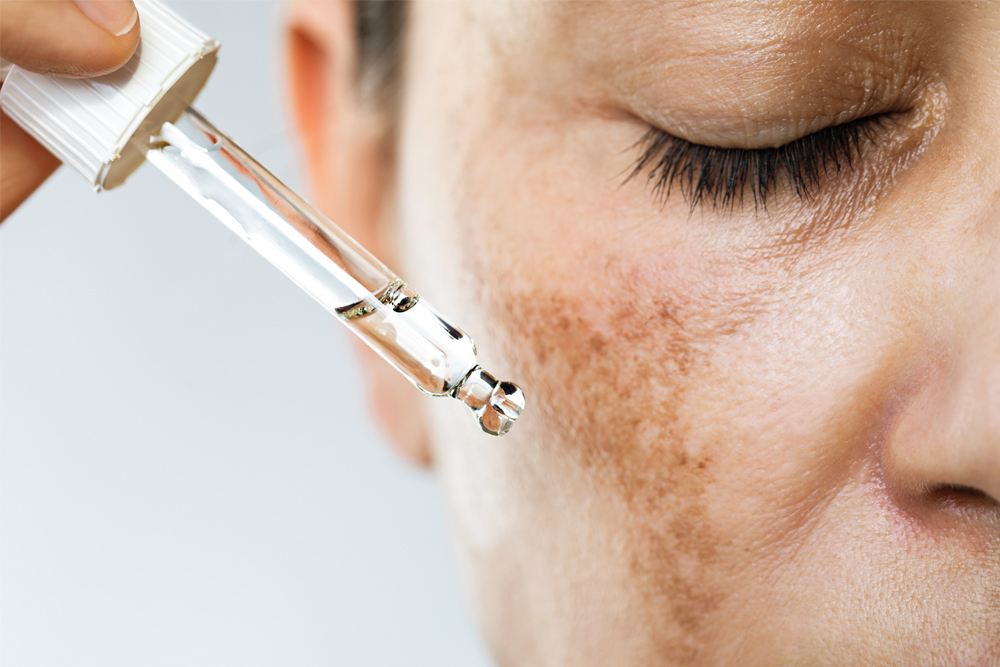
As a diligent sunscreen user, I was horrified when my first dark spot popped up. It came out of nowhere on my lower left cheek, and it was the only thing I saw staring back at me when I looked in the mirror—for weeks. Was it getting darker, bigger? I worried. I knew it was the result of one of my handful of bad sunburns as a youth. I was a tween in the ’90s, and aside from those fun, colorful zinc sticks, sunscreen wasn’t standard procedure—sunbathing was.
“Dark spots, also known as hyperpigmentation or sunspots, don’t show up overnight,” says Miami dermatologist Dr. Deborah Longwill. “They can begin forming deep in the skin years—even decades—before you ever see them on the surface. The sun exposure you had as a child or in your teens can absolutely show up in your 30s, 40s or even later. That’s one of the most frustrating realities of sun damage, and the reason why sunscreen is so critical, even when you’re young and don’t see damage yet.” Frustration aside, there are many ways to downplay the appearance of dark spots, and in some cases, eliminate them entirely.
Featured Experts
- Dr. Deborah Longwill is a board-certified dermatologist in Miami
- Harold Lancer, MD is a board-certified dermatologist in Beverly Hills, CA
- Linda C. Honet, MD is a board-certified dermatologist in Bloomfield Hills, MI
What Causes Dark Spots?
“The dark spot formation process starts to occur the moment we expose our skin to the sun,” says Beverly Hills, CA dermatologist Harold Lancer, MD. “UV exposure, especially in excess, causes melanocytes—our pigment- producing cells—to become overactive and produce excess melanin. These melanocytes can clump up over time, which eventually leads to dark, visible spots on the surface of the skin.”
Though sun exposure is the most common culprit, it isn’t the only one. “Hormonal fluctuations, both endogenous and exogenous, can cause melasma,” says Bloomfield Hills, MI dermatologist Linda C. Honet, MD. “These include pregnancy, menopause, oral contraceptives, hormone replacement therapy, hormonal IUDs and hormone pellets. Some patients who consume an inordinate amount of soy can also experience melasma from soy’s plant estrogens called phytoestrogens or isoflavones.”
Other causes of dark spots are side effects from certain medications, as well as skin trauma (cuts, scrapes, insect bites, shingles, etc.) that Dr. Honet says can lead to post-inflammatory hyperpigmentation (PIH) as a response to healing. “Generally speaking, the darker the skin type, the more susceptible to PIH,” she adds. And of course, as we age, Dr. Longwill points out that our skin’s ability to repair and regenerate slows down, so existing pigment can linger for longer and become more noticeable.
The Best Skin-Care Ingredients to Minimize Them
To promote a more even skin tone, look for products with key ingredients that help inhibit the overproduction of melanin in the skin, says Dr. Lancer. “Vitamin C, niacinamide, retinoids and alpha arbutin are good examples. It is also imperative that sunscreen be worn to further protect the skin and avoid more damage.” Three of Dr. Honet’s favorite ingredients for brightening up dark spots include tranexamic acid, kojic acid and azelaic acid. “These pigment reducers are not only safe to use daily for maintenance, but they are also well-tolerated by all skin types and are safe in pregnancy.”
Though it’s controversial due to adverse side effects in some cases, hydroquinone is also a top pick for Dr. Honet. “Its potency makes it a favorite of mine, but it should be carefully administered and monitored by a board-certified dermatologist because of its potential for causing ochronosis, a rare condition causing blue-gray or dark patches on the skin.”
In-Office Pigment Reducers
Often requiring a series of treatments, dark spot reduction by way of lasers, peels and more is a popular request in the office. The right one for your spots will depend on their cause, your skin type and the depth of the pigmentation, Dr. Longwill says, noting that she often recommends combining in-office treatments with topical products for a comprehensive approach. “For sun-induced pigment concerns, I recommend BroadBand Light [BBL] and Intense-Pulsed Light [IPL],” she explains. “For deeper, more stubborn spots, I use lasers like Fraxel DUAL and Clear + Brilliant. These send different wavelengths of energy into the skin to break down excess melanin and, ultimately, fade dark spots to create a more even skin tone.”
Dr. Honet says another effective option is microneedling combined with tranexamic acid, or another brightening acid. “I am a big fan of a multimodality approach to treating hyperpigmentation because of the additive effect and improved, symbiotic clinical efficacy of in-office treatments.” Certain chemical peels can also brighten skin and promote cell turnover, and there are varying levels of intensity depending on the extent of the spots and sun damage being treated. “The best candidates for in-office dark spot treatments are patients with good sun protection habits who are not currently tanning or pregnant,” adds Dr. Longwill. “Results vary, but most patients see significant lightening of their spots after a few sessions.”
Can Dark Spots Come Back in the Same Place?
Unfortunately, yes. “Dark spots can come back in the same spot after an in-office treatment, and this is especially true if the skin is exposed to the sun again,” says Dr. Lancer. “Or, if there is an underlying hormonal trigger or inflammation that persists, like melasma.” Dr. Honet explains that during laser and light-based treatments, the pigment cells are not destroyed completely, per se; they are only made devoid of their pigment marking them. “This is why fastidious sun protection is so important, as well as maintenance skin care,” she adds.
Additionally, dark spots rarely ever go away on their own. Freckles, on the other hand, which are typically genetic and different than dark spots, tend to come and go. “Freckles often darken with sun exposure and fade in the winter when UV exposure is lower,” says Dr. Longwill.
No matter the type of dark spot you’re trying to tackle, all signs point to sun protection as the surefire method of defense and post-procedure maintenance. “Using sunscreen daily—even on cloudy days—wearing protective clothing in the sun and adhering to a solid skin-care routine are your best long-term tools to avoid dark spots,” Dr. Longwill advises. “Don’t wait until spots show up to start treating your skin—early care is key. Pigmentation is one of the most stubborn concerns we treat as dermatologists, but with the right plan, you can absolutely see results and feel confident in your skin.”
Tone Down
Diminish dark spots fast with these three new brightening formulas.
/

/

/
