
The FinTech industry (financial technology sector) continues to evolve rapidly, transforming how individuals and businesses manage financial services. According to Allied Market Research, the global FinTech market was projected to grow from $110.57 billion in 2020 to $698.48 billion by 2030, although recent market shifts have made growth patterns more dynamic and less uniform.
The industry’s expansion is driven by the increasing adoption of digital financial services, the growing use of advanced technologies across banks and financial institutions, and broader shifts in consumer behavior. As a result, both traditional financial organizations and tech-driven startups are actively investing in FinTech solutions to remain competitive in a fast-changing market.
In this article, we explore the key trends shaping the FinTech industry and provide a practical guide on how to build a successful FinTech application and structure the development process.
Important Trends in Fintech
The rapid evolution of the FinTech industry has significantly changed how consumers manage their finances and how financial institutions deliver services. This transformation has been driven by the adoption of advanced technologies in FinTech solutions. Below are some of the key trends shaping the industry today.
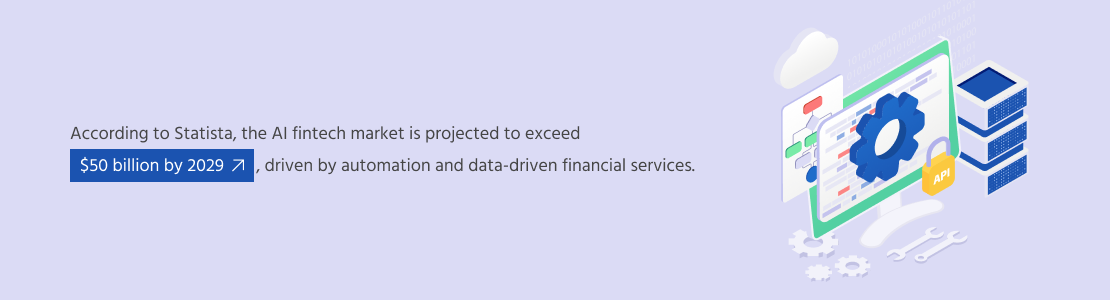
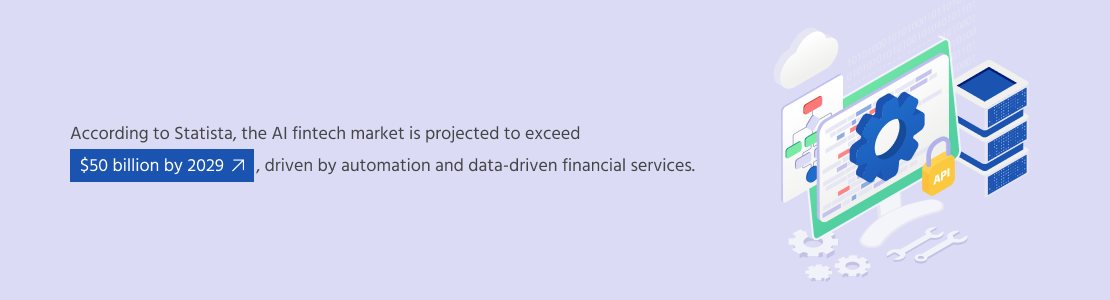
Artificial Intelligence (AI) and Machine Learning (ML)
AI and ML are widely used in modern FinTech solutions, helping organizations process large volumes of data — from customer behavior to global financial trends. Today, these technologies are often combined with real-time analytics and automation to deliver more efficient and intelligent financial services. Here are some examples of how AI and ML are applied in finance:
- Financial decision-making – combined with visualization tools and data analytics, AI and ML provide FinTech app users with insights that help them better manage their finances. This enables users to make more informed and data-driven decisions.
- Security and fraud detection – by processing large datasets, AI and ML can identify patterns associated with fraudulent activities and detect suspicious behavior in real time. This helps prevent financial fraud and enhances overall security, addressing some of the key challenges in FinTech, including data protection and regulatory compliance. In addition, these technologies support compliance processes such as Know Your Customer (KYC) and Anti-Money Laundering (AML) by automating data analysis across multiple sources.
- Customer service personalization – AI and ML analyze customer data and behavior to deliver more personalized financial services. For example, intelligent assistants and conversational AI solutions can automate routine interactions, improve response times, and provide 24/7 support, enhancing overall customer experience.
- Asset management – AI and ML can analyze market trends and support investment decision-making. This allows users to manage their assets more effectively and access data-driven insights. At the same time, automation helps streamline investment processes and improve accessibility to financial services.
Blockchain
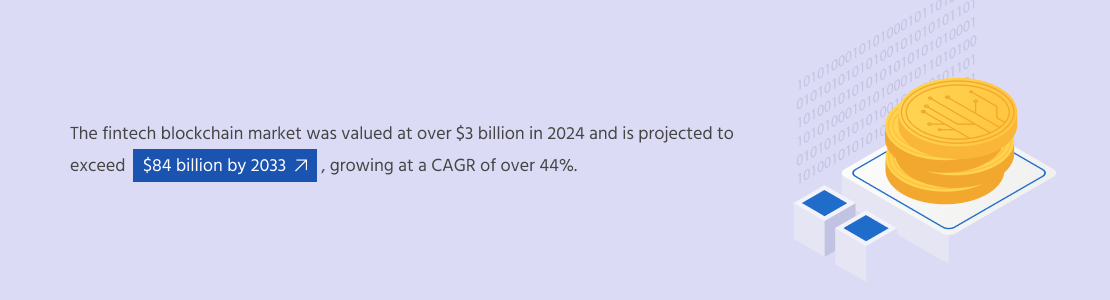
Blockchain is a technology that has gained significant attention in the financial sector over the past few years. It is primarily used in FinTech for enabling secure transactions and supporting digital asset ecosystems.
Due to its decentralized architecture and encryption mechanisms, Blockchain can provide a transparent and secure way to manage transactions and data. At the same time, its adoption depends on specific use cases, regulatory requirements, and system scalability considerations. In some solutions, Blockchain can be combined with technologies such as AI to support data monitoring, processing, and auditing.
Here is how Blockchain is utilized in FinTech:
- Secure P2P payments – Blockchain enables direct transactions between parties, reducing reliance on intermediaries while ensuring data integrity and transparency.
- Crypto trading – Blockchain supports trading of digital assets within a single application, providing users with convenient access to crypto markets.
- Regulatory compliance – Blockchain can improve transparency and traceability of transactions, helping organizations support compliance across complex, multi-party operations.
- Digital identity – Blockchain-based systems allow user verification and help track activity within the network, reducing fraud risks and improving trust.
Microservices
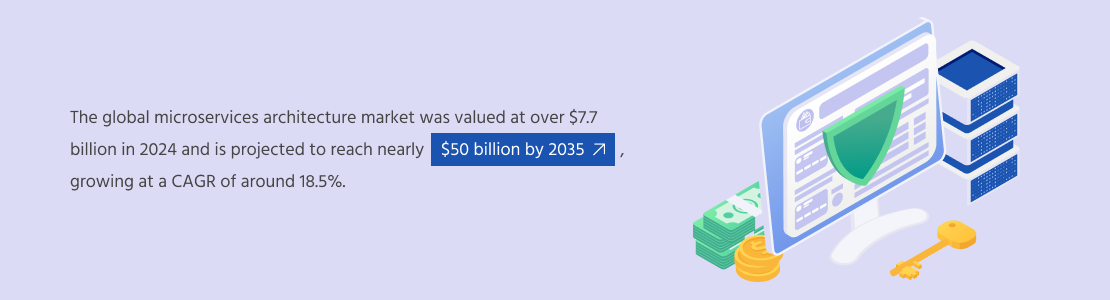
Microservice architecture has become a widely adopted approach in modern software and app development, especially for scalable FinTech solutions. It offers flexibility in building both small and large applications, enables frequent updates with new features, and supports faster time-to-market.
How do microservices work? Microservice architecture consists of small, independent services combined into a single application, forming a flexible and scalable FinTech platform. This allows developers to add, modify, or remove components without disrupting the overall system functionality.
Why use microservices for building FinTech solutions? The microservice architecture ensures:
- Increased app agility – it is easy to add, remove, or update components of the solution. This helps businesses adapt to market changes, implement new technologies, and respond to user feedback more efficiently.
- Scalability – companies can scale specific components of their FinTech solutions based on demand, adding computing power during peak periods and optimizing resources when demand decreases.
- Enhanced reusability – once developed, microservice components can be reused across different FinTech solutions, simplifying development and maintenance.
- High reliability – an application built from multiple components is less likely to fail entirely. If one microservice fails, the rest of the system can continue operating.
- Integration capabilities – microservice architecture simplifies integration with external systems via APIs and allows seamless use of third-party services and tools.
- Faster development – development teams can work on different services independently, accelerating delivery and enabling faster release of MVPs and feature updates.
Types of FinTech Applications
Each year, many FinTech companies explore new directions where specialists can apply their knowledge and create convenient apps to swiftly perform finance-related operations. Here are the most popular FinTech apps to choose from, including both traditional solutions and emerging FinTech segments such as embedded finance, open banking, and Buy Now Pay Later (BNPL) services.
Online Payment Services
Although online payments and money transfers are among the most popular financial services, and there are many competitors in this market, a wide range of companies still prefer investing in this type of FinTech solution. The reasons for that are simple – banks and financial institutions still have inflexible and slow services, meanwhile, they can be enhanced in multiple ways – from payment gateways to QR-code payments, to P2P transfers, and more, as well as embedded finance solutions that integrate payments directly into digital products.
Lending Services
With FinTech solutions, lending and mortgage services have become more accessible, transparent, and easier to perform. Conventional lending services require much paperwork and verification; therefore, they can turn into a tedious, time-consuming activity. FinTech lending automates most of the manual tasks as well as credit score checks, making the process much faster and smoother.
Providing microfinancing services that require soft or alternative credit scoring, FinTech lending apps offer wider access to lending services for the underbanked population as well as for households with low income, including modern models such as Buy Now Pay Later (BNPL) and alternative lending platforms.
Online Banking and Neobanks
Many banks and financial institutions have been using FinTech apps to provide their services online, including digital banking services. However, online banking is no longer limited to traditional banks offering services through the web and mobile apps.
Some FinTech companies make an alternative to conventional banking in the form of neobanks. These are online-only facilities that offer simple banking services at much lower rates to the public, attracting more and more consumers today, often leveraging open banking APIs to provide seamless integration with third-party financial services.
Crypto Platforms and Crypto Wallets
Cryptocurrency remains an important part of the evolving financial landscape. While the market has become more regulated and experienced periods of volatility, digital assets continue to develop, with increasing attention to security, compliance, and real-world use cases.
Today, many companies explore crypto-related solutions such as exchange platforms, wallets, and alternative payment options, depending on their business needs and regulatory environment. Businesses interested in this direction can consider building their own crypto platforms or integrating wallet functionality into existing financial products.
InsurTech
Similar to banks, many insurance companies are adopting FinTech solutions to offer digital insurance services, often referred to as InsurTech.
InsurTech is a digital insurance business that relies on the latest technologies, such as AI, IoT, Blockchain, Big Data, and others, to offer improved insurance services, often supported by data-driven risk assessment and automation tools.
Key Features for A Fintech App
When creating a new FinTech app, businesses need to decide which features are essential for their digital solution and which ones can be added later to stay within the project budget. Below is a list of key features commonly used in FinTech software.
- Adaptive UI – flexible and easily customisable interfaces are becoming increasingly important for FinTech users. The application interface can support various display modes, personalisation, shortcuts, dark mode, and other usability features.
- Advanced security – maintaining user trust and ensuring data protection are critical for financial apps. A high level of security can be ensured through secure onboarding and authentication (including multi-factor and biometric authentication), encrypted data exchange, secure data storage, and compliance with relevant regulatory requirements.
- Notifications and reminders – these features help users stay informed about important events, such as upcoming payments, balance updates, and financial deadlines, improving the overall user experience.
- Customer support and chat – built-in communication tools, including AI assistants and chat solutions, help automate routine enquiries and provide users with timely support, increasing service accessibility.
- Bank integration – integration with banking systems is a key feature of most FinTech solutions. APIs, including open banking interfaces, enable transactions to be carried out without the need to visit physical branches.
- Payment gateways – payment gateways facilitate digital payments and money transfers, remaining one of the key features of FinTech applications and an important driver of user adoption.
Key Steps to Build a Fintech Product
When businesses have outlined the main idea of their app and defined their product strategy, they know the type of FinTech solution they want to create and have decided on the main features to include in it, they have already completed a significant part of the process towards their app realization. The other half is to conduct the project, market research, and find the software development team. Here are the steps to follow.
Step 1: Research the Market
At this step, the business needs to decide if its FinTech solution is worth creating and if it’ll be important for the users. For this, they need to conduct small market research and study similar propositions in the market. Other important factors to pay attention to are:
- The region where the app will operate
- Which legislation should the app comply with
- Who are the end-users of the developed solution
- If time to market is essential, as it often is for FinTech startups, it’s necessary to develop an MVP first to gather customer feedback
Step 2: Estimate the Project
Once the company has conducted market research, it will have a clear idea of who the potential users of the application are and which aspects need to be prioritised during software development. The company is now ready to determine the scope of work required to build the application, as well as to estimate the approximate budget and project timeline.
The budget and timeline depend to a large extent on the set of technologies the company chooses for its application. Therefore, the final decision on both aspects will be made after discussing the project with the development team.
Step 3: Find the Team
Finding professionals to build a solid and effective FinTech solution can be quite challenging. It often requires a fully-equipped and highly-experienced team rather than individual software developers. Therefore, if a business doesn’t have an in-house team, the most budget-saving and optimal decision would be to turn to outsourcing to software development companies.
However, if a business has an in-house team that has some issues with the software development project. Another option would be to hire stand-alone specialists from a reliable outsourcing vendor. Such team augmentation with knowledgeable specialists will help an inner IT department launch and develop a successful FinTech product.
Challenges in Fintech Development
Developing a modern FinTech platform involves not only implementing innovative technologies but also overcoming a number of challenges that directly impact the product’s success. Understanding these challenges in FinTech enables the development of a more robust and effective FinTech product strategy right from the early stages of development.
Regulatory compliance
Financial applications must strictly comply with regulatory requirements depending on the region (e.g., PSD2, GDPR, etc.). This is one of the key challenges in FinTech, as non-compliance with regulations can lead to fines and restrictions on the product’s operation. Therefore, compliance must be embedded in the FinTech product strategy from the very beginning.
Data security
FinTech applications handle sensitive financial information, making security a critically important aspect. Data protection, fraud prevention, and secure user authentication are all essential elements of any reliable FinTech platform.
Integration with legacy systems
Many banks and financial institutions still use outdated IT systems. Integration with such solutions remains one of the most common challenges in FinTech, requiring a flexible architecture and a well-designed API layer as part of the FinTech product strategy.
Scalability
As the user base grows and transaction volumes increase, the FinTech platform must cope with the rising load. Without a properly designed architecture (for example, based on microservices), this can become a serious constraint on product development.
User trust
Financial services are directly linked to users’ money, so the level of trust plays a crucial role. Transparency of operations, stable application performance, and a high level of security are the key factors that help overcome this aspect of the challenges in FinTech and strengthen the product’s position in the market.
Conclusion
Building a FinTech application requires not only strong technical expertise but also a clearly defined FinTech product strategy, robust security practices, and the ability to address key industry challenges such as regulatory compliance, scalability, and system integrations.
Companies that invest in developing a scalable and future-proof FinTech platform gain a significant competitive advantage by delivering faster, more secure, and user-centric financial services. However, developing a FinTech product and turning an idea into a fully functional solution requires deep domain knowledge, architectural expertise, and hands-on experience.
This is where partnering with an experienced software development company becomes critical.
At SCAND, we help businesses build custom FinTech solutions tailored to their specific goals — from initial concept and product strategy to full-scale app development and deployment. As a trusted development company, we support both enterprises and FinTech startups in creating secure and scalable solutions.
Our experienced development team delivers high-quality FinTech software development services, ensuring seamless integrations, compliance, and long-term product scalability.
With a proven track record, SCAND enables companies to launch high-performing FinTech platforms, optimize finance management processes, and achieve sustainable business growth.