The most electric stretch of Gore Verbinski’s Good Luck, Have Fun, Don’t Die arrives immediately. In its opening minutes, Sam Rockwell’s unnamed protagonist strides into a diner, announces he’s from the future, and informs the alarmed patrons that the world is on the brink of an AI-induced apocalypse and he needs their help to put things right. Rockwell talks fast and loud, like a man who has rehearsed this speech dozens of times because, in the logic of the film, he has. The scene is funny, tense, and increasingly unnerving as it piles up the complications and prepares the audience for a wild journey.
Verbinski, making his first film in a decade, has said this opening was directly inspired by Sidney Lumet’s classic 1975 drama Dog Day Afternoon. Both films hinge on a single, volatile performance unfolding in a confined space. And both understand that an actor with the right energy can take control of a room and bend the movie to their will.
‘Dog Day Afternoon’ Is a Pressure Cooker Powered by Al Pacino
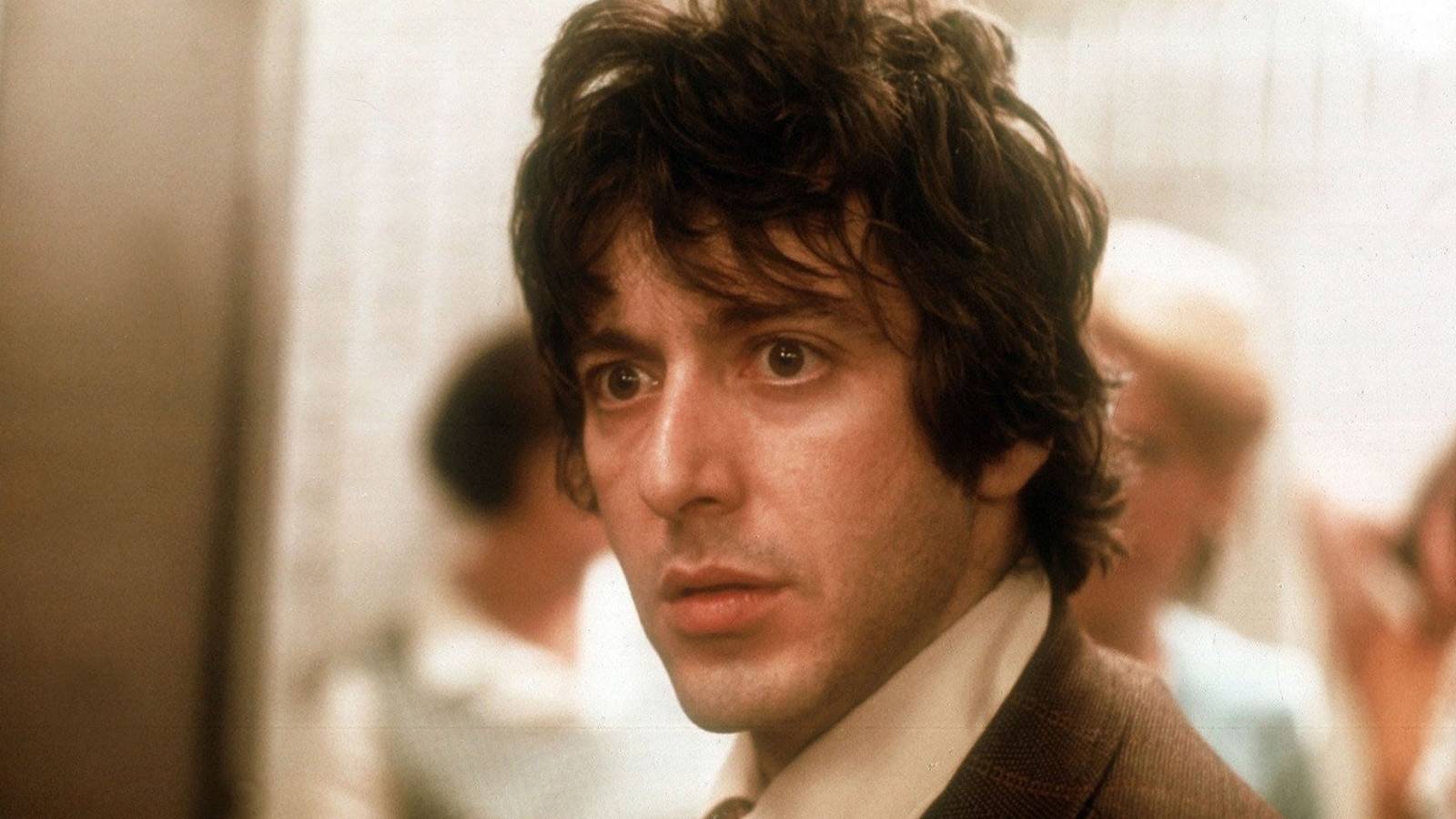
Dog Day Afternoon strands viewers inside a Brooklyn bank alongside Sonny, played by Al Pacino, and Sal, played by John Cazale, as a botched robbery turns into an all-day hostage standoff. The film does not rely on elaborate plotting or choreographed action beats to sustain its tension. Instead, it gives Sonny the space to talk, as Sal lingers nervously in the background. The film’s energy comes as Pacino stalks the set and argues, negotiates, performs, and spirals, often in the same breath.
It’s one of Pacino’s best performances, in which he plays Sonny as a man who understands that attention is power. He keeps talking to maintain his control over the situation. Over time, his verbal onslaught reshapes the situation; Stockholm Syndrome sets in, and the hostages begin to have compassion for their captor. After the film’s famed “Attica” sequence, one of the few sequences in which Sonny takes his act outside the bank’s walls, the onlookers cheer him on, and the media circus grows. The crime becomes a spectacle, with Sonny at its center, feeding off the crowd and giving something back to them in return.

The 30 Best Al Pacino Movies of All Time, Ranked
From ‘The Godfather’ to ‘Scarface’ to ‘Heat,’ this is Collider’s ranking of the greatest Al Pacino movies ever.
Lumet keeps the camera close, the spaces tight, and Pacino at the center. The tension comes from wondering how far Sonny will push the moment, and when his next word will be the one that causes his downfall. Pacino’s performance is electric, with the actor giving into his most volcanic impulses while also quieting down for the film’s quieter moments, particularly a moment in which Sonny calls his lover, Leon. The film barrels toward a tragic real-life conclusion, but its power comes from watching a performance expand until it threatens to burst through the frame. Dog Day Afternoon is one of the best movies of the seventies and one of the best heist movies ever made, due in large part to Pacino’s iconic work.
The Opening of ‘Good Luck, Have Fun, Don’t Die’ Brings Chaotic Comedy

Verbinski borrows the combustible core of Dog Day Afternoon and filters it through a science fiction lens for Good Luck, Have Fun, Don’t Die. Rockwell’s character storms the diner with the same command that Sonny brings to the bank, replacing the criminal desperation with apocalyptic urgency and off-kilter comedy. He rattles off names, memories, and future outcomes, insisting he knows these people because he has fought and nearly died alongside his hostages in hundreds of attempts to save the world.
As the scene stretches, skepticism shifts to alarm. The staff calls the police, and the authorities arrive. While the majority of the diners are baffled and alarmed by the man, understandably, since he’s strapped with a bomb and looks like he escaped from an asylum, others are drawn in by his knowledge and familiarity. Rockwell escalates his performance to attention through sheer momentum, building on the quirky energy that’s made him beloved. Like Pacino, he dares his captors, as well as the audience, to decide whether this man is brilliant, unhinged, or both, and the film benefits from his manic confidence.
The sequence crackles with energy, purpose, and humor. It’s suspenseful, entertaining, and a heck of a way to open a story, and many of the film’s reviews recognize Rockwell’s performance. When the film eventually pulls away into a series of self-contained stories, that spell breaks. Good Luck, Have Fun, Don’t Die remains playful and inventive, but it never quite recaptures the claustrophobic pull or singular focus of its opening. Some of that is because the movie is so jam-packed with ideas and images that it risks bursting, but part of it is because that opening sets a bar the rest of the movie couldn’t hope to reach.
Letting Actors Command a Scene Never Goes Out of Style

Dog Day Afternoon sustains its intensity for nearly its entire runtime, while Good Luck, Have Fun, Don’t Die uses it as a launching pad rather than a template. Even so, Verbinski’s nod to Lumet clarifies how much he values Rockwell’s performance to propel his weird, anti-AI sci-fi-comedy, which he hopes is a franchise starter.
Watching that first scene highlights how timeless Dog Day Afternoon’s approach remains. Technology, genre, and tone may change, but the thrill of watching an actor seize control of a confined space endures. Pacino turns a bank into a stage and dares the world to watch. Rockwell does the same with a diner and a doomsday pitch. For a few breathless minutes, both films remind us how exhilarating it is when a movie trusts an actor to take over a movie.
Dog Day Afternoon is available to stream on Tubi in the U.S.

- Release Date
-
December 25, 1975
- Runtime
-
124 minutes
- Director
-
Sidney Lumet
- Writers
-
Frank Pierson, Thomas Moore, P.F. Kluge, Leslie Waller
- Producers
-
Martin Bregman