
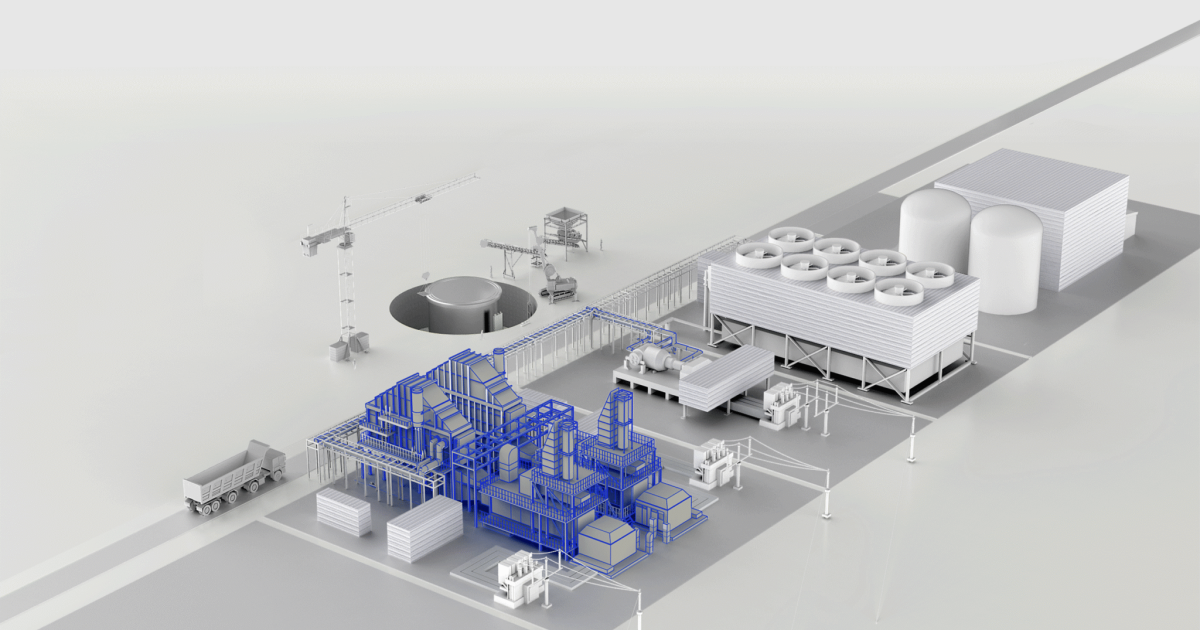
Want to build a power plant and can’t decide between nuclear and natural gas? Why not opt for both? That’s the strategy that Blue Energy has developed in collaboration with GE Vernova for a proposed 2.5-GW hybrid facility in Texas that uses both fuels.
Two aggravating things about nuclear power plants are that they take a ridiculously long time to get approved and built, and that they aren’t especially good at responding to rapidly shifting power demands.
First, even leaving aside the long build-time, there is a tortuous regulatory maze that has to be navigated that seems like something the Greek gods devised to annoy Odysseus. That leaves the backers with the very real problem of how to keep the books balanced while all the paperwork and brick laying drag on.

Blue Energy
The second problem is that, while nuclear power is excellent for supplying baseload electricity, it isn’t especially well suited to power grids that need to respond rapidly to fluctuating demand. Nuclear plants prefer the steady-demand networks currently in use that have loads of inertia as opposed to the future ones that must accommodate intermittent renewable energy sources.
To overcome these shortcomings, Blue Energy and GE Vernova have hit on the idea of combining gas turbine and nuclear generation in one plant. The plan is to use GE Vernova Hitachi Nuclear Energy’s (GVH) BWRX-300 small modular reactor (SMR) at Blue Energy’s first planned site in Texas to create what the partners call a proprietary “Integrated Monopile System” (IMS) as part of a “gas-to-nuclear” re-sequencing strategy.
It isn’t that the plant will integrate gas and nuclear generation, but that separate gas and nuclear facilities will go into a single plant. In this way, a single facility will combine the strong baseline power of nuclear with the flexibility of throttleable gas. It also means that one system can go online while the other is under construction.

Blue Energy
The first phase will be to install massive 12-ft-wide (3.66-m) steel monopiles that have been adapted from offshore wind turbine facilities. These will serve as containment structures for prefabricated modular reactors housed inside the monopiles, which will themselves sit within water pools connected to a navigable channel. According to the companies, this arrangement enables passive cooling while also allowing the surrounding water to act as an extremely thick and effective radiation shield, even in the event of a total systems shutdown. Blue Energy estimates the approach could reduce plant construction time by as much as 93%.
The next phase will occur simultaneously with the deployment of two GE Vernova 7HA.02 gas turbines capable of generating 1 GWe (1,000 MW) of electricity. This will allow the plant to begin generating electricity and revenue relatively quickly. As the reactors are installed, the main plant will transition from gas to steam to turn the dynamos. At this point, both the nuclear and gas operations will share a common turbine hall and grid connection.
As a bonus, Blue Energy says that the gas turbines are “hydrogen ready” and could eventually use hydrogen produced by nuclear-generated steam or electricity.
“Combining our industry-leading HA gas turbines with the BWRX-300, the only small modular nuclear reactor under construction in the Western world today, provides an effective solution aimed to meet the demands of rapid AI expansion in the United States while decreasing time to power,” said Eric Gray, CEO, GE Vernova’s Power Segment. “Our collaboration with Blue Energy on this project exemplifies the innovative approaches required to help deliver the scale of electricity needed for this extraordinary demand.”
Source: Blue Energy