
The workplace is not what it used to be. Skills that were relevant a few years ago are quickly becoming outdated, and new technologies are constantly reshaping how businesses operate. In this kind of environment, hiring talent is only part of the equation. The real challenge is keeping that talent skilled, engaged, and ready for what comes next.
This is exactly why organizations are turning toward advanced LMS solutions. Not just as a training tool, but as a long-term strategy to build a workforce that can actually keep up with change.
Why “Future-Ready” Is No Longer Optional
Let’s be honest, most companies have faced this at some point. You invest in hiring, onboard employees, and then realize a few months later that there are still skill gaps. Or worse, employees lose interest in outdated training programs.
The reality is simple.
Employees today expect learning to be:
- Flexible
- Relevant
- Easy to access
- Actually useful in their daily work
If those expectations are not met, engagement drops. And when engagement drops, performance follows.
A future-ready workforce is not just about training people once. It is about creating an environment where learning becomes part of everyday work.
What Makes Modern LMS Solutions So Effective
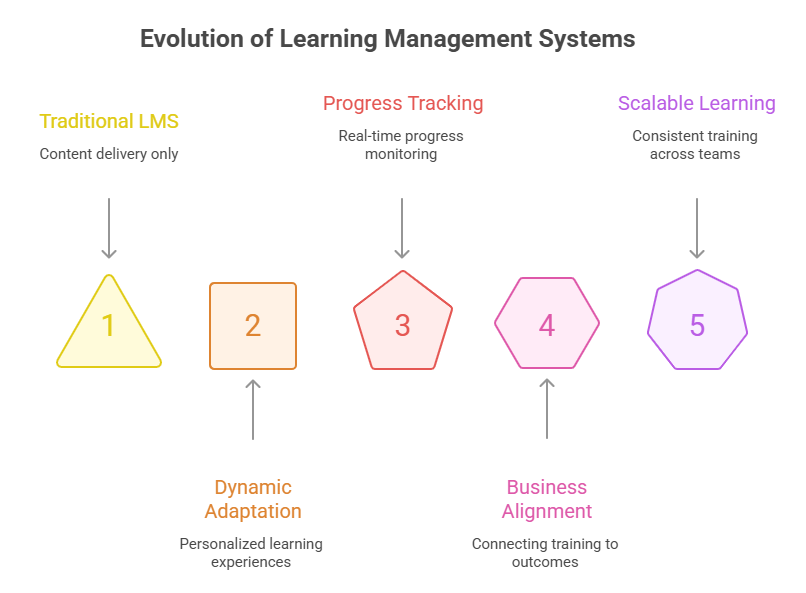
Earlier training systems were built just to deliver content. You log in, complete a course, and move on. That model no longer works.
Today’s LMS platforms are far more dynamic. They adapt to users, track progress, and help organizations understand what is actually working.
An advanced LMS helps you:
- Deliver personalized learning instead of generic courses
- Track real progress, not just course completion
- Connect training directly with business outcomes
- Scale learning across teams without losing consistency
And the biggest difference? Employees actually want to use them.
A Real-World Perspective
Imagine onboarding ten new employees without a structured system. Each manager explains things differently, training quality varies, and employees take longer to adjust.
Now compare that with an LMS-driven approach. Every employee follows a structured path, gets access to the same quality content, and can revisit training anytime.
The difference is not just convenience. It directly impacts:
- Time to productivity
- Employee confidence
- Overall team performance
That is where LMS starts becoming a business advantage, not just a training tool.
Features That Actually Make a Difference
Personalized Learning That Feels Relevant
One of the biggest reasons training fails is because it feels generic. Employees do not want to sit through content that does not apply to them.
Modern LMS platforms solve this by tailoring learning paths. Based on role, experience, and behavior, employees see content that actually matters to them.
That small shift makes a big difference in engagement.
Learning That Fits Into Real Life
People are busy. Long training sessions often get postponed or ignored.
With mobile-friendly LMS platforms, learning becomes flexible. Employees can:
- Complete short modules between tasks
- Access training on their phones
- Learn at their own pace
This makes learning feel less like a task and more like an opportunity.
Insights That Help You Improve
Many organizations run training programs but have no idea if they are effective.
An LMS changes that. You can see:
- Who is completing courses
- Where employees are struggling
- Which content is actually useful
Instead of guessing, you can improve training based on real data.
Engagement Through Interaction
Let’s face it, static content is boring.
Modern LMS platforms include:
- Quizzes
- Interactive videos
- Simulations
- Rewards and recognition
These elements make learning more engaging and keep employees involved.
Integration That Saves Time
Training should not exist separately from daily work.
LMS platforms integrate with existing systems like HR tools and CRM platforms. This means:
- Automated onboarding
- Easier tracking
- Better alignment with business processes
Everything works together instead of in silos.
The Shift Toward Continuous Learning
One major change in recent years is how organizations approach training. It is no longer a one-time activity.
Instead, companies are building a culture where learning is ongoing.
Why does this matter?
Because industries are evolving fast. Employees need regular updates, not occasional training sessions.
An LMS supports this by:
- Providing ongoing content updates
- Offering bite-sized learning modules
- Making knowledge easily accessible
When learning becomes continuous, improvement becomes natural.
How AI Is Quietly Changing LMS
Artificial Intelligence is not just a buzzword here. It is already improving how LMS platforms work.
For example, AI can:
- Recommend courses based on user behavior
- Identify skill gaps without manual effort
- Suggest learning paths for career growth
This removes a lot of guesswork and makes training more effective.
Choosing the Right Approach Matters
Not every LMS will deliver the same results. The difference often comes down to how well it fits your business.
Things to consider:
- Is it easy to use?
- Can it be customized?
- Will it scale as your team grows?
- Does it integrate with your existing tools?
Working with a trusted lms software development company can help you build a solution that actually aligns with your goals instead of forcing your team to adapt to a rigid system.
Why Custom Solutions Work Better
Every organization is different. Training needs in one company may not work for another.
That is where customization becomes important.
With elearning portal development services, businesses can create platforms that:
- Match their workflows
- Reflect their brand
- Offer a smoother user experience
Custom solutions are especially useful when you want long-term scalability and flexibility.
The Role of Cloud and SaaS in LMS Growth
Cloud technology has made LMS platforms easier to adopt and manage.
Instead of dealing with complex infrastructure, businesses can now use cloud-based systems that are:
- Easy to deploy
- Accessible from anywhere
- Regularly updated
This is why many organizations prefer SaaS-based LMS models today.
Leading saas development companies in usa are continuously improving these platforms, making them more scalable and efficient for businesses of all sizes.
Building a Culture That Supports Learning
Technology alone is not enough. Even the best LMS will not work if employees are not encouraged to learn.
Organizations need to:
- Make learning part of daily routines
- Recognize progress and achievements
- Encourage curiosity and growth
- Align learning with career development
When employees feel that learning actually benefits them, participation increases naturally.
Getting Started Without Overcomplicating It
If you are planning to implement an LMS, you do not need to do everything at once.
Start simple:
- Identify key skill gaps
- Build a few essential training modules
- Test with a small group
- Gather feedback and improve
This approach reduces risk and helps you build a system that actually works.
Conclusion
The future of work is changing faster than most organizations expect. The companies that succeed will not just be the ones with the best technology, but the ones with the most adaptable and skilled workforce.
Advanced LMS solutions make this possible by turning learning into a continuous, engaging, and meaningful process.
When done right, it is not just about training employees. It is about preparing them for what comes next, and that is what truly makes a workforce future-ready.