


An electronic toggle ratchet relay is a specialised type of relay that, unlike standard relays, maintains its state (either on or off) even after the control signal is removed. It ‘latches’ into position and changes state only when it receives another trigger pulse. This makes it incredibly useful for applications where you need a momentary input to result in a persistent action. So, it is used for converting momentary inputs to on/off operations. A standard relay would only stay on while the button is pressed. An electronic toggle ratchet relay, however, would turn on with one press and stay on, then turn off with the next press. It converts momentary inputs into latched outputs, activated via the onboard push-button, an external switch, or an appropriate trigger.
A true ratchet relay (see Fig. 1) operates with a single pulse input and relies on magnetic memory to retain its switched state.
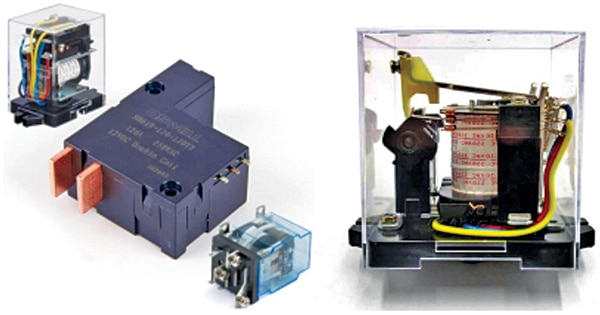
Refer to the datasheet for more details. However, this system employs an unconventional design and can be best described as an electronic toggle or ratchet relay system.

In this configuration, the load is controlled using a push-button switch. When a switching threshold is detected at the input terminal, the relay toggles and latches into its new state. Upon receiving the next trigger signal, the relay toggles again, functioning like a flip-flop.
The functional block diagram of the proposed design is shown in Fig. 2.
Oops! This is an EFY++ article, which means it’s our Premium Content. You need to be a Registered User of our website to read its complete content.
Good News: You can register to our website for FREE! CLICK HERE to register now.
Already a registered member? If YES, then simply login to you account below. (TIP: Use ‘forgot password’ feature and reset and save your new password in your browser, if you forgot the last one!)