
A real-time control system that sharply improves humanoid robot balance, accelerating reliable deployment in industrial and electronics-driven environments.
Researchers at the Georgia Institute of Technology have unveiled a control framework that significantly improves how two-legged robots handle instability and recover balance a key bottleneck in deploying humanoid machines outside controlled labs.

At the heart of the work is a real-time planning and control strategy built into autonomous robots that lets them “reason” through balance challenges without human intervention. Early humanoid prototypes often suffer falls or require careful preset paths on flat surfaces; the new system helps robots sense when a planned motion may lead to instability and adjust their next steps on the fly.
This advancement matters for electronics-oriented robotics because reliable bipedal locomotion and dynamic balance are prerequisites for robots to interact with complex, unstructured environments from factory floors to automated warehousing and beyond. Compared with prior methods, the team’s approach dramatically boosts decision speed, improves stability on shifting platforms, and raises collision avoidance confidence.
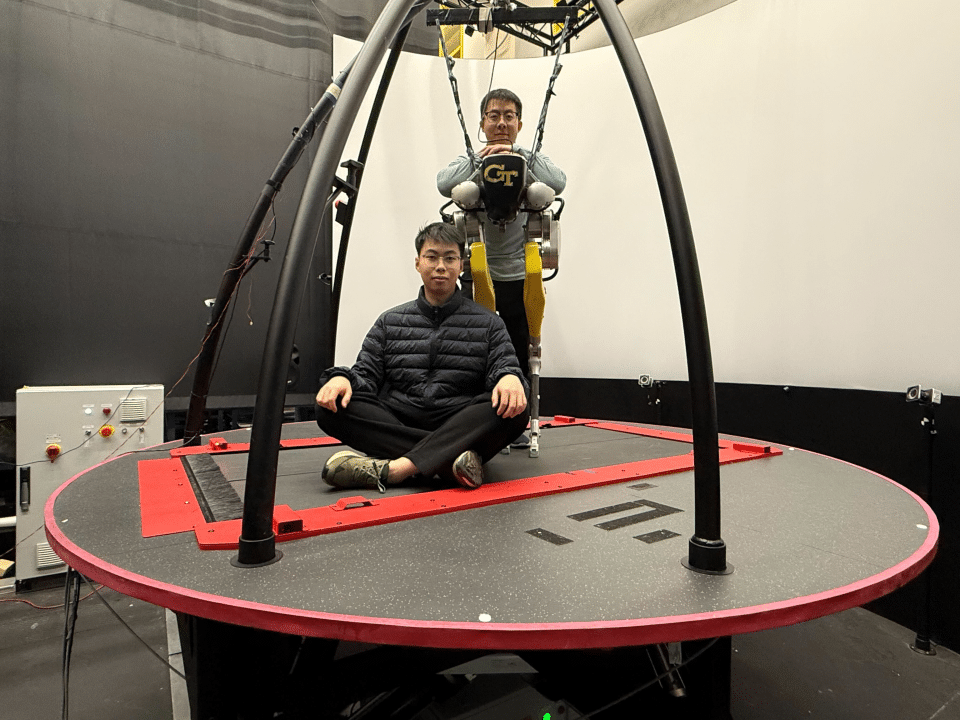
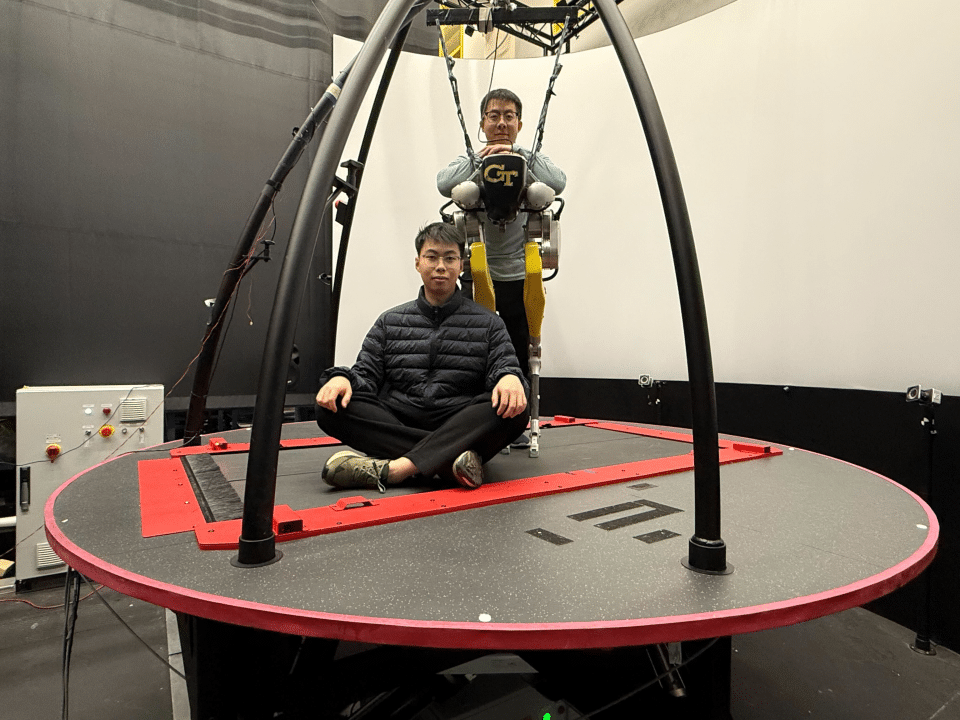
In experiments with the Cassie bipedal robot a two-legged prototype the enhanced control framework was tested inside Georgia Tech’s Human Augmentation Core Facility. A programmable treadmill environment, coupled with added perturbations to mimic unpredictable terrain, showed the system enabling Cassie to maintain balance more reliably than before.
Quantitatively, the novel framework increased Cassie’s recovery capability by around 81%, a substantial leap toward robust autonomous walking. Still, researchers noted limitations: downhill movement and extremely wide steps challenged the robot, highlighting that bipedal stability remains an open research area.
The work appears in IEEE Transactions on Robotics under the title “Robust-Locomotion-By-Logic,” and is backed by funding from the U.S. Office of Naval Research and the National Science Foundation. Looking ahead, the team aims to test their methods in more realistic settings, including at sea, where robots might perform maintenance or logistics tasks in uneven, moving environments. Increasingly confident locomotion could be a stepping stone for humanoid robots to take on electronics-centric roles like inventory management, component assembly support, or even household automation tasks.
While not a complete solution to bipedal autonomy, the new framework marks a notable stride in making humanoid robots safer and more capable an essential building block for future applications in commercial and industrial electronics sectors.