
What if that old CCTV could work smarter? An Indian startup, Quantum Sharq, is making existing cameras AI-ready to detect faces, intruders, and tampering. New cameras? Not needed anymore.
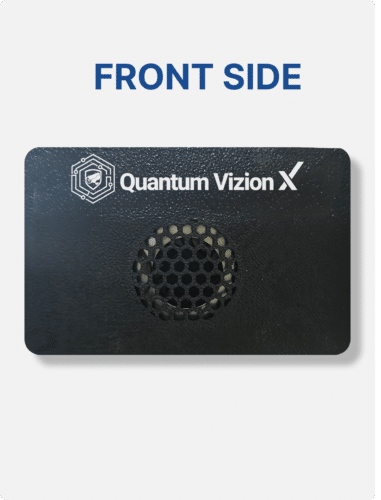
A Tamil Nadu-based startup Quantum Sharq Digital Systems has developed technology that transforms existing CCTV cameras into AI‑driven analytics devices, eliminating the need for costly hardware upgrades with their flagship Quantum Vision X.

Early deployments are currently live in police stations and jewellery stores in Tamil Nadu. “Plans are underway to expand to government projects across multiple states, showcasing the potential of scaling AI-enhanced surveillance without the burden of new smart camera costs,” said M.Saravanan, Chief Executive Officer, Quantum Sharq Digital Systems in an recent interaction with EFY.
There was a time when businesses and government offices seeking facial recognition, tamper alerts, smart human detection, or automated headcount systems had to invest in new cameras equipped with AI capabilities. This innovation flips that model, using software and AI to enhance the intelligence of existing cameras.
The device connects to standard IP cameras and adds smart features to the surveillance system. It can even monitor multiple cameras across locations simultaneously, making it suitable for banks, jewellery stores, and police stations. By using edge computing with Raspberry Pi or cloud-based AI, the system balances performance and cost while offering flexibility that aligns with the client’s infrastructure.
The startup claims that the innovation lies in its compatibility. Unlike many proprietary systems, this technology supports cameras from different manufacturers, ensuring that a police station or business with mixed hardware can still deploy advanced analytics without replacing existing equipment. This approach significantly reduces AI integration costs and accelerates deployment. It supports cloud-based or edge processing and delivers updates over-the-air (OTA), ensuring analytics remain up to date.
Regarding software and AI/ML integration, the system architecture uses Raspberry Pi hardware, RTSP video input, and Linux-based video operating systems. AI models include TensorFlow, OpenCV, YOLOv8, and SSD. The communication layer uses MQTT and SCAPIA for cloud connectivity and remote storage. The machine learning pipeline includes preprocessing (resizing, normalisation, frame sampling), inference with CNN and SSD, post-processing with non-max suppression, and outputs converted to JSON. Alerts can be delivered via the cloud or via WhatsApp.
In a market where hardware costs often slow the adoption of AI surveillance, the startup is taking a practical approach: instead of inventing new cameras, why not leverage software, AI, and intelligent assembly to make existing devices smarter, more efficient, and adaptable? It could reshape India’s surveillance industry.