
New measurement system captures complete magnetic hysteresis loops at megahertz frequencies, closing a key gap in power-electronics materials characterisation.
Researchers in Japan have unveiled a magnetic measurement platform that, for the first time, reliably records complete magnetisation (M–H) hysteresis loops up to megahertz (MHz) frequencies and under high magnetic fields a regime previously inaccessible with conventional tools. High-frequency magnetic behavior is crucial for designing components such as power converters, inductors, and transformers in next-generation electronics.

Yet traditional measurement techniques typically fall short when it comes to capturing the full dynamic response of magnetic materials under real operating conditions, especially at frequencies in the MHz band and field strengths approaching 0.5 tesla. These limitations have forced engineers to extrapolate from partial data, reducing confidence in performance predictions for high-speed and compact devices.
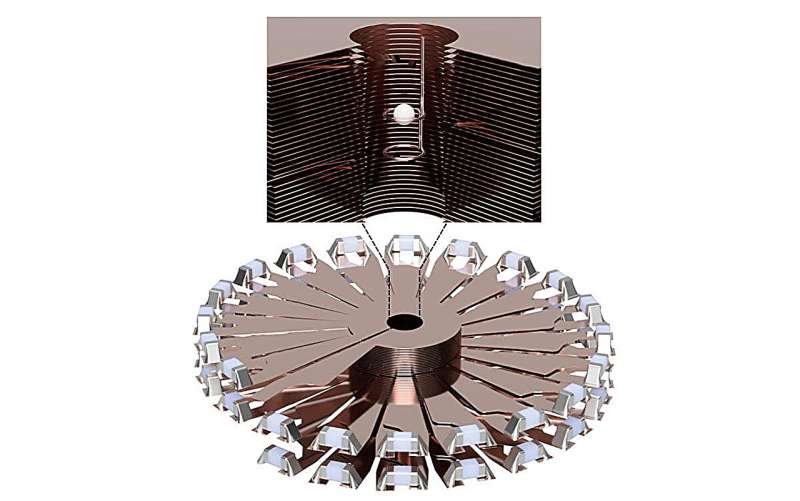
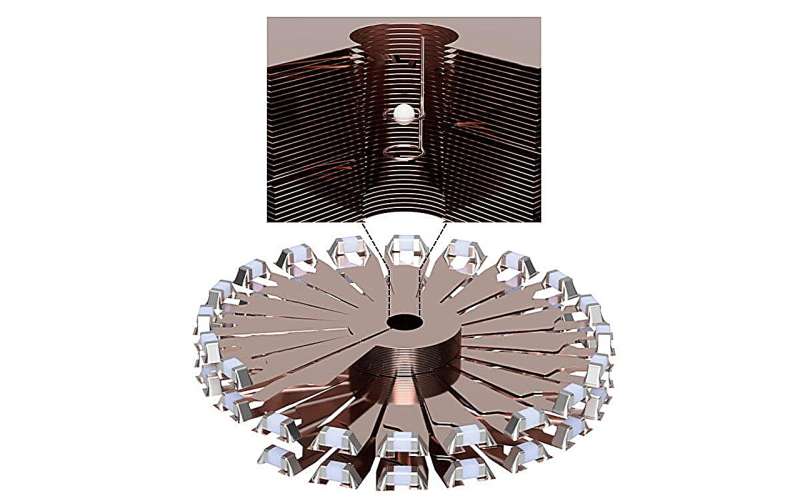
The newly developed system from the University of Tsukuba overcomes these challenges by using a low-impedance LC-resonant excitation coil capable of generating large-amplitude alternating magnetic fields in the MHz range. This configuration allows the magnetometer to drive materials into saturation and then trace the entire hysteresis loop including irreversible processes without the high power penalties or restricted field amplitudes seen in legacy approaches.
In experiments with a commercial Ni-Zn ferrite sample, the team successfully measured saturation-level loops at 1.2 MHz, demonstrating that the system can quantitatively capture magnetic loss and dynamic magnetization responses under conditions representative of real devices. This level of fidelity is a significant leap over prior methods that could only probe the initial magnetization region.
Device manufacturers and materials scientists are likely to find this advance useful for fine-tuning magnetic formulations and optimizing components for high-frequency power electronics from smaller, more efficient inverters to next-generation wireless power modules. By enabling accurate characterization under MHz conditions, the technology helps close the gap between lab measurements and real-world device performance.
The findings were published in IEEE Transactions on Instrumentation and Measurement, underlining the potential of this measurement technique to become a standard tool in high-frequency magnetic materials research.