

There is always a way to de-escalate an issue and work together with people who may not share the same values or opinions. This is how a free and democratic society is meant to function. But what happens when someone crosses the line and does something clearly wrong? One person may try to stand up and challenge it — but can one voice truly make a difference when the stakes are this high?
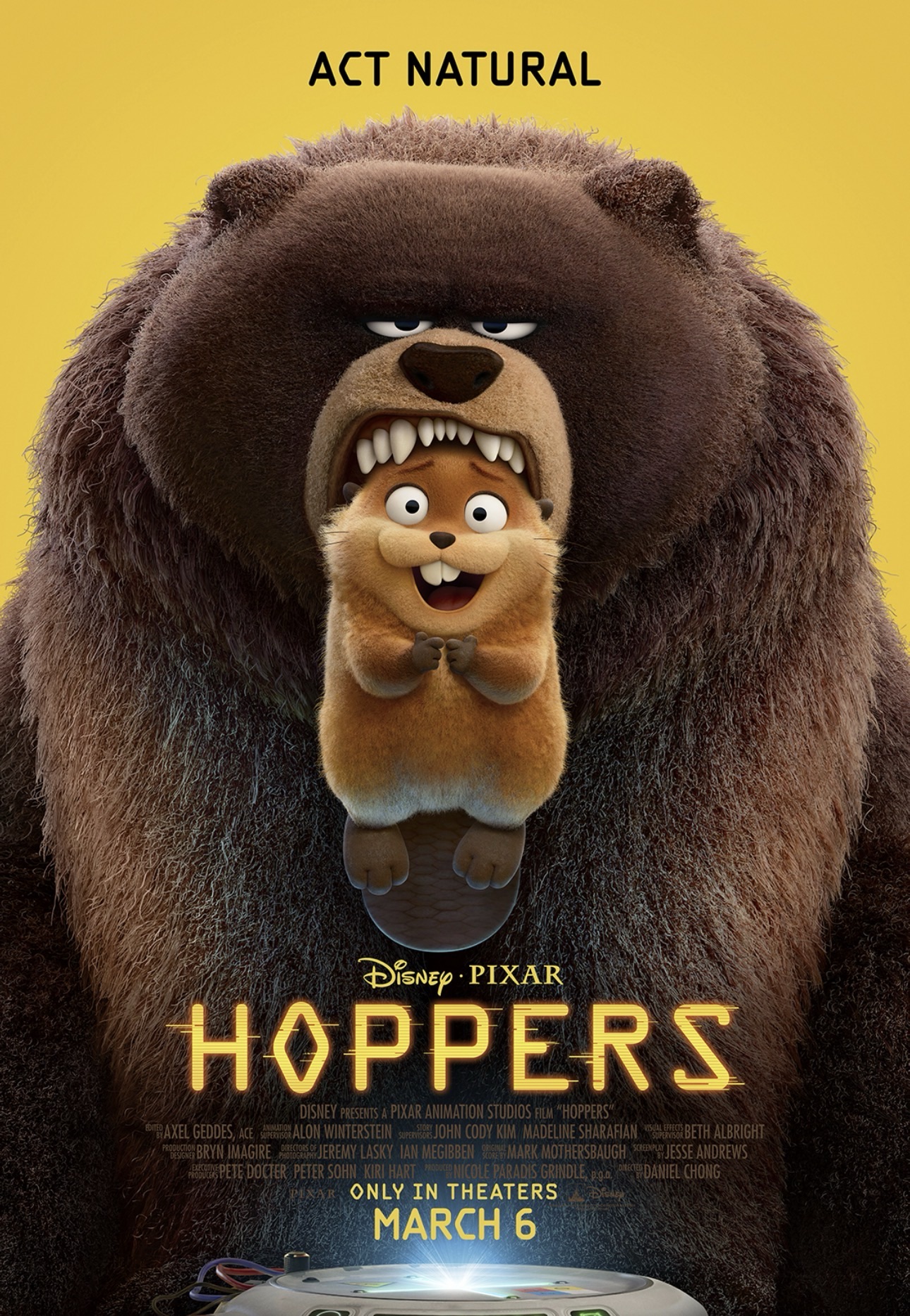
Mabel Tanaka (voiced by Piper Curda) loves nature and animals, and she strongly resists the idea of seeing the beloved forest glade destroyed by the mayor of Beaverton, Jerry Generazzo (voiced by Jon Hamm). The mayor plans to replace the glade with a freeway in order to fulfill one of his campaign promises — connecting the town to the nearby big city. When Mabel realizes she has only two days to stop the construction, an unexpected opportunity appears. With the help of experimental technology developed by her biology professor Dr. Samantha “Sam” Fairfax (voiced by Kathy Najimy), Mabel “hops” into the body of a robotic beaver to search for real beavers that could repopulate the glade and halt the development project. As she embarks on this unimaginable journey and encounters King George (voiced by Bobby Moynihan), the monarch of the displaced beaver colony, Mabel begins to discover strengths she never knew she possessed. More importantly, she learns that even in the most heated conflicts, there is often common ground — a lesson that many adults could stand to remember.
What begins as a desperate attempt to stop a construction project quickly transforms into something much deeper. Once inside the robotic beaver, Mabel finds herself in a world she has always loved but never truly understood. Through the eyes of the animals, she begins to see the fragile balance that exists between nature and humanity. It is here that she meets King George (voiced by Bobby Moynihan), the proud and cautious monarch of the beaver colony who shelters many displaced animals in a massive dam. Their unlikely friendship becomes the emotional core of Hoppers.
At first, George is suspicious of Mabel, sensing that something about her is different. But as the two spend more time together, a quiet bond forms between them. George represents the dignity of the natural world, while Mabel carries the curiosity and compassion of humanity. Their relationship becomes a bridge between two worlds that rarely understand each other.
Yet the film does not shy away from conflict. As tensions rise among the animals themselves, the Animal Council enters the picture, introducing powerful and unpredictable figures such as the Insect Queen (voiced by Meryl Streep) and her ambitious successor Titus (voiced by Dave Franco). What follows is a sequence of events that is both thrilling and emotionally complex, reminding viewers that even noble intentions can spiral into chaos when fear and anger take over.
Director Daniel Chong crafts this world with remarkable warmth and imagination. The animation is vibrant and full of life, capturing the beauty of forests, rivers, and wildlife with stunning detail. Every frame feels alive, from the playful movement of the beavers to the tense moments when the fragile peace between humans and animals begins to break.
At the same time, Hoppers carries a message that resonates far beyond its animated setting. It reminds us that progress and preservation do not have to be enemies. Sometimes the greatest solutions emerge when opposing sides choose to listen rather than fight. Even Jerry Generazzo (voiced by Jon Hamm), who initially appears to be the film’s antagonist, is given the opportunity to grow and reconsider his choices. In doing so, the story avoids simple villains and instead explores the complicated reality of human decision-making.
The emotional strength of the film lies in Mabel herself. Piper Curda delivers a heartfelt performance that captures the determination and vulnerability of a young woman who refuses to give up on something she loves. Through her journey, the film celebrates courage — not the kind that comes from power, but the kind that comes from empathy.
By the time the story reaches its conclusion, Hoppers becomes more than an adventure about animals and technology. It becomes a story about responsibility, understanding, and the quiet hope that people — and even entire communities — can change when they begin to see the world through someone else’s perspective.
Heartwarming, imaginative, and surprisingly thoughtful, Hoppers stands as another memorable entry from Pixar Animation Studios. It reminds us that sometimes the smallest voice, when guided by compassion, can echo louder than the roar of progress.
And perhaps that is the film’s most powerful message of all: protecting the world around us does not begin with grand gestures. Sometimes it begins with a single person who simply refuses to stop caring.