
A next-generation 32-bit microcontroller targets smart industrial and IoT systems with integrated security, advanced processing, and versatile connectivity.
A new 32-bit microcontroller platform has been introduced by Nuvoton Technology to support the growing demands of industrial automation and connected devices, combining high-performance computing with built-in security and broad connectivity options. Designed around the Arm Cortex-M33 core, the MCU delivers clock speeds of up to 180 MHz, enabling efficient execution of complex control tasks in real-time environments.

The device emphasises secure operation at the hardware level. It integrates features such as Secure Boot to ensure only authenticated firmware is executed, alongside memory protection mechanisms that help prevent unauthorised access to critical code. TrustZone technology further enhances protection by isolating secure and non-secure operations, making the platform suitable for applications where data integrity and system security are essential.
The key features are:
- Cortex-M33 core with up to 180 MHz processing
- Hardware security with Secure Boot, XOM, and TrustZone
- Dual CAN FD, I3C, USB 2.0 HS, and SD host interface
- 12-bit ADC (4.2 Msps) with up to 48 PWM outputs
- Industrial-grade reliability with ECC Flash
Beyond security, the MCU is engineered for reliability in demanding conditions. It supports operation across a wide industrial temperature range and includes error correction for Flash memory and SRAM parity checks. These capabilities help minimise system failures and improve long-term stability in harsh deployment environments.
Connectivity is another major focus. The platform incorporates next-generation interfaces such as I3C for efficient sensor communication and dual CAN FD controllers for high-speed networking. It also integrates USB 2.0 high-speed support and an SD host interface, enabling fast data transfer and storage expansion for data-intensive applications across industrial and consumer use cases.
The MCU also brings strong analog and control capabilities. A high-speed 12-bit ADC enables precise signal acquisition, while multiple PWM channels support fine-grained control in lighting, motor control, and similar applications. Dedicated LED control interfaces further reduce processor overhead, simplifying development of dynamic lighting systems.
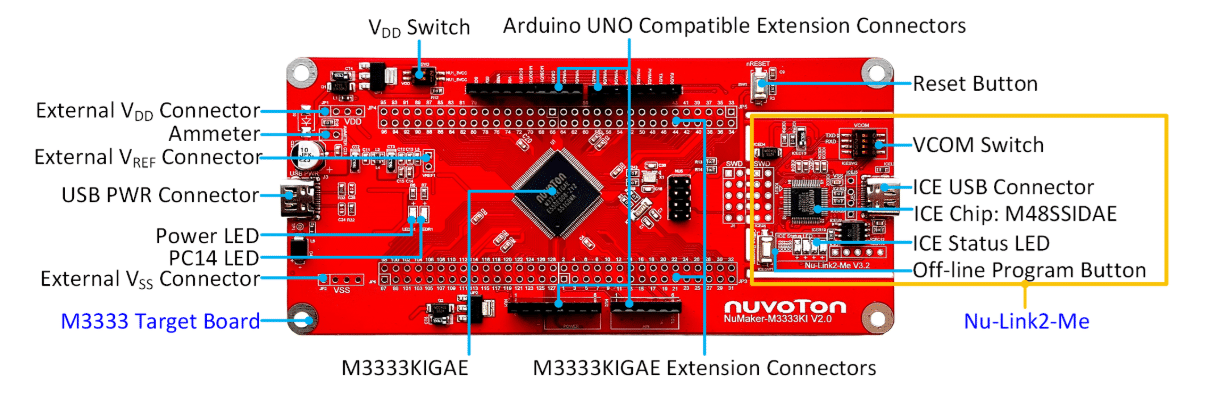
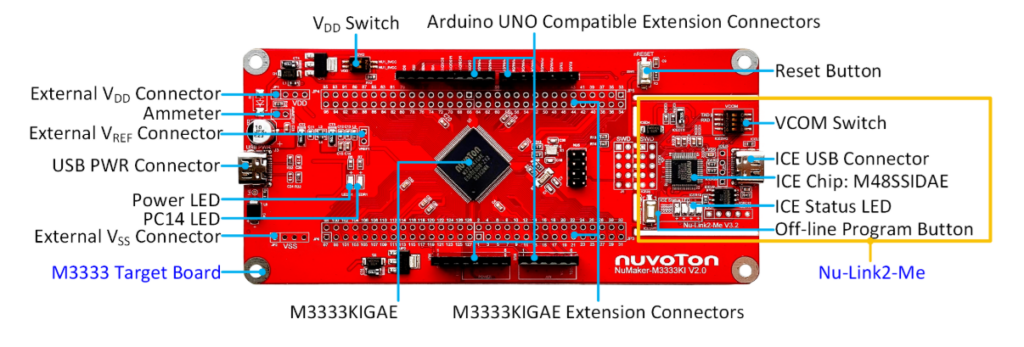
To accelerate development, the platform is supported by evaluation kits and compatibility with widely used RTOS and GUI frameworks, helping engineers reduce time-to-market and streamline system design.
Click here for the original announcement.