

Lyme disease is spreading—a new vaccine could curb infections
A new Lyme disease vaccine made by Pfizer and Valneva could lower infection rates of the tick-borne illness, but federal approval and patient uptake could be a challenge
Oleg Marchak via Getty Images
Since pharmaceutical companies Pfizer and Valneva announced positive results from their phase 3 trial of a vaccine to prevent Lyme disease last month, two questions have loomed large: Will the vaccine receive approval from the Food and Drug Administration. And if so, will the U.S. public accept it?
An effective vaccine could put a huge dent in the growing burden of Lyme disease. Populations of the ticks that spread the disease are growing, and nearly a half-million estimated cases of Lyme disease occur in the U.S each year. But the vaccine must overcome the same obstacles that caused an earlier Lyme vaccine to be pulled from the market in 2002.
The recent announcement showed the vaccine was capable of preventing Lyme disease infection. But its efficacy was only about 73 to 75 percent. The trial also faced several setbacks, including quality concerns that led Pfizer to drop about half the study population several years ago. The results also were not as statistically powerful because fewer infections occurred than expected in the placebo group during the trial. Still, clinicians are approaching the latest news with cautious optimism. “I do think this is great news,” says Martin Backer, an infectious disease physician at NYU Langone Health, who was involved in a previous pediatric trial of this vaccine. “Time will tell about the acceptability.”
On supporting science journalism
If you’re enjoying this article, consider supporting our award-winning journalism by subscribing. By purchasing a subscription you are helping to ensure the future of impactful stories about the discoveries and ideas shaping our world today.
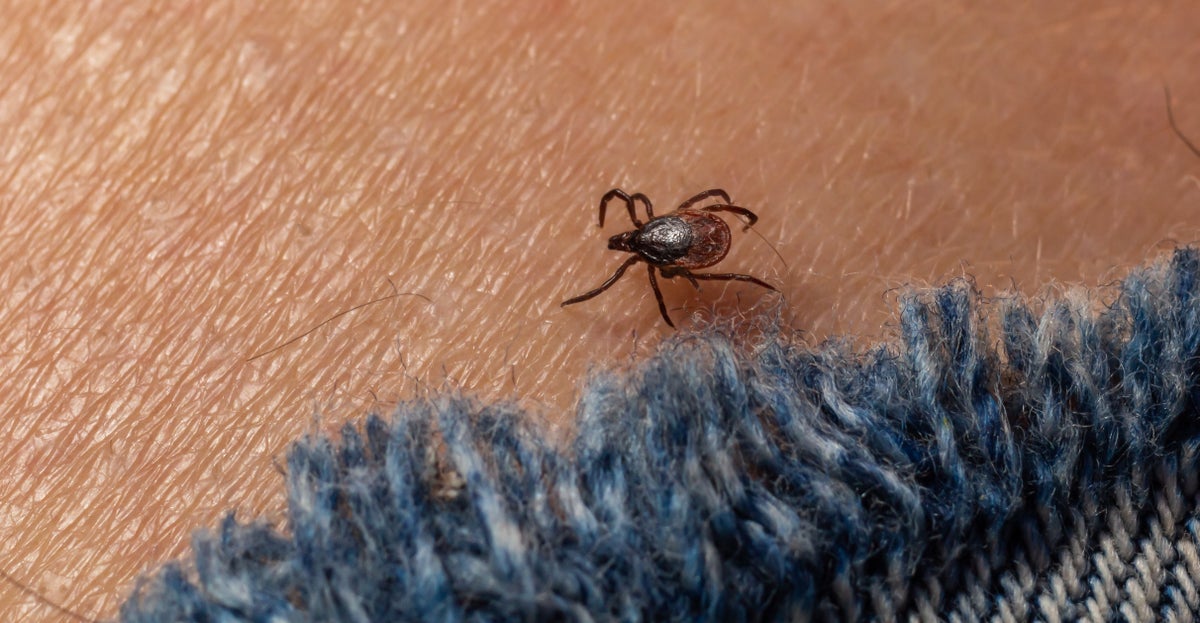
Lyme disease is caused by Borrelia burgdorferi bacteria carried by Ixodes scapularis, the black-legged tick, or deer tick. The tick transmits the bacteria to people when it latches onto human skin and feeds on blood. Though the disease is mild in some people, if it is not treated, it can cause severe neurological, cardiac, and joint inflammation problems and long-lasting symptoms in others, explains Daniel Pastula, a neurologist at the University of Colorado Anschutz. Prompt treatment with antibiotics can prevent that damage, but cases are often missed, testing is complex, and the disease is often underdiagnosed.
More than 89,000 cases of Lyme disease were reported to the Centers for Disease Control and Prevention in 2023, but the agency estimates the country’s actual burden at about 476,000 cases a year. Cases have been rising, the tick’s geographic distribution has been expanding, and tick seasons have been starting earlier and lasting longer, partly as a result of climate change.
Using insect repellent, wearing protective clothing such as long pants and sleeves and checking for ticks after being outside in tick-prone areas can substantially reduce the risk of being bitten. But most people don’t follow these strategies, Pastula says.
The new vaccine is what’s known as a protein subunit vaccine. Called LB6V, it targets six serotypes, or bacterial variations, of the outer surface protein A (OspA) on the B. burgdorferi bacterium that causes Lyme disease. This prompts the immune system to develop antibodies against the six most prevalent subtypes of the bacterium in North America and Europe. Unlike most vaccines, which target pathogens inside the body, this one targets bacteria inside the tick. When a tick is feeding on a vaccinated person’s blood, it ingests these antibodies, which then bind to the bacteria within the tick and prevent them from entering the person.
The vaccine first showed efficacy in mice in 2017, leading the FDA to grant it fast-track designation, and the phase 1 trial showed no major safety concerns in people. The recent phase 3 trial involved approximately 9,400 participants aged five and older in the U.S., Canada and Europe. Participants received three doses of the vaccine over five to nine months and then a fourth booster dose before the start of a second tick season.
The new vaccine bears some similarities to LYMErix, a vaccine approved by the FDA in 1998 that was later withdrawn because of public concerns about safety—some vaccine recipients reported musculoskeletal pains that they attributed to the vaccine—and poor market performance. In their respective trials, both vaccines had an efficacy below 80 percent and an uncertain length of immunity. Notably, people will likely need boosters before each tick season, says Ondrej Hajdusek, a parasite biologist at the Czech Academy of Sciences, who co-authored a Comment piece about the phase 1 trial of the new vaccine in the Lancet. Antibodies often fade over time, so a booster would ensure enough antibodies are present for ticks to ingest each season.
Despite its similarities to the previous vaccine, LB6V “reflects lessons learned from the LYMErix era,” Hajdusek says. The new vaccine was tested in children younger than age 15. And it covers more serotypes of the bacteria and does not contain the component in the LYMErix vaccine that was hypothesized to cause arthritic pain. The proposed link between the previous vaccine and arthritis was never confirmed through subsequent safety research, but fear of an association was among the factors that caused the vaccine’s market withdrawal.
Lorraine Johnson, CEO of the education and advocacy nonprofit LymeDisease.org, says she had hoped to see a vaccine that would protect against the various co-infections that can occur with Lyme disease. Meanwhile she is interested in seeing the safety data when the companies release that information.
“Lyme patients want a vaccine that’s going to be safe and effective,” Johnson says, “and they want [the manufacturer to be] really honest about disclosing adverse events.”
A Pfizer spokesperson told Scientific American that the company was not giving interviews about the vaccine at this time.
Pfizer has submitted the LB6V vaccine trial data to the FDA. If the vaccine is approved, the CDC’s Advisory Committee on Immunization Practices (ACIP) would normally determine whom to recommend it to. (A recent court decision had blocked the earlier appointments of ACIP’s current members.) The recommendation would likely involve assessing who is at risk of Lyme disease exposure, similar to recommendations for travel vaccines, Backer says.
At that point, Hajdusek says, “the main practical question will likely be public acceptance, particularly if an annual preseason booster is recommended.”
It’s Time to Stand Up for Science
If you enjoyed this article, I’d like to ask for your support. Scientific American has served as an advocate for science and industry for 180 years, and right now may be the most critical moment in that two-century history.
I’ve been a Scientific American subscriber since I was 12 years old, and it helped shape the way I look at the world. SciAm always educates and delights me, and inspires a sense of awe for our vast, beautiful universe. I hope it does that for you, too.
If you subscribe to Scientific American, you help ensure that our coverage is centered on meaningful research and discovery; that we have the resources to report on the decisions that threaten labs across the U.S.; and that we support both budding and working scientists at a time when the value of science itself too often goes unrecognized.
In return, you get essential news, captivating podcasts, brilliant infographics, can’t-miss newsletters, must-watch videos, challenging games, and the science world’s best writing and reporting. You can even gift someone a subscription.
There has never been a more important time for us to stand up and show why science matters. I hope you’ll support us in that mission.