
Delivering nearly three times the heat conduction of copper, this discovery could ease one of the biggest bottlenecks in modern electronics and AI systems.
Researchers at Argonne National Laboratory, a U.S. Department of Energy facility, has identified a new metallic material capable of conducting heat nearly three times more efficiently than copper. The discovery, centered on theta-phase tantalum nitride (θ-TaN), could significantly impact thermal management across electronics, AI hardware, and quantum systems where overheating remains a persistent challenge.

As computing systems grow more complex, particularly with the rise of AI workloads, managing heat has become a key design constraint. Conventional materials such as copper, which account for a large share of thermal management solutions, are nearing their practical performance limits. The newly discovered material offers a potential alternative, enabling more efficient heat dissipation, improved device reliability, and the possibility of higher performance without proportional thermal penalties.
A major advantage of θ-TaN lies in how it handles heat transport at the microscopic level. In most metals, heat is carried by electrons and atomic vibrations, with interactions between the two limiting efficiency. However, researchers observed unusually weak electron-phonon interactions in this material, allowing heat to flow far more freely. As a result, it achieves a thermal conductivity of around 1,100 watts per meter-Kelvin, compared to approximately 400 watts per meter-Kelvin for copper, setting a new benchmark among metallic materials.
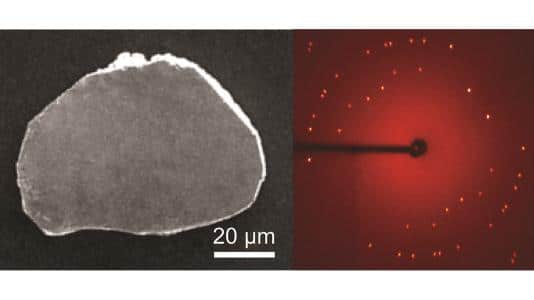
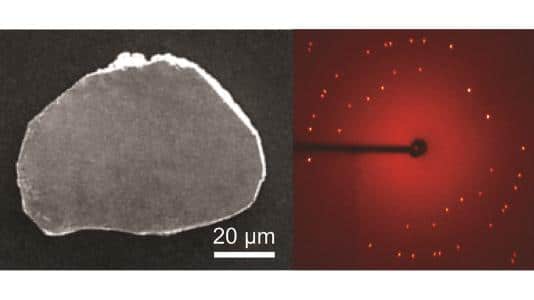
At the feature level, the material’s unique atomic structure plays a critical role in enabling this performance. The team, led by researchers from the University of California, Los Angeles (UCLA), validated these properties using high-resolution inelastic X-ray scattering at the recently upgraded APS facility. The upgrade, which has transformed APS into one of the brightest synchrotron X-ray sources globally, allowed precise characterization of heat transport behavior at atomic scales.
Beyond consumer electronics, the findings could influence thermal design strategies in data centers, aerospace systems, and next-generation quantum platforms, where heat dissipation increasingly limits scalability.
Ahmet Alatas, Argonne National Laboratory, says, “The enhanced capabilities of the upgraded APS made these precise measurements possible. Together, experiment and theory provide a microscopic explanation for the record-high thermal conductivity.”