
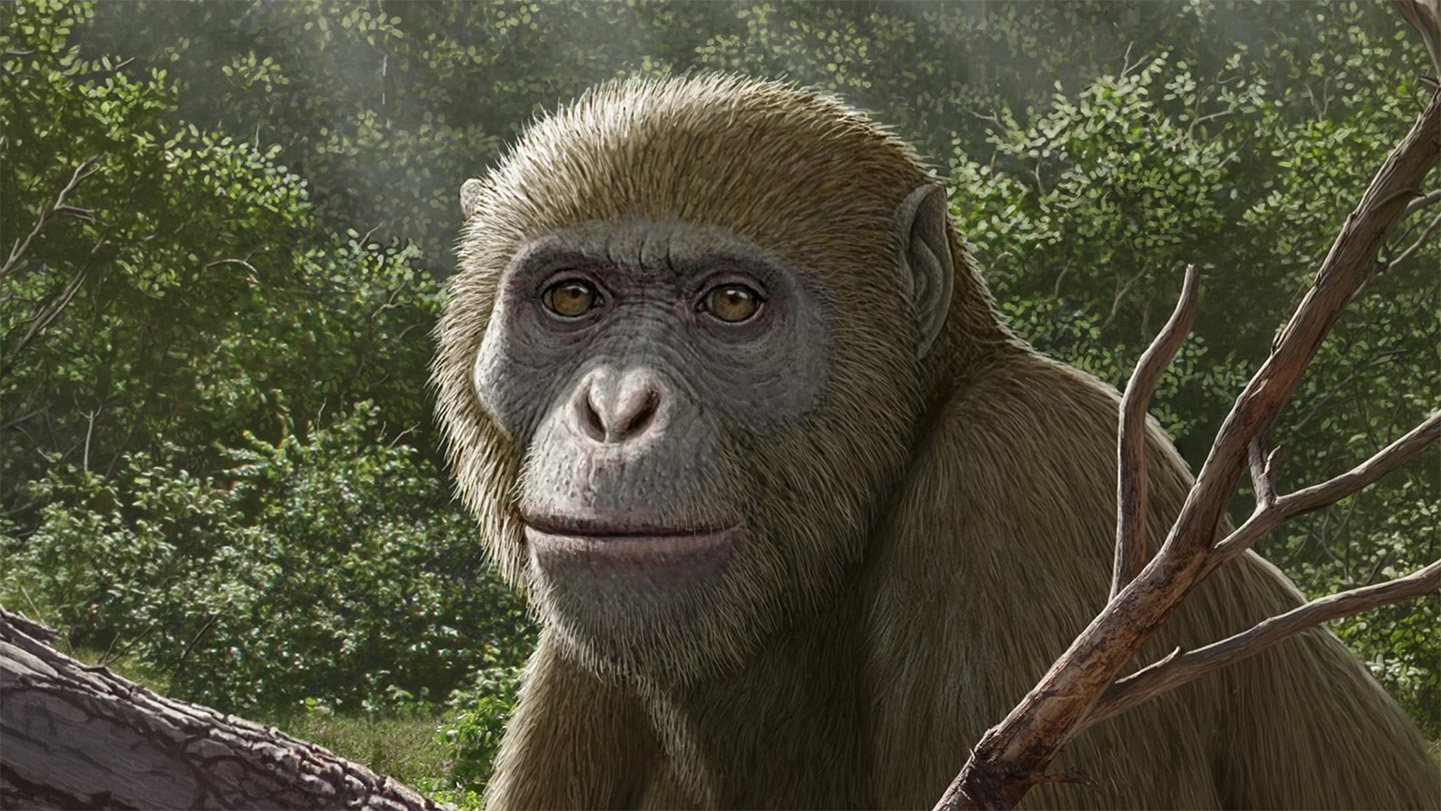
Modern apes may have swung into existence in North Africa or the Middle East.
New fossil findings — published March 26 in Science — unveil Masripithecus, a roughly 17-million-year-old early ape that lived in what is now Egypt. The discovery expands the earliest ancestry of primates like gibbons, chimpanzees and humans beyond East Africa.
That’s where the vast majority of the fossil evidence for early apes came from until now, says paleontologist Shorouq Al-Ashqar at Mansoura University in Egypt.
“The entire story [of early ape evolution] was told by only a small corner of the continent,” she says.
Fossil monkeys from North Africa and the Middle East have been dated to this same prehistoric timing of the Early Miocene sub-epoch, up to around 20 million years ago. But no apes, says Al-Ashqar.
Al-Ashqar and her colleagues were curious if there were lost fossil apes in the region. So, in 2021, they started a project looking for ape fossils at Wadi Moghra, a fossil hot spot in northern Egypt. There, in 2024, Al-Ashqar discovered something unusual underfoot.
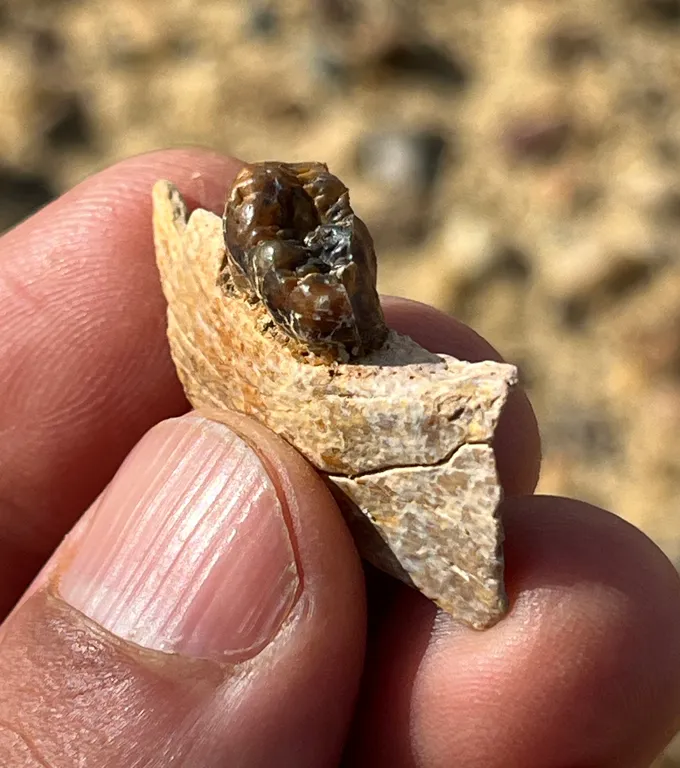
“I found a piece of [lower jaw] with a wisdom tooth,” she says. “I immediately realized that it was an ape.”
Apes’ teeth differ from those of monkeys, Al-Ashqar says. They’re quite flat, comparatively. The second and third molars are also of similar size, unlike in monkeys.
When the researchers sent images of the jaw pieces they found to a colleague in California, he was just as excited by the discovery, says Al-Ashqar. The team compared the jaw to those of known fossil species, and determined it belonged to a new genus and species of ape that lived 17 to 18 million years ago and named it Masripithecus moghraensis (Egyptian ape from Moghra).
“Anytime anybody has a new ape fossil it’s exciting,” says paleontologist Susanne Cote of the University of Calgary in Canada, who wasn’t involved with the study. Moghra is a fossil locality that’s been known for a century, she says, yet these primates are apparently rare enough in the fossil record that it’s taken this long for evidence to turn up.
Based on the thickness of its tooth enamel, says Al-Ashqar, Masripithecus probably had a mixed diet of fruits, nuts and seeds. These would have been plentiful in the subtropical and tropical forests that covered Egypt when it lived.
The team combined genetic data from modern apes with information on physical characteristics of living and extinct ape species to generate an ape family tree. Apes are united by a relatively large body size compared to monkeys, and lack the tails that most monkeys possess. Masripithecus was very closely related to the last common ancestor of modern apes, such as gorillas and orangutans. This raises the possibility that apes evolved in the north of the continent.
The team used a statistical analysis to reconstruct the predicted movement of early apes out of Africa over millions of years given the new fossil findings. Their findings suggest that early apes may have evolved in North Africa or the Middle East and moved into Eurasia, with some populations migrating back into Africa.
Cote suspects that apes, though perhaps sparsely populated, would have been more widespread in Africa than what can be seen in the fossil record. Many regions outside of East Africa are very poorly sampled, she says, so the area is just a small window into that early period of ape evolution.
“That doesn’t mean that it’s the only place they were living,” says Cote.
For James Rossie, a paleontologist at Stony Brook University in New York, Masripithecus shows that when fossil sampling does happen outside of East Africa, new and fascinating species tend to show up.
“This [discovery] verifies that our view of ape evolution in Afro-Arabia still has huge blind spots,” says Rossie, who was not involved in the work.
There’s a lot left to know about this mysterious Egyptian ape. Al-Ashqar points out that anything about the body of Masripithecus beyond the lower jaw is unknown.
There’s more paleontological work to be done across the whole region. Other countries in North Africa, including Morocco, Tunisia and Libya may contain early apes yet to be unearthed, she adds.
“We’re just getting started.”