

NASA announces nuclear-powered Mars mission by 2028
The U.S. space agency will aim to send a nuclear-powered spacecraft to Mars—a first—in a bid to show that nuclear propulsion can be used to send missions into deep space
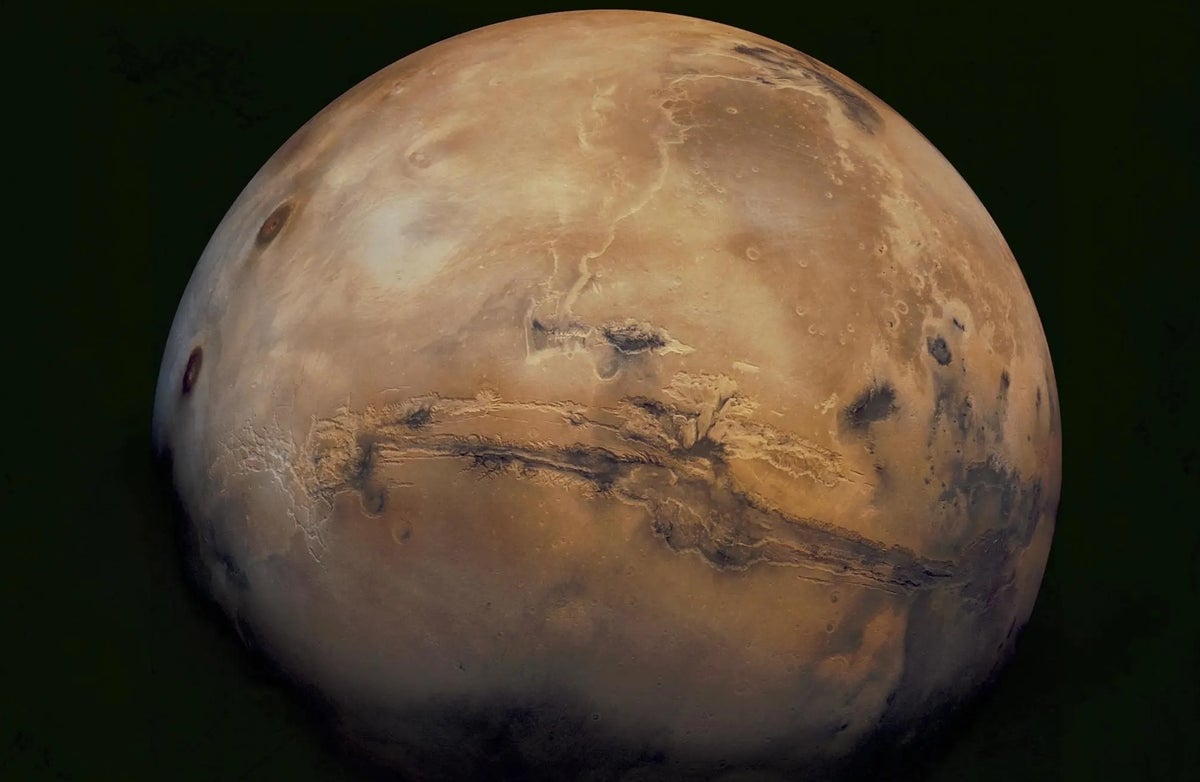
NASA has announced it will launch a nuclear-powered spacecraft to Mars before the end of 2028. The effort would mark a world first—no interplanetary spacecraft mission has ever been powered by nuclear propulsion before—and a massive boost for potential missions that would go farther out into space and travel faster than traditional liquid-fueled craft could manage.
The space agency plans to the launch the spacecraft, called Space Reactor-1 Freedom, to the Red Planet, where it will deploy several helicopters to explore the surface. The helicopters, NASA said in a statement, will be modeled on Ingenuity, which flew as part of the Perseverance Mars rover’s mission on the planet.
According to NASA, the mission will prove nuclear propulsion can power spacecraft “and activate the industrial base for future fission power systems across propulsion, surface, and long-duration missions.” These could include missions to planets and other bodies in the outer solar system. Currently, exploring these distant worlds would be impossible with traditional craft, which would require massive amounts of liquid fuel to travel such distances. Only spacecraft that are small enough to be battery- or solar-powered, such as the Voyager and Juno missions, have reached these outer realms of our solar system.
On supporting science journalism
If you’re enjoying this article, consider supporting our award-winning journalism by subscribing. By purchasing a subscription you are helping to ensure the future of impactful stories about the discoveries and ideas shaping our world today.
Nuclear propulsion has long been touted as the solution to this problem, but it has never been proven to work in a mission. It is unclear what propulsion design NASA would use to test the system or if there will be any collaboration with industry.
Editor’s Note (3/24/26): This is a breaking news story and may be updated.
It’s Time to Stand Up for Science
If you enjoyed this article, I’d like to ask for your support. Scientific American has served as an advocate for science and industry for 180 years, and right now may be the most critical moment in that two-century history.
I’ve been a Scientific American subscriber since I was 12 years old, and it helped shape the way I look at the world. SciAm always educates and delights me, and inspires a sense of awe for our vast, beautiful universe. I hope it does that for you, too.
If you subscribe to Scientific American, you help ensure that our coverage is centered on meaningful research and discovery; that we have the resources to report on the decisions that threaten labs across the U.S.; and that we support both budding and working scientists at a time when the value of science itself too often goes unrecognized.
In return, you get essential news, captivating podcasts, brilliant infographics, can’t-miss newsletters, must-watch videos, challenging games, and the science world’s best writing and reporting. You can even gift someone a subscription.
There has never been a more important time for us to stand up and show why science matters. I hope you’ll support us in that mission.