

NASA’s Artemis II moon mission reaches greatest distance from Earth
The space exploration milestone came during a 40-minute period during which the Artemis II astronauts were unable to communicate with Earth
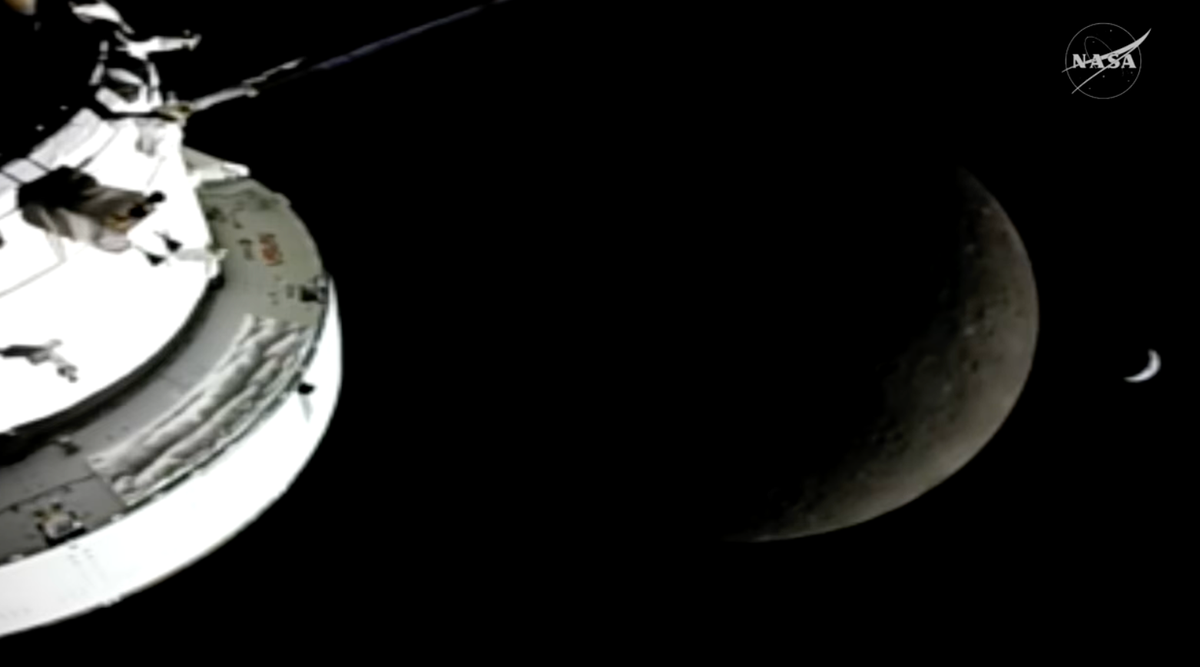
The Artemis II Orion capsule, the moon and the Earth all seen from a camera at the tip of one of Orion’s solar arrays.
NASA has launched four astronauts on a pioneering journey around the moon—the Artemis II mission. Follow our coverage here.
For NASA’s Artemis II mission, there’s nowhere to go now but home.
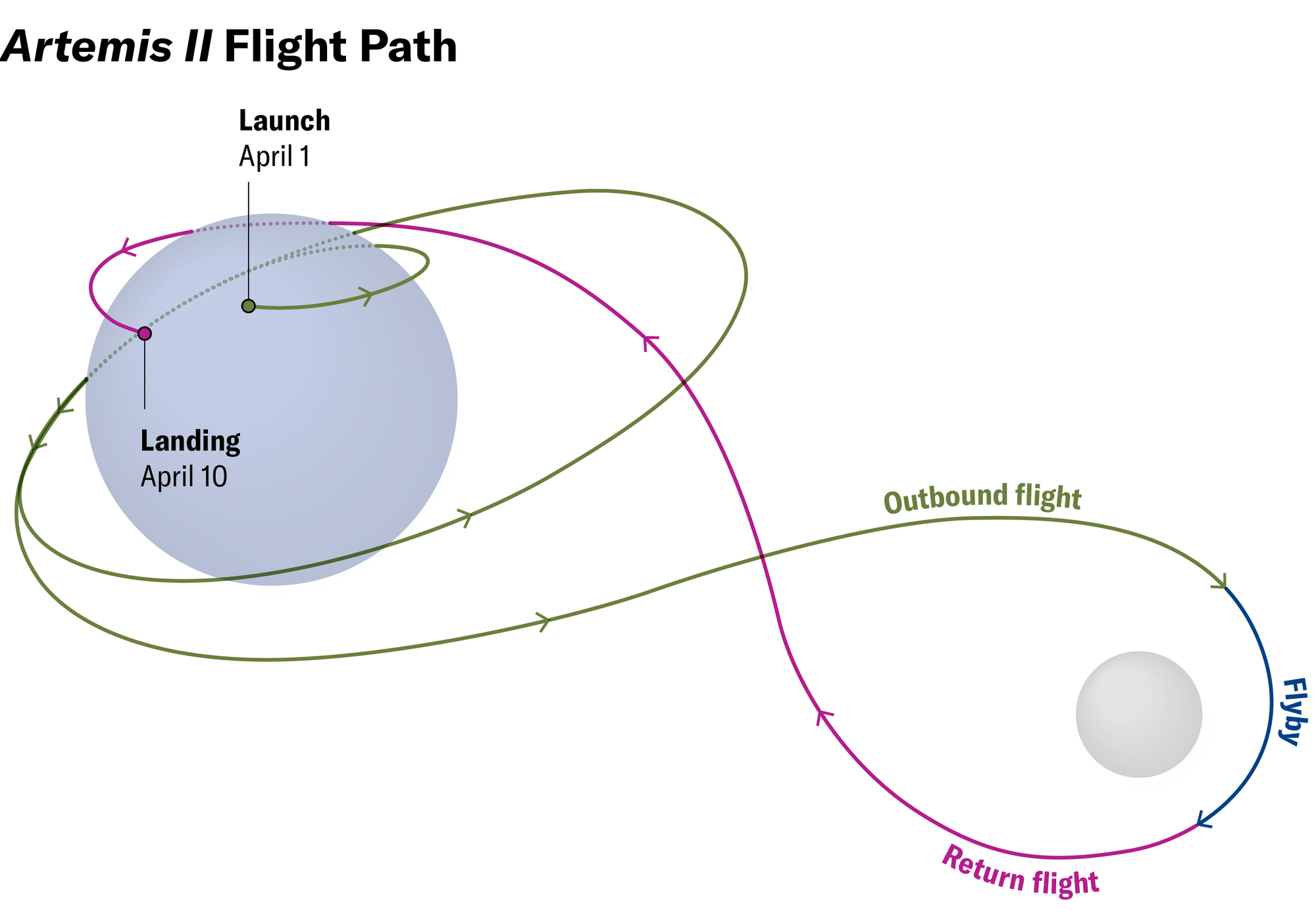
At 7:02 P.M. EDT on Monday, April 6, NASA astronauts Reid Wiseman, Victor Glover and Christina Koch and Canadian Space Agency astronaut Jeremy Hansen reached their greatest distance from Earth—around 252,756 miles (406,771 kilometers). The crew also reached their closest approach to the moon—4,067 miles above the moon—at 7:01 P.M., according to NASA.
The four astronauts experienced the milestone alone. It came during a quiet 40 minutes, when all radio signals from Earth were blocked by the moon’s mass, meaning the crew could not communicate with ground control.
On supporting science journalism
If you’re enjoying this article, consider supporting our award-winning journalism by subscribing. By purchasing a subscription you are helping to ensure the future of impactful stories about the discoveries and ideas shaping our world today.
“From all of us, it’s a privilege to witness you carrying the fire past our farthest reach,” Jenni Gibbons, a Canadian astronaut serving as capsule communicator, said from Mission Control to the astronauts before that period began.
“Thank you to all of you for allowing us the immense privilege to be on this journey together, it’s quite amazing,” Glover replied.
“As we continue to unlock the mysteries of the cosmos, I would like to remind you of one of the most important mysteries there on Earth, and that’s love,” he said. “As we prepare to go out of radio communication, we’ll still feel your love from Earth. And to all of you down there on Earth, and around Earth, we love you from the moon.”
Reaching the farthest distance from Earth marks the second superlative of the mission during that “loss of signal” period—just minutes prior, the crew made their closest approach to the moon, flying about 4,067 miles (6,545 kilometers) above its surface. At this distance, the moon appeared about the same size as a basketball held at arm’s length.
Amanda Montañez; Source: NASA (reference)
The Orion capsule reenters communication range with Earth at around 7:25 P.M. EDT. The crew will focus on observing the moon for at least two more hours, gathering as much data—and soaking up as much of the experience—as possible.
Hours ago the Artemis II crew broke the record for how far humans have traveled from Earth. The previous record was set by the crew of Apollo 13 in 1970 during their emergency loop around the moon after an oxygen tank exploded on the third day of that mission. The Artemis II crew has surpassed that record by about 4,111 miles (6,616 kilometers).
All told, the 10-day Artemis II journey will encompass nearly 700,000 miles (about 1.1 million kilometers)—the equivalent of circling Earth’s equator about 27 times.
It’s Time to Stand Up for Science
If you enjoyed this article, I’d like to ask for your support. Scientific American has served as an advocate for science and industry for 180 years, and right now may be the most critical moment in that two-century history.
I’ve been a Scientific American subscriber since I was 12 years old, and it helped shape the way I look at the world. SciAm always educates and delights me, and inspires a sense of awe for our vast, beautiful universe. I hope it does that for you, too.
If you subscribe to Scientific American, you help ensure that our coverage is centered on meaningful research and discovery; that we have the resources to report on the decisions that threaten labs across the U.S.; and that we support both budding and working scientists at a time when the value of science itself too often goes unrecognized.
In return, you get essential news, captivating podcasts, brilliant infographics, can’t-miss newsletters, must-watch videos, challenging games, and the science world’s best writing and reporting. You can even gift someone a subscription.
There has never been a more important time for us to stand up and show why science matters. I hope you’ll support us in that mission.