

The electric motorcycle industry is in an exciting stage right now. There are tons of new motorcycles launching each week across the globe, and with each launch, words like “bikes” and “motorcycles” are thrown around as loosely as possible.
A new bill advanced by the House Transportation Committee aims to clarify that distinction once and for all. This would do away with the fast-growing grey area in the two-wheeled world.
Washington state lawmakers are proposing updated definitions that would clearly separate low-speed pedal-assist bicycles from higher-powered electric machines that increasingly resemble small motorcycles in both performance and design. I guess we’re at a stage where classifying one electric two-wheeler from another is paramount.

Zero Motorcycles
At the heart of the proposal is concern over how certain high-output electric two-wheelers are being classified, and more importantly, where they’re being ridden. So far, in the USA, e-motos fall into three established classes.
Class 1 e-bikes provide an electric boost only when the rider is pedaling and cease to do so at 20 mph (32 km/h). Class 2 e-bikes can also be powered by a throttle, but only up to 20 mph. Class 3 e-bikes can provide pedal-assisted power up to 28 mph (45 km/h) and require a speedometer.
These three classes of e-bikes are generally limited by motor output and top assisted speed. These classifications determine where these vehicles can be legally ridden, such as bike lanes, multi-use paths, or certain roadways.
However, the rapid rise of more powerful electric two-wheelers – some capable of significantly higher speeds and equipped without functional pedals – has blurred regulatory lines. Manufacturers tend to take advantage of this gray area to market and sell their offerings … but it seems like this will be no more.
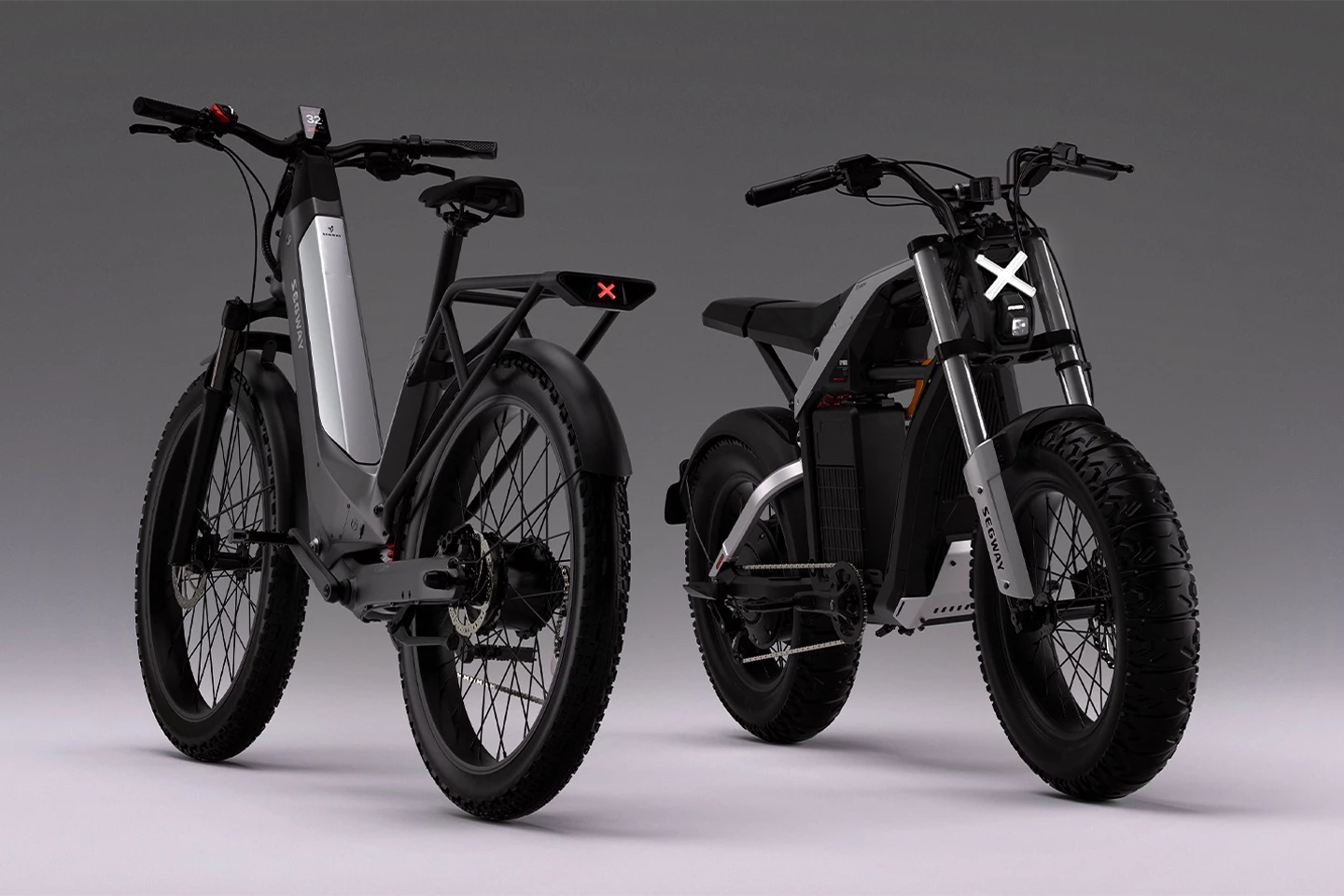
Segway
According to the bill, an e-bike can reach a top speed of 20 mph with only throttle power. Currently, if a two-wheeler has pedals, it’s a bicycle. The new bill would make it a motorcycle if any of these conditions are true:
- No real pedals
- Motor over 750 watts
- Powered past 20 mph (32 km/h) throttle-only
- Assistance continues past 28 mph (45 km/h)
And once it is categorized as an e-motorcycle or e-moto, as we commonly refer to them as, it would require a license, registration, insurance, lights, and it would not be legal to be ridden on bike paths.
Lawmakers backing the bill argue that clearer definitions are required to ensure higher-performance vehicles are treated more like mopeds or motorcycles as opposed to being grouped alongside conventional pedal-assist bicycles. I can see this not going down well with buyers.

Vida
But on technical terms, I can see the logic in this bill. Their argument is less about restricting riders and more about safety and consistency.
Take the infrastructure, for instance. Areas like bike lanes and shared trails were not designed with motorcycle-level acceleration or mass in mind. By tightening the language around what qualifies as an e-bike, this bill hopes to reduce confusion for riders, law enforcement, and local jurisdictions.
The bill would cost the Department of Licensing almost $100,000 for a study group to investigate ways to assist law enforcement in regulating e-bikes and educating users about the distinctions between the two types of bikes.

Segway
Janice Zahn from D-Bellevue, the bill’s sponsor, said, “It gives a lot of ability for people to get around who need that additional boost that conventional bicycles don’t. And at the same time, we know that community safety is really, really important.”
The e-bike market has grown rapidly in recent years, driven by commuters, delivery workers, and recreational riders seeking affordable, low-emission transport. Overly broad definitions could unintentionally sweep up legitimate electric bicycles or stifle innovation in a sector that has helped expand mobility options across urban and rural communities alike.
This comes at a time when a growing number of US states are reevaluating how electric two-wheelers fit into existing transportation frameworks. For riders, the outcome could determine not just how their bikes are classified – but where they’re allowed to ride them. And that’s a big deal.
What are your thoughts on this? Do you see other countries following suit?