
Pakistan has taken a more prominent diplomatic position since the war broke out on 28 February, when the U.S. and Israel launched the initial airstrikes on Iran.
China and Pakistan announced on Tuesday a five-point initiative aimed at restoring “peace and stability” in the Middle East amid the escalating conflict between Iran, the United States, and Israel.
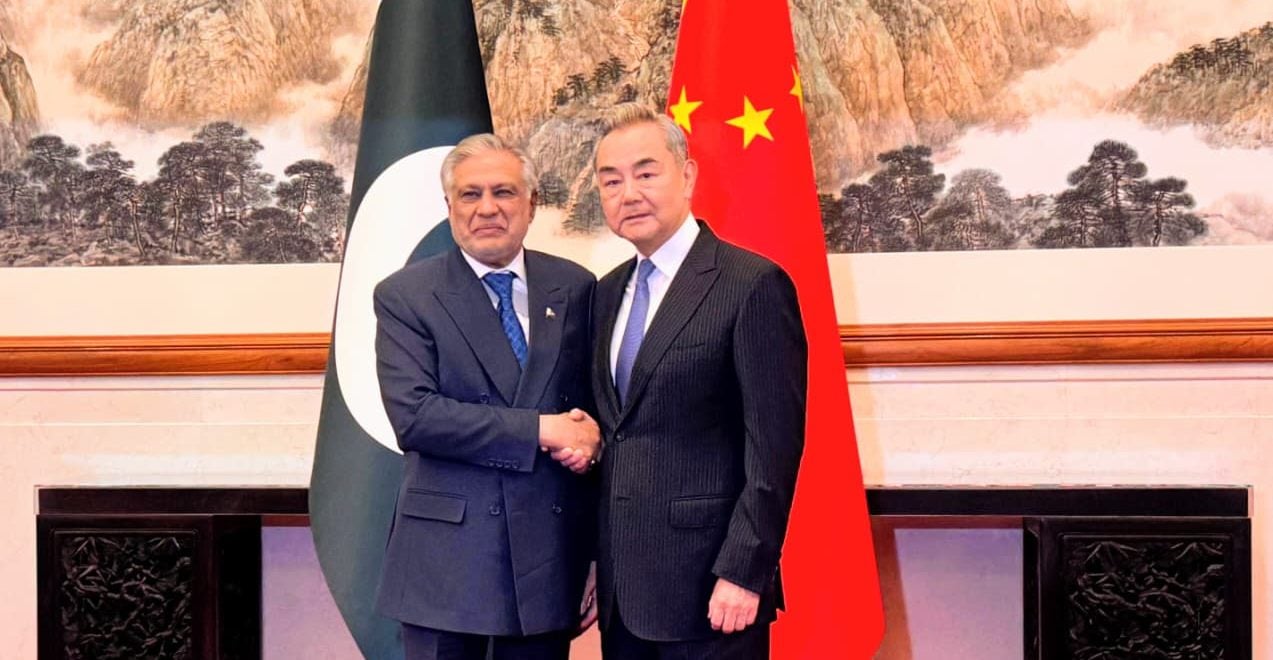
The proposal was unveiled after talks in Beijing between Chinese Foreign Minister Wang Yi and his Pakistani counterpart Mohammad Ishaq Dar, who discussed the current regional crisis.
The plan calls for an immediate cessation of hostilities and the delivery of humanitarian assistance into war-affected areas. It also urges the warring parties to begin peace talks “as soon as possible”, with support from China and Pakistan.
“Sovereignty, territorial integrity, national independence and security of Iran and the Gulf states should be safeguarded. Dialogue and diplomacy is the only viable option to resolve conflicts. China and Pakistan support the relevant parties in initiating talks,” the proposal, shared by Pakistan’s foreign ministry, said.
Both countries also called on all sides to halt attacks on civilians and non-military targets, including energy, desalination and power facilities.
Another point in the proposal entailed the preservation of shipping lanes’ security, including the vital Strait of Hormuz.
“China and Pakistan call on the parties to protect the security of ships and crew members stranded in the Strait of Hormuz, allow the early and safe passage of civilian and commercial ships, and restore normal passage through the Strait as soon as possible,” the statement said.
The final point urges efforts “to jointly strengthen the primacy” of the United Nations “and to support the conclusion of an agreement for establishing a comprehensive peace framework”.
Pakistan has taken a more prominent diplomatic position since the war broke out on 28 February, when the U.S. and Israel launched the initial airstrikes on Iran.
Islamabad recently hosted two-day talks with Saudi Arabia, Egypt, and Türkiye at the level of foreign ministers to explore ways to de-escalate the war. Pakistan’s foreign minister, following Sunday’s discussions, expressed his country’s readiness to host and facilitate talks between Washington and Tehran.
“Pakistan will be honoured to host and facilitate meaningful talks between the two sides in coming days, for a comprehensive and lasting settlement of the ongoing conflict,” Dar said in a video statement at the time.
Increased regional engagements have also been taking place in recent days. On Monday, Qatar’s Amir Sheikh Tamim bin Hamad Al Thani attended a trilateral meeting in Jeddah with Saudi Crown Prince and Prime Minister, Mohammed bin Salman Al Saud, and Jordan’s King Abdullah II.
The leaders discussed the war’s risks to freedom of international navigation and the security of energy supplies, as well as its impact on the global economy. Coordination of joint efforts to enhance regional security and stability was also at the top of the meeting’s agenda.
Sheikh Tamim was also in the United Arab Emirates on Tuesday where he met with President Sheikh Mohamed bin Zayed Al Nahyan.
In a post on X, the Amir said both leaders “affirmed the importance of intensifying joint coordination to protect the security” of their countries—both of which have been subjected to Iranian attacks over the past month along with other regional countries.
Iran has targeted several sites across the region, including energy facilities, saying it is responding to U.S. interests. Gulf states have repeatedly rejected Tehran’s justification for the strikes.